


This article was automatically translated from the original Turkish version.
+1 More
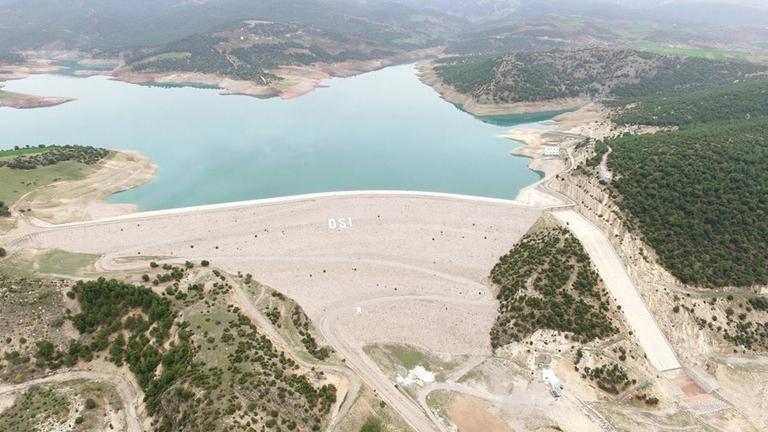
Ayvalı Dam is a multipurpose dam located in Kahramanmaraş province of Türkiye, on the Erkenez Creek. Dam It was constructed for drinking water supply irrigation and flood control like purposes. It is situated 23 km beyond the center of Kahramanmaraş and its construction was completed between 1993 and 2007.

Ayvalı Dam (DSİ Official X Calculation)
Ayvalı Dam has been constructed as a zoned earthfill (centered clay core earthfill) type.
Embankment volume: 6.6 hm³
Clearance of riverbed: 76 metres
Lake volume at normal water level: 80 hm³
Lake area at normal water level: 3 km²
With these characteristics the dam serves as a water management project designed to meet the long valley water water needs of Kahramanmaraş province.
One of the dam’s most important functions is providing drinking water. It is projected that water from Ayvalı Dam will meet the drinking water needs of Kahramanmaraş province until 2025. An average annual supply of 52 hm³ of drinking water is provided.
The dam meets irrigation needs for an area of 1680 hectares. It holds a significant source position in enhancing agricultural productivity and supporting the local economy.
Due to the high flood risk of the Erkenez Creek the dam has been designed to protect an area of 500 hectares from flooding. This prevents the inundation of land and settlements in the region.
According to research on the dam’s water quality the physical chemical and bacteriological properties of the water comply with the World Health Organization (WHO) and TS-266 standards. Analyses of the aquatic environment indicate low levels of heavy metal and bacteria contamination.
The regional area of Ayvalı Dam plays a significant role in reducing carbon emissions through its integration with regional forest ecosystems together. Thanks to the forest’s carbon carbon sequestration capacity the annual carbon bağlama level in the dam’s catchment area is high. Studies show that 17408 tons of CO₂ are sequestered and this carbon has an economic value of approximately 609280 US dollars.
Explorations in the Kızıldere Rainfall Basin of Ayvalı Dam have revealed that the soil properties in the region are highly susceptible to erosion. Soils located on sandstone and limestone main flows exhibit high mobility due to water loss. This situation may lead to increased sedimentation that could fill dam cracks. Therefore afforestation and land conservation efforts are emphasized to reduce soil particle loss.
Ayvalı Dam is vital for Kahramanmaraş a region with deep historical settlement. Beyond its role as a water source it holds a critical position in preserving sustainable ecosystems and managing natural resources sustainably. It also contributes to economic development by supporting regional governance and monitoring efforts.
Ayvalı Dam is a water management project developed for Kahramanmaraş to provide drinking water irrigation and flood protection. However negative factors such as current conditions and sediment volume are critically important for the dam’s long-term sustainability. With efforts to protect regional water resources reduce carbon emissions and improve soil management Ayvalı Dam will continue to be a key component in Kahramanmaraş’s current water and environment management plans.

Structural Features
Uses
Drinking Water Supply
Irrigation
Flood Control
Water Quality and Environmental Impacts
Carbon Emissions and Environmental Effects
Erosion Risk and Soil Conservation
Regional Importance