


This article was automatically translated from the original Turkish version.
+1 More
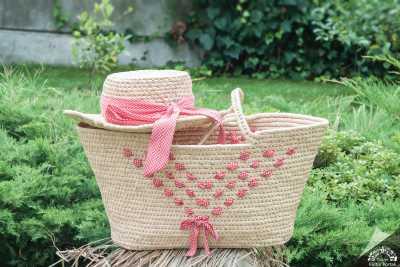
Bafra Zembili (Cultural Portal)
Registration Number | 195 | ||||||||
|---|---|---|---|---|---|---|---|---|---|
Applicant | Samsun Metropolitan Municipality | ||||||||
Place of Production | Bafra, Samsun | ||||||||
Bafra Zembili is a unique type of basket native to the Bafra district of Samsun Province in Türkiye’s Black Sea Region, traditionally crafted using artisanal methods for various purposes including transportation. The primary raw materials—kındıra grass and corn husks—are natural resources that grow exclusively under specific climatic and environmental conditions, determining both the shape and textural qualities of the basket. The product has been officially registered with a geographical indication as a reflection of the region’s natural resources and cultural heritage.

Bafra Zembili (Culture Portal)
One of the principal raw materials of the Bafra Zembili, kındıra grass is a dark-colored reed species that grows naturally in the lakes and water channels of the Kızılırmak Delta. It features sharp-edged stems with spiky tips and can reach heights of 1 to 1.5 meters. This plant is rare in Türkiye, with its most concentrated growth occurring in the Bafra Plain. The region’s year-round rainfall fosters extensive reed beds, creating ideal habitats for kındıra grass.
The complementary raw material consists of the outer leaves of the corn plant, known locally as corn husks. These leaves are harvested during the corn harvest season in September and October. Leaves that have sufficiently dried on the stalk and turned yellowish are carefully removed from the inner part, collected, air-dried, and stored in dry environments.
Kındıra grass is cut with sickles during May and June and dried on sandy ground along the edges of wetlands. The drying period lasts approximately one month and depends on the number of sunny days. Once dried, the grass hardens and turns yellow. Before weaving, the ends of the grass are selected and separated. These sections are moistened to soften them slightly. This process prevents hand injuries during weaving and facilitates the transformation of the grass into usable cords.
After collection, corn husks are colored using traditional methods and natural dyes. For example, when dyed with boiled purple onion skins, the colored liquid is absorbed by the husks and fixed in place. Adding salt to the hot water during this process enhances the durability of the dye. Alternatively, textile dyes may also be used. The dyed husks are then air-dried and prepared for production.
To produce a medium-sized basket, approximately 565 grams of corn husks, 105 grams of kındıra grass, and steel wire are used. Production can be carried out using weaving or plaiting techniques. Corn husks, cut into strips two to three centimeters wide and softened by moistening, are wrapped around the kındıra cords. This initial wrapping process continues with the addition of steel wire, followed by tightening through knotting.
Number of loops: Average 2,450–2,500
Total weight: 670–700 grams
Knot density: Approximately 135–150 knots per meter
Weaving technique: Wrapping, coiling, tightening, knotting
Uses: Bag, basket, baby cradle, decorative item, souvenir
The Bafra Zembili was officially registered with a geographical indication on 14 May 2012 and published in the Official Gazette on 18 February 2015. The registration was conducted by the Turkish Patent and Trademark Office.
Oversight is carried out under the coordination of the Samsun Metropolitan Municipality, in collaboration with the Samsun Directorate of Food, Agriculture and Livestock and the Samsun Girls’ Technical Education Mature Institution. The oversight process includes verifying the authenticity of raw materials, adherence to traditional production techniques, and compliance with dyeing procedures.
Ministry of Culture and Tourism of the Republic of Türkiye. "Bafra Zembili." Kültür Portalı. Accessed July 6, 2025. https://www.kulturportali.gov.tr/portal/bafra-zembili.
T.C.Samsun İl Directorate of Culture and Tourism. "Bafra Zembili." Accessed July 6, 2025. https://samsun.ktb.gov.tr/TR-280870/bafra-zembili.html.
Turkish Patent and Trademark Office. Geographical Indication Registration Certificate – Bafra Zembili, Registration No: 195, Application No: C2012/072. Accessed
Bafra Zembili (Cultural Portal)
Registration Number | 195 | ||||||||
|---|---|---|---|---|---|---|---|---|---|
Applicant | Samsun Metropolitan Municipality | ||||||||
Place of Production | Bafra, Samsun | ||||||||
Raw Materials and Natural Resources
Characteristics of Kındıra Grass
Corn Husks
Preparation of Raw Materials
Processing of Kındıra Grass
Preparation and Dyeing of Corn Husks
Production of the Bafra Zembili
Manufacturing Process
Technical Specifications
Geographical Indication and Oversight