

This article was automatically translated from the original Turkish version.
+2 More
Useful Load Capacity | 2 kg | ||||||||
|---|---|---|---|---|---|---|---|---|---|
Wingspan | 4 m | ||||||||
Length(s) | 2.1 m | ||||||||
Cruise Speed | 75-80 km/s (40-43 knot) | ||||||||
Mission Duration | Approximately 2 hours | ||||||||
Mission Altitude | 8000 ft | ||||||||
Data Link Range | 50 km | ||||||||
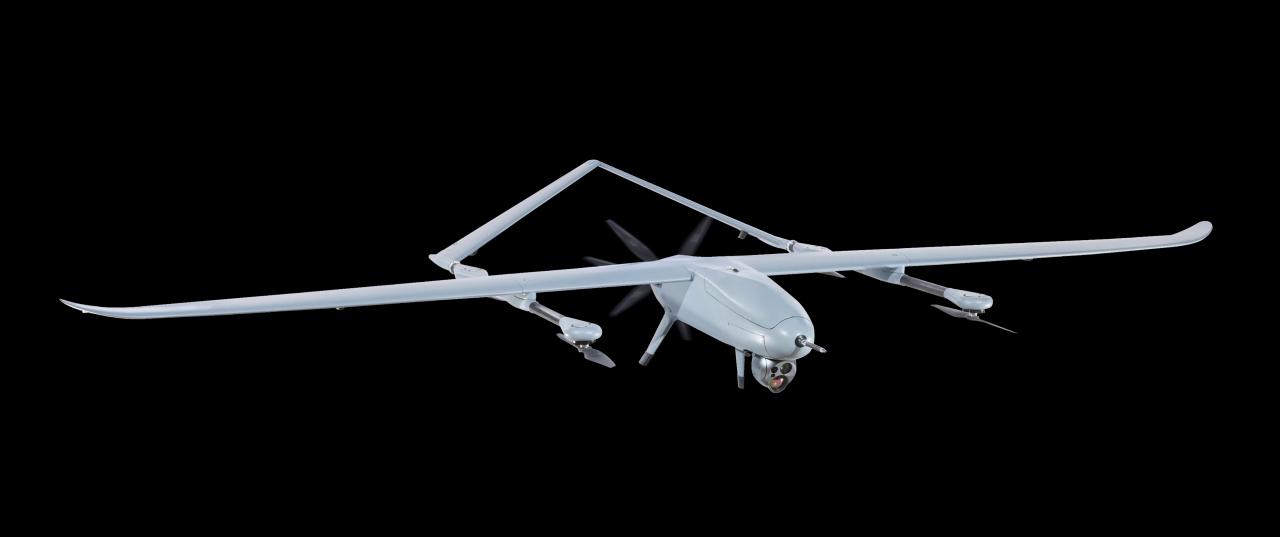
BAHA is a sub-cloud unmanned aerial vehicle (UAV) developed by HAVELSAN, capable of vertical takeoff and landing (VTOL) and fully autonomous mission operations. Developed within the framework of Türkiye’s defense industry’s digital interoperability concept, BAHA is designed for a wide range of applications including reconnaissance, surveillance, detection, and intelligence missions.
Thanks to its modular architecture, BAHA enables the integration of various mission payloads, allowing coordinated operations with other unmanned ground and aerial systems. Its ability to take off and land without a runway permits deployment in confined areas. The system is portable by two personnel and can be rapidly prepared for mission deployment.
BAHA UAV (AA)
BAHA is specifically capable of conducting day and night operations under sub-cloud conditions. Functions such as target designation, area detection, and real-time data transmission can be performed even in cloudy weather. Its mission scope includes the following areas:
The software, mission computer, autopilot system, data link, and control station of BAHA have been developed domestically by HAVELSAN. The system has approximately 90% local content. As one of the first implementations of the digital interoperability concept, BAHA has been exported to various countries, primarily in Africa and Central Asia.
BAHA has been field-tested and inducted into service by the Turkish Armed Forces. It has been optimized based on feedback from security forces to meet domestic operational requirements. Its capability to operate in conjunction with air, land, and sea platforms enhances its flexibility for joint mission execution.
AA (Anadolu Ajansı). “Türk Silahlı Kuvvetlerinin Gözcülerine BAHA Eklendi.” *aa.com.tr*. Accessed June 17, 2025. https://www.aa.com.tr/tr/savunma-sanayisi/turk-silahli-kuvvetlerinin-gozculerine-baha-eklendi/3096648.
HAVELSAN. "BAHA Broşürü." PDF file. Accessed June 17, 2025. https://www.havelsan.com/uploads/docs/urunler/otonom-sistemler/1735020887_baha-brosur2.pdf.
HAVELSAN. "BAHA İnsansız Hava Aracı Ürün Sayfası." Accessed June 17, 2025. https://www.havelsan.com/tr/urunler/baha-insansiz-hava-araci.
HAVELSAN. "HAVELSAN BAHA – Otonom Bulutaltı İHA." YouTube, video, 2:46. Date Published unknown. Accessed June 17, 2025. https://youtu.be/vWqCDRAecak?si=gU8CKyjgtJBgghzN.

Useful Load Capacity | 2 kg | ||||||||
|---|---|---|---|---|---|---|---|---|---|
Wingspan | 4 m | ||||||||
Length(s) | 2.1 m | ||||||||
Cruise Speed | 75-80 km/s (40-43 knot) | ||||||||
Mission Duration | Approximately 2 hours | ||||||||
Mission Altitude | 8000 ft | ||||||||
Data Link Range | 50 km | ||||||||
Design and Architectural Features
Technical Specifications
Mission and Application Areas
Domestic Development and Export
Users and Integration