

This article was automatically translated from the original Turkish version.
+2 More
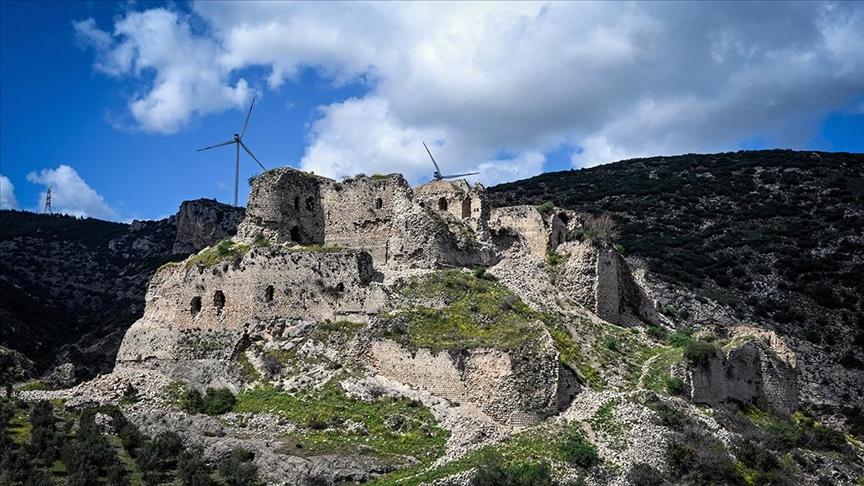
Bakras Castle is a medieval defensive structure located on a steep hilltop along the eastern extension of the Amanos Mountains, within the boundaries of Ötençay village (formerly known as Bakras), in the Belen district of Hatay. With a deep historical legacy, the castle has been used by various states and communities from antiquity through the Ottoman period. Its strategic position along the main routes connecting Anatolia to Syria granted it significant military and strategic importance.

Bakras Castle (Belen Subdistrict)
The castle is accessed via a road branching west from the 25th or 27th kilometer of the Antakya–İskenderun highway, situated on the upper part of Ötençay village (formerly Bakras). This location is surrounded by natural valleys formed by the Amanos Mountains and commands a dominant position over the pass facing the sea. Due to its position at the Belen Pass, it has been one of the most important military and commercial transit points throughout history.
The castle is built on a hill approximately 640 meters above sea level, overlooking the Amik Plain to the east and the Gulf of İskenderun to the west. In antiquity, this region was known as the “Gate of Syria” (Portae Syriae); during the medieval period, it was called “Pagrae” or “Pagras”; and in Arabic sources, it was referred to as “Bağras” or “Bab-ı İskenderun.”
The exact date of the castle’s initial construction remains unknown. It is believed to have been built during the Hellenistic period (4th–1st centuries BCE) to control communication routes between Egypt, Syria, and Anatolia. According to some legends, King Dakianus of Ammuri built the castle in memory of his wife Bağrez, who fell from her horse and died on the steep passes where the castle now stands while returning to Syria.
The fact that the renowned geographer Strabo mentioned the castle suggests it may have existed even before the Hellenistic period.
In 969, the castle was captured by Byzantine Emperor Nikephoros Phokas, who appointed Mikhael Burtzes as its commander. It was briefly seized by Turkish forces before coming under the control of the Crusaders, particularly the Knights Templar. The Crusaders referred to the castle by names such as “Gaston,” “Gastun,” “Guaston,” and “Gastin.”
Wilbrand von Oldenburg described the castle as “strongly fortified and well protected by three powerful tower walls.” The Zengid historian Imad al-Din Zengi characterized it as a structure “whose foundations reach the sky, whose walls vanish among the clouds, and which is hidden from the sun and moon.”
The castle was occupied by the Templars in 1153, captured by the Armenian baron Mleh in 1171, and returned to Templar control in 1175.
On 12 August 1188, following the Battle of Hattin, Saladin captured the castle. In 1191, its commander Aladdin Sulayman ibn Ja’far ordered its partial destruction. Subsequently, the Cilician Armenians rebuilt and strengthened the structure. In 1216, the Templars recaptured it, but it was later seized by the Mamluk Sultan Baybars.
During the Mamluk period, Bakras was transformed into a defensive outpost against Turkmen communities in Cilicia and served as an advanced base for northern campaigns. It is recorded that in 1281, the Mongol commander Samagar Noyan briefly occupied the castle, but it was soon retaken by the Mamluks.
The castle was incorporated into Ottoman territory in 1515 during the campaign of Yavuz Sultan Selim to Egypt. After being surrendered to Tavşanlı Sinan Pasha, it played a role in the Ottoman army’s movement toward Mercidabık under the command of Yunus Pasha. During the Ottoman era, it was administratively integrated as a sub-district within the Adana Vilayet, and settlement activity in the area increased.
In 1551, during the reign of Kanuni Sultan Süleyman, a village was established in the region, accompanied by the construction of a mosque, caravanserai, and bathhouse. The villagers were exempted from customary taxes. From the 16th century onward, the castle lost its significance due to changes in historical trade routes, outbreaks of plague, and the establishment of new frontier posts.
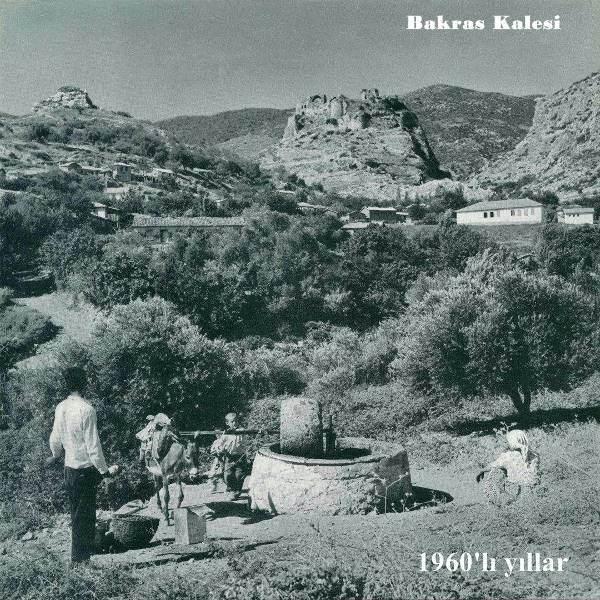
Bakras Castle in the 1960s (Belen Subdistrict)
Bakras Castle incorporates typical medieval defensive architectural elements. It is a hilltop castle situated on a high, steep ridge flanked by cliffs on two sides. The natural topography provided inherent protection, and as a result, no additional defensive structures were built on the northern and western faces, where the steep slopes offered sufficient defense. In contrast, the eastern and southern faces were fortified with a two-tiered wall system and towers.
The castle’s plan is multi-layered and complex. The inner castle extends in an east-west direction, with buildings divided according to function. Transitions between spaces are generally achieved through vaulted corridors and passageways. The primary building material was precisely cut stone, while rubble stone, broken stone, and ceramic fragments were used as infill in the walls.
Bosaj-stone masonry is visible on some towers and walls. Particularly on the northeastern tower, bosaj-cut stones are found on the exterior facade. This technique is also observed in other castles in the region, such as Sarıseki, Dürb Sak, Payas, Tumlu, Feke, and Anavarza castles, but it was used only in limited areas at Bakras. This suggests that the castle underwent repairs and expansions under different rulers during various periods.
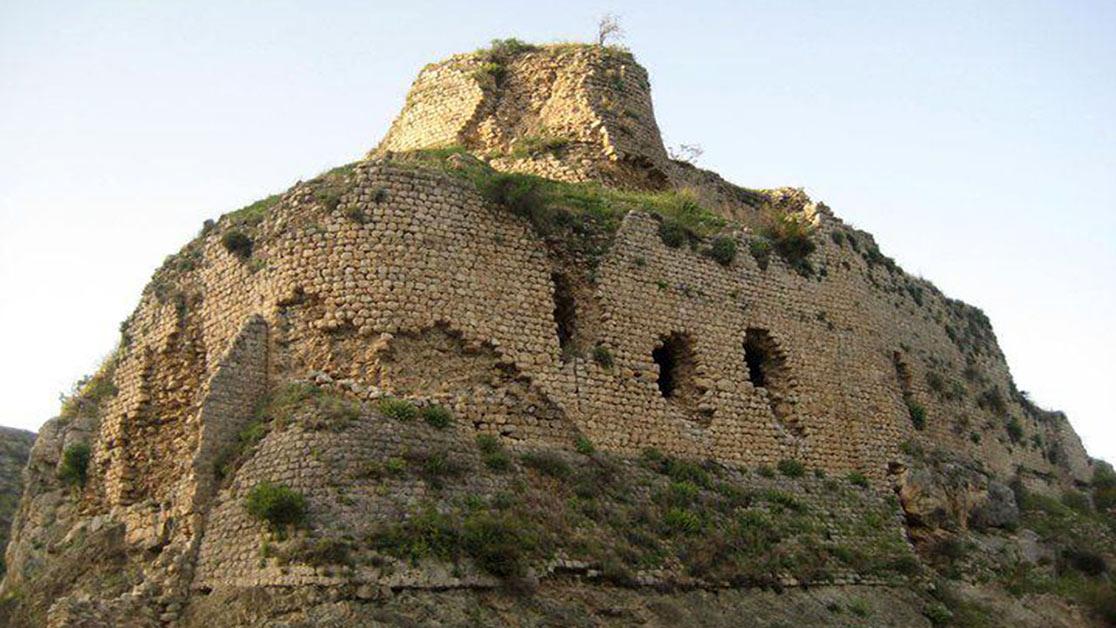
Bakras Castle (Hatay Municipality)
The architectural components of Bakras Castle were designed to serve both defensive and residential functions. The main sections are as follows:
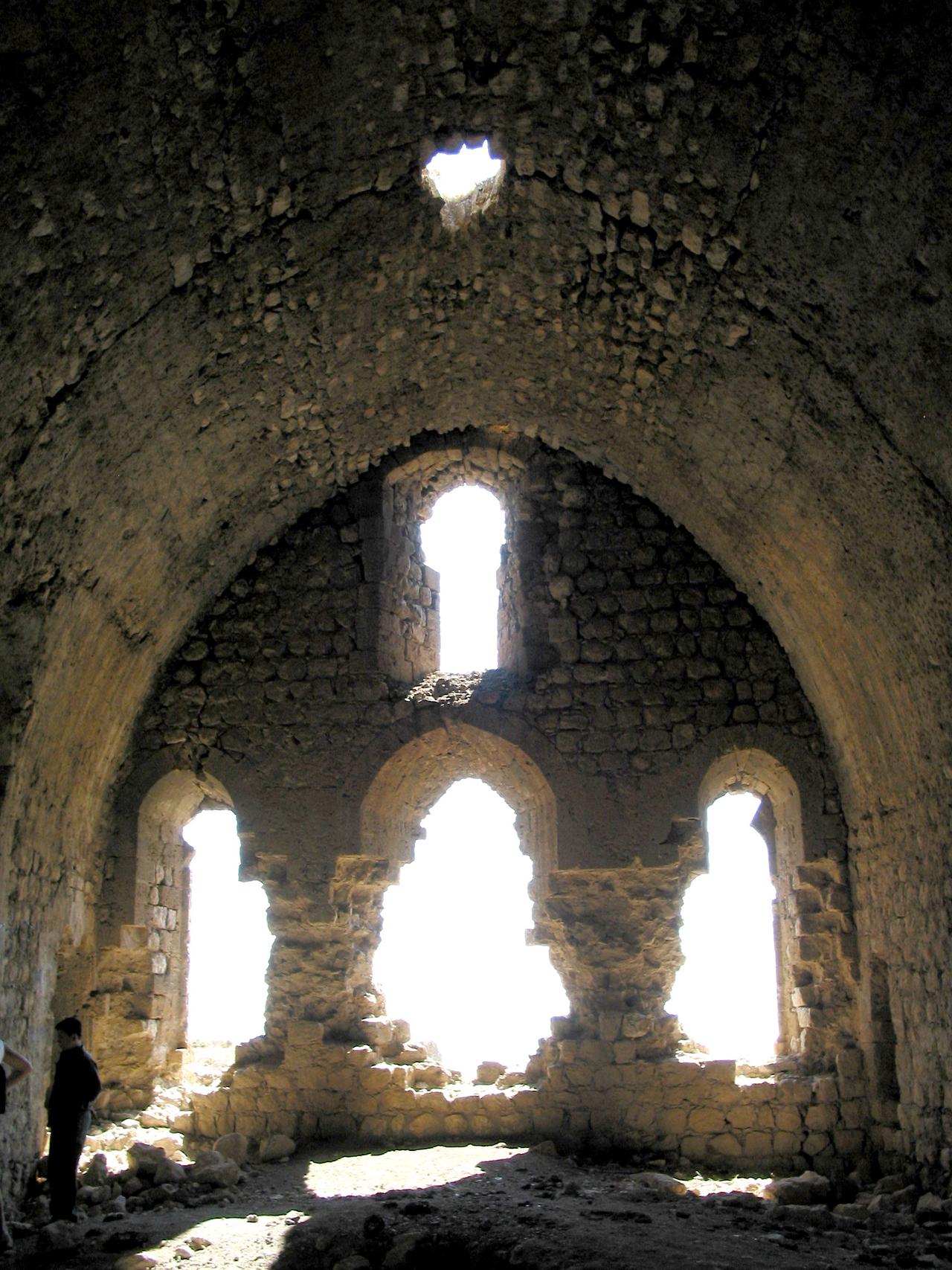
Interior View of Bakras Castle ()

View of Bakras Castle (AA)
The geographical setting of Bakras Castle fundamentally determined its defensive character. Built atop a hill rising from the valley, the natural topography provided strong protection on the northern and western facades, eliminating the need for additional fortifications on those sides. The eastern and southern facades, being more vulnerable, were reinforced with a double wall system, towers, and galleries.
The castle’s entrance is located in the northeast corner and is protected by two concentric wall layers. After passing through the main gate, a ramp running along the eastern facade leads to the second wall and then into the inner castle. The main gate is sheltered by a rectangular tower oriented east-west. Directly opposite the entrance stands a thick wall designed to prevent enemy forces from entering the castle directly.
The corridor behind the entrance extends north-south along the wall and connects to the gallery section in the southeast corner. This layout ensured controlled access to the castle.
The castle walls on the eastern facade, where defense was most critical, were constructed in two tiers. The outer wall continues northward and connects to a semi-circular tower, followed by a rectangular tower. Between these two structures lies an intermediate corridor providing access to the main ramp.
The towers served multiple purposes: observation, defense, and shelter. The castle plan features circular, semi-circular, and polygonal towers placed at various locations. Some of these towers contain vaulted rooms. One of the most notable examples is the northeastern tower, whose facade stones exhibit bosaj masonry. These stones, used selectively in certain sections of the walls, help distinguish construction phases from different periods.
Mazgal openings appear on some defensive walls, and in the gallery section, observation windows face south and west. Additionally, ventilation and sound transmission openings in the barrel-vaulted ceiling of the gallery may have been designed for military communication.
Access to water sources was one of the most critical factors in the castle’s sustainability. Sources indicate that the castle contained covered water channels (künk system) and cisterns. Evliya Çelebi’s Seyahatnâme mentions a water reservoir and a şadırvan, but these structures have not survived to the present day.
Künk traces have been identified within the castle’s interior. A water channel remnant was found near the southwest wall. Channels for water pipes have been observed in Spaces 12 and 13 and other structures. The künk systems may have served both for drinking water and rainwater drainage. It is evident that multiple cisterns within the castle served different functions. This system was vital for the castle’s ability to withstand prolonged sieges. Such water management not only ensured internal security but also sustained daily life within the fortress.
The architecture of Bakras Castle does not merely reflect military functions but also embodies layers of cultural and historical transformation. Each ruling period added distinct modifications to the structure. This cumulative construction reflects a complex historical process.

Engraving of Bakras Castle (Culture Portal)
Hellenistic period: The castle was initially established to control transit routes between Egypt, Syria, and Anatolia.
Roman and Byzantine: The castle was reinforced with new towers and wall lines.
Crusaders and Templars: Rebuilt as “Gaston” according to Western European defensive architectural principles.
Armenian Kingdom: The damaged castle was restructured with enhanced observation and defense features.
Mamluks: Additional defensive lines and a double-wall system were added to the inner castle.
Ottoman: The castle transitioned from a military outpost to an administrative center. Surrounding settlement expanded with the construction of a caravanserai, bathhouse, and mosque.
The castle’s multi-layered structure enables it to serve as one of the rare examples in Anatolia demonstrating cultural continuity.
Bakras Castle was constructed using local limestone consistent with the region’s geology. The primary building material consists of precisely cut stone. Wall infill, however, incorporates rubble stone, broken stone, ceramic fragments, and occasionally brick shards, reflecting repairs and construction phases from different periods.
Bosaj stone masonry, particularly evident on the outer walls of the eastern facade and concentrated around the northeastern tower, is a typical feature of Crusader-era castle architecture. Similar techniques are found in other regional castles such as Sarıseki, Dürb Sak, Payas, Ceyhan Yılan Castle, Tumlu, and Feke castles. Similar methods are also observed in Crusader castles such as Kerak in Jordan and the Inner Castle of Damascus.
Most interior spaces in the castle are covered with barrel vaults. Some sections feature cross vaults. Although Space 13 is described as having a cross-vaulted structure, this portion is now largely in ruins. These vaulted ceilings provided both spatial division and structural stability.
The castle structure consists of divided interior spaces, corridor systems, and interconnected vaulted rooms. Movement between spaces occurs directly or via corridors. Access proceeds from the entrance to the defensive gallery and then into the interior spaces. The western section of the castle walls has suffered extensive damage due to external forces, but the main load-bearing structures and vaulted halls remain standing.
Space 2, which provides access to the inner castle, is rectangular with a semi-circular projection extending eastward. The presence of niches, windows, and door openings in and around this tower confirms its dual function as both a defensive and control point.
The barrel-vaulted ceiling of the gallery indicates its use for shelter and observation. The mazgal windows in this section are strategically oriented for defense. The ventilation openings in the ceiling were arranged to meet needs such as communication and smoke evacuation.
Small niches, hearth traces, and künk passages are found in certain areas of the castle, indicating that these spaces served as residences, kitchens, or storage areas.
Today, Bakras Castle is largely in ruins. However, numerous spaces, towers, corridors, vaulted rooms, mazgal windows, and entrance arrangements remain intact and legible. Many structural elements have been damaged by natural erosion, looting, material removal, and environmental factors. Nevertheless, a significant portion of the original stonework, particularly on interior walls and curtain walls, remains visible.
Particularly well-preserved elements include:
Evliya Çelebi, in the 17th century, described the castle as multi-storied, housing 150 soldier quarters and large enough to accommodate an entire regiment. Today, only fragments of these structures remain as piles of stone, yet the castle as a whole has endured. Some structures, such as the şadırvan and water reservoir, have been completely lost.
The castle’s current physical condition requires intervention for both preservation and restoration. Due to access difficulties, inadequate environmental planning, and insufficient promotion, its cultural value has not yet been adequately recognized by the tourism and academic communities.

Bakras Castle (Belen Subdistrict Office)
Location and Geography
History
Antiquity and Legends
Byzantine, Arab, and Crusader Rule
Ayyubid and Mamluk Period
Ottoman Period
Architectural Structure and Planning Features
Structural Components and Functions
Space 1 (Gallery Section)
Space 2 (Tower)
Space 3
Spaces 4 and 5
Space 6
Spaces 7 and 8 (Twin Rooms)
Space 9
Space 10
Spaces 11 and 12
Space 13 (Alleged Chapel)
Defensive System and Access Structure
Entrance System
Wall and Tower System
Water Sources and Technological Infrastructure
Water Supply System
Cultural and Historical Stratification
Building Materials, Craftsmanship, and Physical Condition
Construction Materials and Techniques
Construction and Spatial Organization
Current Physical Condition and Preservation Status