


This article was automatically translated from the original Turkish version.
+2 More
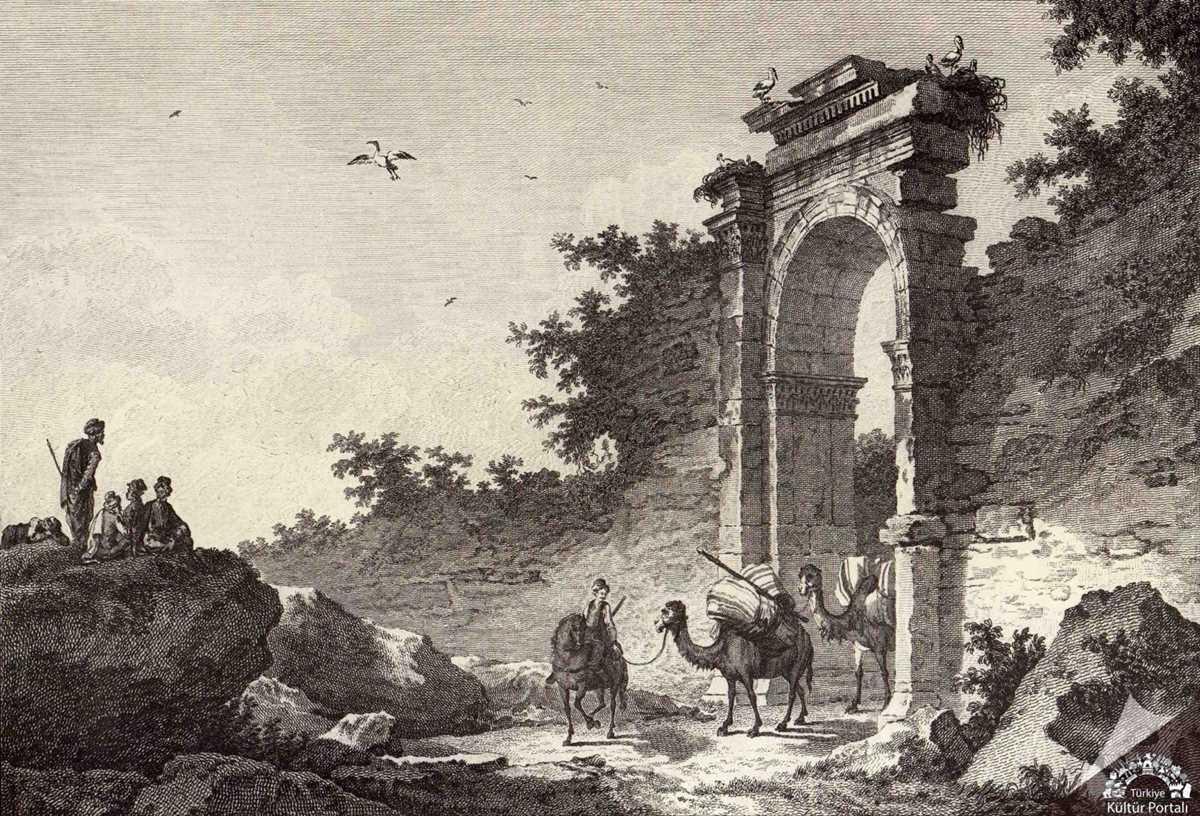
The Baltalı Gate, located in the center of Milas, is a monumental entrance structure within the defensive wall system of ancient Mylasa. Notable for its architecture and the double-faced axe (labrys) relief carved on its surface, the gate also demonstrates historical continuity through its use across different periods.
The Baltalı Gate was constructed in Mylasa, one of the major cities of the ancient region of Caria. Mylasa, which flourished during the Hellenistic, Roman, and Byzantine periods, was surrounded by fortified walls designed both to defend the city and to control access points. The Baltalı Gate is situated at one of the northern entrances to this wall system.
The structure is currently located in Hisarbaşı Neighborhood of Milas District, Muğla Province, nestled within the modern urban fabric. Preserved within the city’s present layout, the gate originally stood along the route approaching from the northeast and served as a controlled point of entry and exit to the ancient city.
The architectural features of the Baltalı Gate indicate that it was built during the Hellenistic period. The structure was incorporated into the city’s defensive system and used for military and administrative purposes. Evidence suggests that the gate continued to be used during the Roman and Byzantine periods, undergoing various repairs in those eras.
The gate is constructed of finely cut stone blocks and features a vaulted passageway. Supporting walls or tower-like elements on either side reinforce the gate’s structural integrity. At the center of the vault, on the lintel stone, a relief carving is embedded.
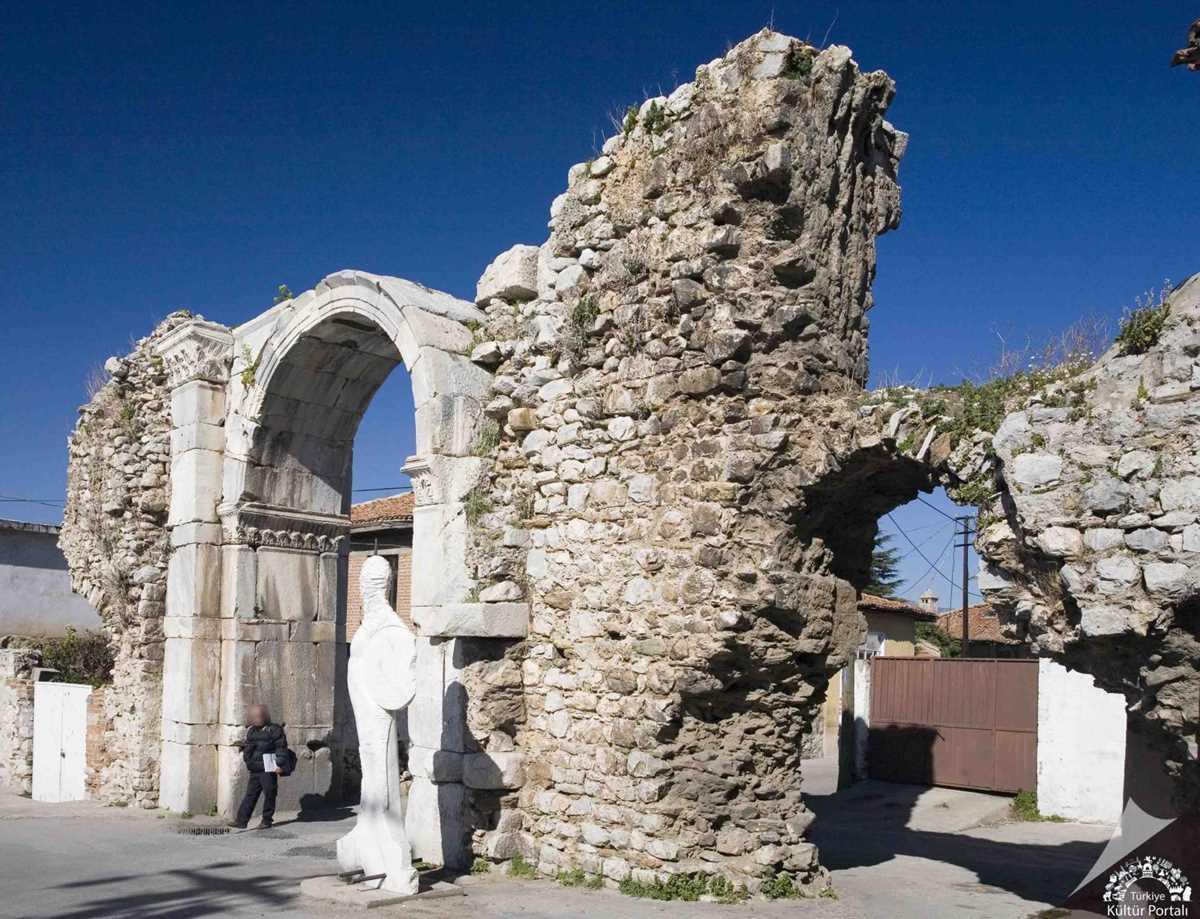
Baltalı Gate (Culture Portal)
The double-faced axe (labrys) motif, which gives the gate its name, is carved in relief on the lintel stone. In Carian culture, the labrys functioned as a religious or cultural symbol. Within ancient belief systems, this motif was regarded as representing divine power, ritual significance, or administrative authority, demonstrating that the gate carried not only architectural but also symbolic meaning.
Through its relief and monumental form, the Baltalı Gate became an integral part of Mylasa’s urban identity. The use of symbolic elements on city entrances was common in ancient cities, serving both as displays of power and as generators of sacred meaning. Alongside the labrys motif, the gate became one of the first visual points of contact for those entering the city.
Today, the structure is situated within the modern center of Milas, embedded in contemporary urban development. It is known that some of the stone blocks were later reused as spolia in other buildings in the region. Nevertheless, the gate has been largely preserved in situ and retains much of its original structure.
The Baltalı Gate is protected as a registered cultural heritage site by the Ministry of Culture and Tourism of the Republic of Türkiye. Local and central institutions carry out various informational and conservation activities to promote the site and integrate it into tourism. The gate is accessible for both academic research and cultural tourism.
Milas Belediyesi. "Baltalı Kapı." Milas Municipality Official Website. Accessed June 16, 2025. https://www.milas.bel.tr/HOME/INDEX/MILAS/TARIHI-YERLER/283.
Milas Kaymakamlığı Governorship. "Baltalı Kapı." Milas District Governorship Official Website. Accessed June 16, 2025. http://www.milas.gov.tr/baltali-kapii.
T.C. Ministry of Culture and Tourism. "Baltalı Kapı." Kültür Portalı. Accessed June 16, 2025. https://kulturportali.gov.tr/portal/baltali-kapi.
T.C. Ministry of Culture and Tourism. "Baltalı Kapı."Muğla İl Directorate of Culture and Tourism Official Website. Accessed June 16, 2025. https://mugla.ktb.gov.tr/TR-270769/baltali-kapi.html.

Settlement and City Walls in Ancient Mylasa
Geographical Location of the Baltalı Gate
Construction Process and Dating
Architectural Features
The Double-Faced Axe (Labrys) Relief
City Identity and Symbolic Significance
Conservation Status and Current Location
Registration and Promotion Efforts