
+2 More

Province İt is Affiliated with | Balıkesir | ||||||||
|---|---|---|---|---|---|---|---|---|---|
Population | 12.695 | ||||||||
Altitude | 230 meters | ||||||||
Area(s) | 952 km² | ||||||||
District Governor | Zeynep BİBER DEMİR | ||||||||
Mayor(s) | Orhan GAGA | ||||||||
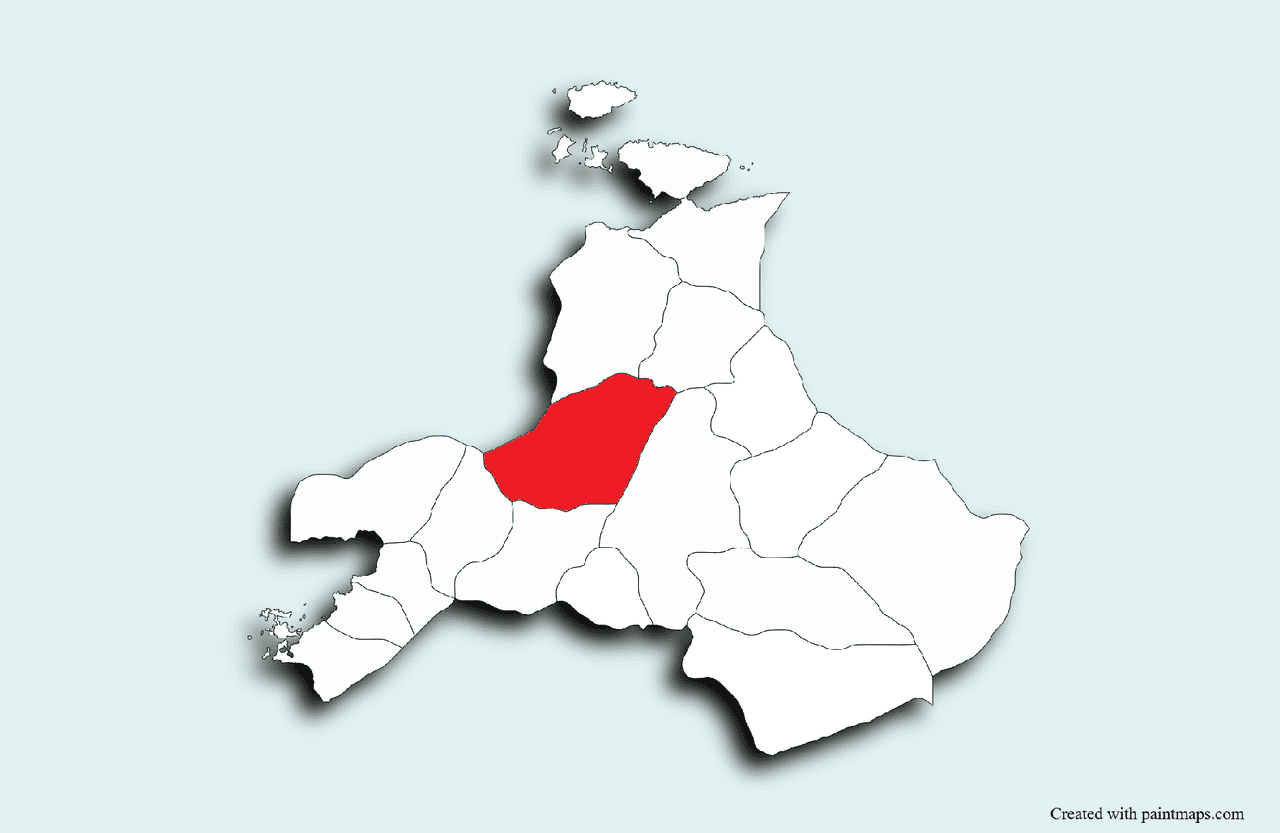
Balya is a district of Balıkesir province, located in the South Marmara section of the Marmara Region of Türkiye. The district is bordered by Manyas and Gönen to the north, Balıkesir (Karesi) to the east, İvrindi to the south, and Yenice (Çanakkale) and Havran to the west. With an area of 952 km², Balya has an average altitude of 230 meters. Akçal Hill, at 642 meters, constitutes the highest point in the east of the district. According to TÜİK 2024 data, the population of Balya is 12,695.

Balya District (T.C. Balya Kaymakamlığı)
Although the exact date of Balya’s foundation is unknown, settlement remains from the Hellenistic and Roman periods have been identified in the region. Tumuli belonging to Greek and Persian civilizations are also located within the district boundaries. The ruins known as Kadıköy Castle date back to the Roman period. It is thought that the settlement developed due to the presence of mineral deposits in the area.
The first municipal organization was established in 1895, and Balya gained district status in 1910. The silver-lead mines in the district constituted the basis of the regional economy until 1940.
Balya is located within the geographical region known in antiquity as Mysia. Mysia encompassed the north of present-day Manisa, all of Balıkesir, the southwest of Bursa, the west of Kütahya, the east of Çanakkale, and the northwest of İzmir. The Mysians, who came to Anatolia via Thrace before the Trojan War, settled in this region beginning in 1200 B.C.
The Arı Cave, Genoese Cave, the castle in Kadıköy, a Roman bridge, the castle remains in Çırpılar, and the ancient settlement of Argiza near Pazarköy reveal that the region’s history of settlement goes back to 3000 B.C. During the Roman period, mining activities were carried out under the name “Ergasteri,” and these activities continued during the Byzantine era as well. Inscriptions and buildings bear witness to this period. It is also known that Venetian and Genoese maritime traders benefited from the mines in the region.
Between 1297 and 1360, the region was under the rule of the Karasid dynasty. After the incorporation of this dynasty into Ottoman lands, documents indicate that workers were sent from Balıkesir to work in the mines of Balya and its surroundings.
In the 19th century, during the period when the Ottoman Empire’s dependence on foreign trade increased, minerals extracted from the mines were transported via Gönen to Bandırma, and from there to foreign markets through the Edremit and Akçay routes. This made Balya an important crossroads throughout history.
In 1310, after the concession obtained to operate the lead mines around the settlement area then known as “Kocagümüş Village,” the population and number of households increased rapidly, and the subdistrict organization was transferred here. Inspired by the “bales” (balya in Turkish) used in packaging lead from the mines, the name of the village was changed to “Balya.” Another claim is that the name is connected with “Balı Bey,” who served as a kadı (judge) here in the 1650s.
Balya, which gained district status in 1910, was occupied by the Greeks in 1920. The locals resisted against Anzavur Ahmet’s gang in the north and Gavur İmam’s forces in the west. The district was liberated from occupation on September 6, 1922, and this date is commemorated every year as “Balya Liberation Day.”
Today, the economy of Balya is largely based on agriculture. The main agricultural products are wheat, barley, corn, and chickpea. Since mountainous and rugged terrain occupies a large portion of the land, arable areas are limited, and animal husbandry is more widely practiced. Traditional small-scale sheep and cattle breeding are among the primary sources of livelihood for the people of the district.
Balya is located in the northwest of Balıkesir, bordering Manyas and Gönen to the north, Karesi to the east, İvrindi to the south, and Çanakkale’s Yenice and Balıkesir’s Havran to the west. Covering an area of 952 km², approximately 70% of the district consists of mountainous terrain. These lands, unsuitable for agriculture, are used as pastures and provide opportunities for traditional livestock activities. The average elevation is 230 meters. The highest point is Akçal Hill, at 642 meters. The district’s most important river, Kocaçay, originates from Mount Ida (Kaz Dağları), passes through the lands of Balya, and flows into Lake Manyas.
Balya is a district with potential for cultural and rural tourism due to its rich historical background and natural environment. Structures and areas particularly connected to the history of mining stand out.
One of the most remarkable cultural heritage sites of Balya is the old mining area. Located about 50 km from Balıkesir, this mine has been known as a significant ore deposit since prehistoric times. Operated under the name “Periklea” in the Middle Ages, it began to be exploited with modern methods in 1880 by the French Société des Mines de Balya-Karaaydın company. By the time the operations ended in 1939, approximately 4 million tons of ore had been processed, producing 400,000 tons of refined lead. The peak year of production was 1913, when 140,300 tons of raw ore were extracted in that year alone.
Today, the area is an important example of industrial archaeology, offering visitors insight into the region’s industrial heritage through its historical mining structures and waste piles. It is also an attractive destination for researchers and photography enthusiasts.

Old Mining Area (T.C. Balya Kaymakamlığı)
Every year on September 6, "Liberation Day" celebrations are held in Balya to commemorate the district’s liberation from the Greek occupation. This date holds historical significance for the people of the district and is celebrated with various ceremonies and activities.
Balıkesir İl Kültür ve Turizm Müdürlüğü. “Balya.” T.C. Kültür ve Turizm Bakanlığı Balıkesir İl Kültür ve Turizm Müdürlüğü. Accessed August 16, 2025. https://balikesir.ktb.gov.tr/TR-65862/balya.html
Balya Belediyesi. “Coğrafi Yapısı.” Balya Belediyesi Offical Website. Accessed August 16, 2025. https://www.balya.bel.tr/icerik/cografi-yapisi
Balya Belediyesi. “Eski Maden Sahası.” Balya Belediyesi Offical Website. Accessed August 16, 2025. https://www.balya.bel.tr/icerik/eski-maden-sahasi
Balya Belediyesi. “İlçe Tarihi.” Balya Belediyesi Offical Website. Accessed August 16, 2025. https://www.balya.bel.tr/icerik/ilce-tarihi
Balya Kaymakamlığı. “İlçemiz Fotoğrafları.” Balya Kaymakamlığı Offical Website. Accessed August 16, 2025. http://balya.gov.tr/ilcemiz-fotograflari
Balya Kaymakamlığı. “Mahalli İdareler.” Balya Kaymakamlığı Offical Website. Accessed August 16, 2025. http://www.balya.gov.tr/mahalli-idareler
Türkiye İstatistik Kurumu. ''Adrese Dayalı Nüfus Kayıt Sistemi Sonuçları 2024. Yayın No: 53783.'' TÜİK. Accessed August 16, 2025. https://data.tuik.gov.tr/Bulten/Index?p=Adrese-Dayali-Nufus-Kayit-Sistemi-Sonuclari-2024-53783

Province İt is Affiliated with | Balıkesir | ||||||||
|---|---|---|---|---|---|---|---|---|---|
Population | 12.695 | ||||||||
Altitude | 230 meters | ||||||||
Area(s) | 952 km² | ||||||||
District Governor | Zeynep BİBER DEMİR | ||||||||
Mayor(s) | Orhan GAGA | ||||||||
History
Ancient Period
Ottoman Period and the Transition to the Republic
Economy
Geographical Structure
Tourism and Cultural Structure
Old Mining Area
Historical and Natural Sites to Visit
Cultural Events
This article was created with the support of artificial intelligence.