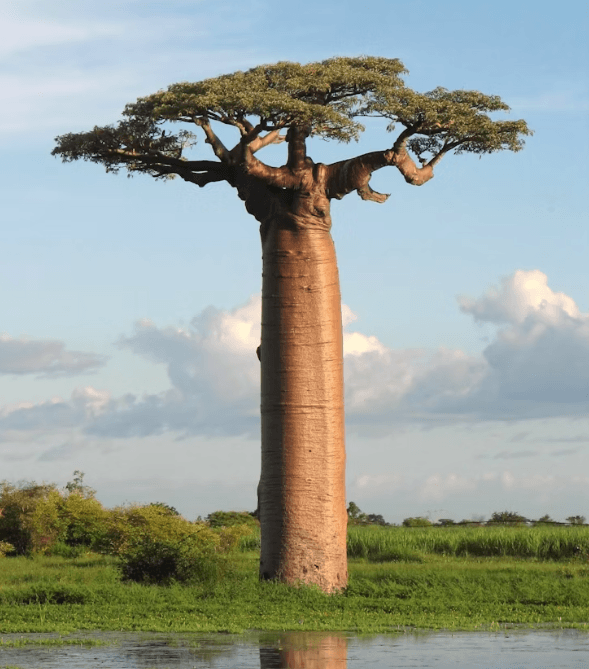


This article was automatically translated from the original Turkish version.
Scientific Name(s) | Adansonia digitata | ||||||||
|---|---|---|---|---|---|---|---|---|---|
Family | Malvaceae | ||||||||
Genus | Up to 20–25 meters | ||||||||
Trunk Diameter | 7–10 meters | ||||||||
Trunk | Thick, cylindrical, and sponge-like in structure. It stores thousands of liters of water during the rainy season. Its bark is fibrous and can regenerate when stripped. | ||||||||
Leaf | It is deciduous. Usually palmate with 5–7 segments. | ||||||||
The baobab tree is a long-lived species that naturally grows in the arid and semi-arid savannas of Africa. Known among local communities as the “tree of life,” the baobab holds central importance for both human livelihoods and environmental balance. Its trunk can store tens of thousands of liters of water, making it a critical resource during dry periods for both the ecosystem and local communities. Due to this characteristic, the baobab is regarded as one of the defining plant symbols of the African savanna.
The baobab is particularly the most well-known species of the genus Adansonia in the family Malvaceae. Its trunk diameter can exceed 10 meters in some individuals, and its height can reach 20 to 25 meters. This expansive trunk structure is supported by sponge-like tissues that facilitate water storage, enhancing the tree’s adaptation to arid climatic conditions.
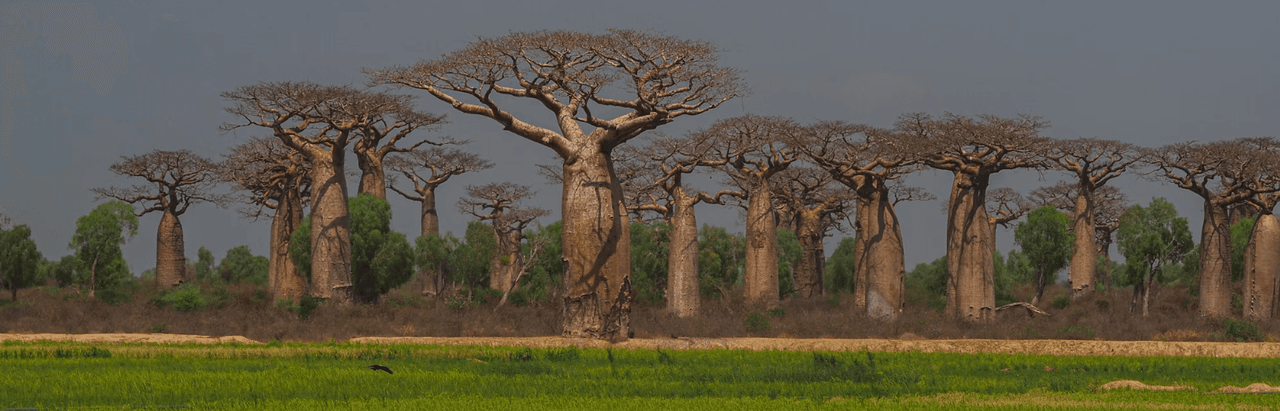
Baobab tree (Lesly Derksen, Unsplash)
The baobab’s trunk has a thick, cylindrical structure with high water storage capacity. Its root system spreads over a wide area to maximize water and mineral uptake. The leaves are palmate, consisting of five to seven lobes; this structural feature increases the surface area for photosynthesis while allowing the tree to shed its leaves during dry periods to minimize water loss.
The flowers are large, white, and fragrant. They open at night and are primarily pollinated by bats. This adaptation enhances the tree’s reproductive success in hot and arid climates. Its physical and biological traits are key factors supporting its long lifespan and exceptional water storage capacity.
The baobab is widely distributed across Africa, particularly in countries such as Sudan, Tanzania, Senegal, Chad, and Mozambique. As an indispensable component of arid and semi-arid savannas, it supports biodiversity in both flora and fauna. Trunk cavities provide shelter for birds, small mammals, and insects; leaf litter enriches soil mineral content and contributes to local cyclic ecosystem processes.
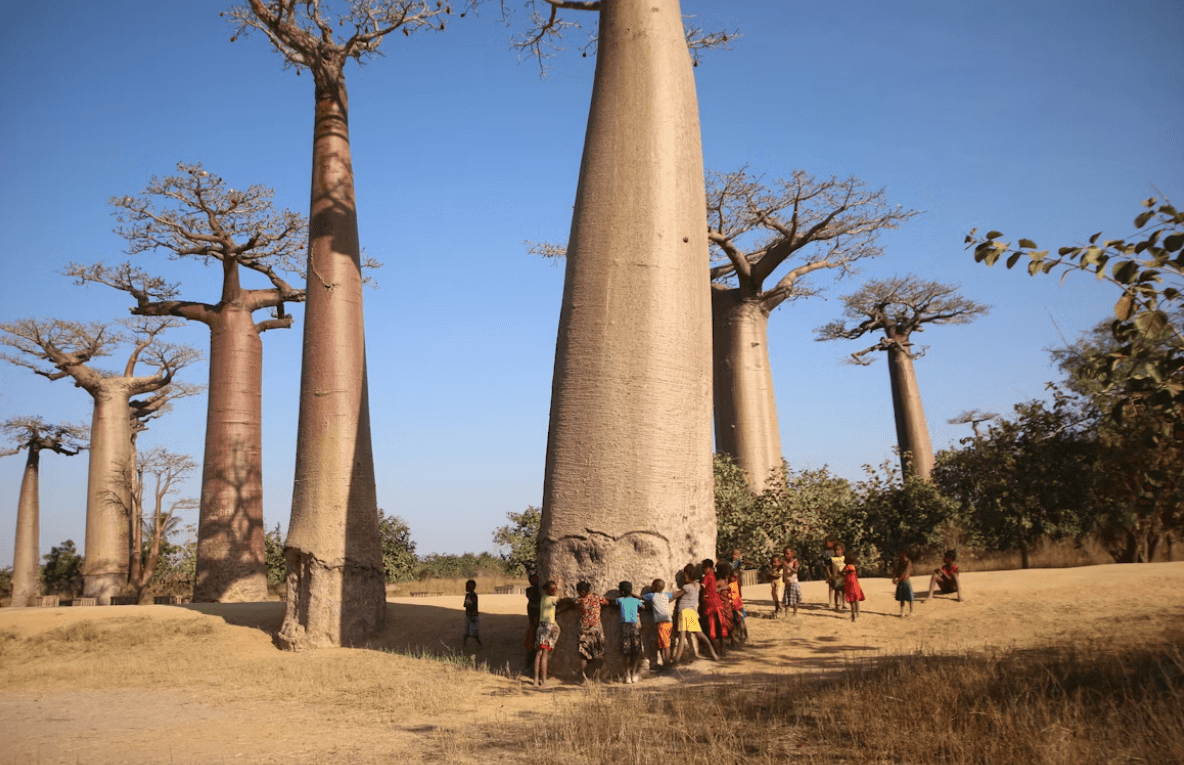
Baobab tree (Ignacio Garcia, Unsplash)
Climate change and increasing drought conditions have led to the death of some ancient baobab trees in Africa. This phenomenon is recognized as a critical threat, affecting interspecies interactions within the ecosystem as well as the economic and cultural uses by local populations.
Baobab fruit is notable for its high vitamin C content and strong antioxidant capacity. The fruit pulp is rich in potassium, calcium, magnesium, and dietary fiber, contributing to digestive health. The leaves are consumed as vegetables, while the seeds are roasted and used to prepare beverages similar to coffee.
In traditional medicine, baobab has been used for centuries due to its anti-inflammatory, antipyretic, and digestive-regulating properties. These attributes are now being incorporated into modern nutrition and health products, enabling the use of baobab fruit pulp and seed oil in functional foods and the cosmetics industry.
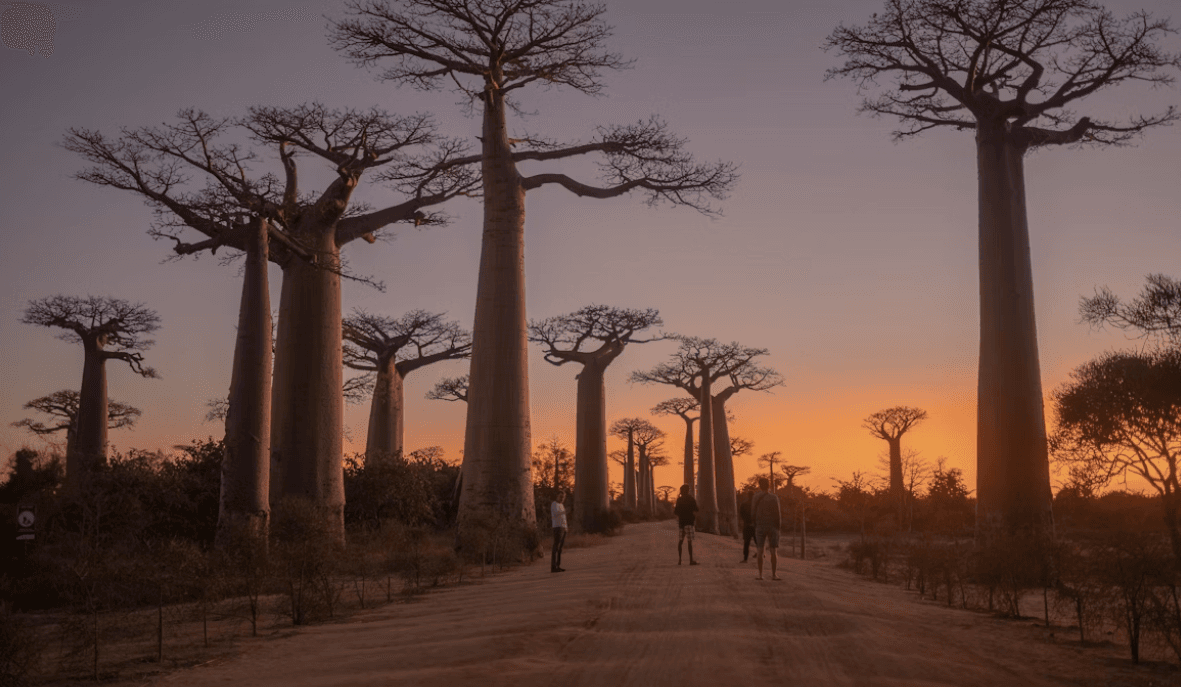
Baobab tree (Noah Grossenbacher, Unsplash)
In African societies, the baobab is more than just a tree—it is a historical and cultural symbol. In local beliefs, it is regarded as the “tree of ancestors,” and village squares or gathering places are typically situated around a baobab. Trunk cavities and branches are utilized as storage, shelter, or symbolic spaces for traditional practices.
In modern architecture and design, the baobab’s form has served as inspiration for aesthetic and sustainable design principles. Notable examples can be found in water parks and themed areas, where natural forms are integrated into contemporary structures.
Baobab fruit and its derivatives are used in both local and international economic activities. Fruit powder is valued as a functional ingredient in beverages, energy bars, and cosmetic products. Seed oils are rich in oleic acid and possess moisturizing and antioxidant properties. Leaves are consumed as vegetables, while trunk fibers are used in rope and net production.
Baobab cultivation diversifies livelihoods for local communities while contributing to ecosystem conservation. Sustainable production offers a model that simultaneously supports social and economic benefits alongside environmental protection.
The baobab is threatened by low seed germination rates, slow growth, and the impacts of climate change. Drought, rising temperatures, and habitat loss limit the development of young individuals. Deforestation and human activity are reducing its natural habitats.
Conservation efforts combine local community knowledge with modern ecological methods. Community-based conservation initiatives aim to ensure both the species’ continuity and the healthy functioning of the ecosystem.
Disclaimer: The content in this article is provided solely for general encyclopedic informational purposes. The information here should not be used for diagnosis, treatment, or medical advice. Always consult a physician or qualified healthcare professional before making decisions regarding health. The author and KÜRE Encyclopedia accept no responsibility for any consequences arising from the use of this information for diagnostic or therapeutic purposes.
Accessed November 26, 2025.
Accessed November 26, 2025.
Arslan, Hammet. "Afrika Topluluklarında Tabiat Kültü ve Tabii Unsurlara Atfedilen Güçler." Bartın Üniversitesi İslami İlimler Fakültesi Dergisi 4, no. 8 (2017): 1–14. Accessed October 24, 2025.
BBC Türkçe. "Bilim insanları antik 'hayat ağacı'nın gizemini çözdü." BBC Türkçe, August 2023. Accessed October 24, 2025.
Derksen, Lesly. "A group of bao trees in the middle of a field." Unsplash. Accessed October 24, 2025.
García, Ignacio. "A group of people standing in front of a group of tall trees." Unsplash. Accessed October 24, 2025.
Gebauer, Jens, K. El-Siddig, and Georg Ebert. "Baobab (Adansonia digitata L.): A Review on a Multipurpose Tree with Promising Future in the Sudan." European Journal of Horticultural Science 67, no. 4 (2002): 155–160. Accessed October 24, 2025.
Grossenbacher, Noah. "A group of people walking on a dirt road with tall trees with Avenue of the Baobabs in the background." Unsplash. Accessed October 24, 2025.
One Earth. "Species of the Week: African Baobab Tree." One Earth. Accessed October 24, 2025.
Please seems you've provided only a placeholder (`
https://www.oneearth.org/species-of-the-week-african-baobab-tree/
Wilson, Deshawn. "Brown tree trunk on green grass field under white clouds and blue sky during daytime." Unsplash. Accessed October 24, 2025.


Scientific Name(s) | Adansonia digitata | ||||||||
|---|---|---|---|---|---|---|---|---|---|
Family | Malvaceae | ||||||||
Genus | Up to 20–25 meters | ||||||||
Trunk Diameter | 7–10 meters | ||||||||
Trunk | Thick, cylindrical, and sponge-like in structure. It stores thousands of liters of water during the rainy season. Its bark is fibrous and can regenerate when stripped. | ||||||||
Leaf | It is deciduous. Usually palmate with 5–7 segments. | ||||||||
Morphological and Physiological Characteristics
Distribution and Ecological Importance
Nutritional Content and Health Benefits
Cultural and Social Significance
Economic Potential and Industrial Uses
Threats and Conservation Strategies