This article was automatically translated from the original Turkish version.
+2 More
Location | Altıparmak Village Türkiye Artvin Yusufeli District | ||||||||
|---|---|---|---|---|---|---|---|---|---|
Year of Construction | 10th century | ||||||||
Patron | King David Magistros of the Bagratids | ||||||||
Architectural Plan | Three-nave basilica plan | ||||||||
Current Condition | Used as a mosque | ||||||||
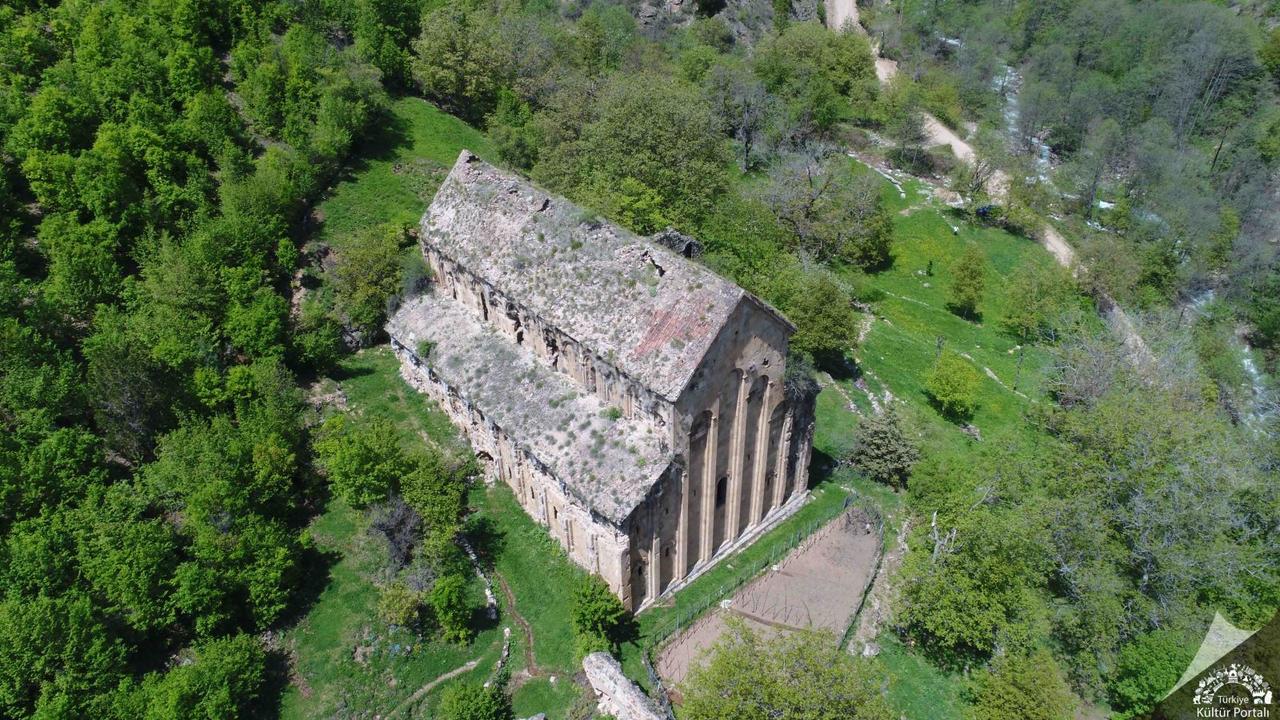
Barhal Church is one of the significant religious structures of medieval Georgian architecture, located in the village of Barhal (Altıparmak), Yusufeli district, Artvin province, Türkiye. The church, currently used as a mosque, was constructed in the 10th century within a monastery complex during the reign of the Georgian Bagratid dynasty. It stands as one of the important examples of cultural heritage in the region due to its architectural features, decorations, and well-preserved structure.

Barhal Church (Culture Portal)
The church was commissioned in the 10th century by King David Magistros during the period of the Georgian Bagratids. Built in accordance with the Bagratids’ religious and cultural expansion policies in the Tao-Klarceti region, it was dedicated to Saint John. Of the original monastery buildings, only the church has survived to the present day. After the region came under Ottoman rule in the 16th century, the structure was converted into a mosque and has continued to serve in this capacity ever since.

Barhal Church (Culture Portal)
Barhal Church was constructed in a basilical plan with a rectangular form. The building extends in an east-west orientation and exhibits a three-aisle basilica layout. The central nave is wider and taller than the side aisles. A small tower rises above the narthex. Regularly cut stone was used as the primary building material, while the walls were constructed using the rubble-fill technique.
Three apses are located on the eastern façade, with the central apse being the largest. The roof of the church is wooden. Inside the interior, arches and columns serve as supporting elements. Although much of the interior decoration has been largely destroyed, the architectural plastic elements remain striking.
After its conversion into a mosque, certain architectural elements were preserved, while frescoes were covered with plaster. Due to its continued use as a mosque, the structure has been largely preserved. In recent years, the General Directorate of Foundations has carried out various maintenance and repair works, strengthening the roof and interior space. However, the majority of the original frescoes and decorative elements have not survived to the present day.
Aydın, Ekrem. “Barhal Kilisesi.” *Türkiye Turizm Ansiklopedisi, 2019.* Accessed August 16, 2025.
T.C. Karadeniz Regional Development Agency. "Barhal (Altıparmak) Church." *Karadeniz.gov.* Accessed August 16, 2025. https://karadeniz.gov.tr/barhal-altiparmak-kilisesi/.
T.C. Ministry of Culture and Tourism. "Barhal Kilisesi." *Kültür Portalı.* Accessed August 16, 2025.
T.C. Yusufeli Kaymakamlığı. "Barhal Kilisesi." Accessed August 16, 2025. http://www.yusufeli.gov.tr/barhal-kilisesi.

Location | Altıparmak Village Türkiye Artvin Yusufeli District | ||||||||
|---|---|---|---|---|---|---|---|---|---|
Year of Construction | 10th century | ||||||||
Patron | King David Magistros of the Bagratids | ||||||||
Architectural Plan | Three-nave basilica plan | ||||||||
Current Condition | Used as a mosque | ||||||||
History
Architectural Features
Restoration Efforts