


This article was automatically translated from the original Turkish version.
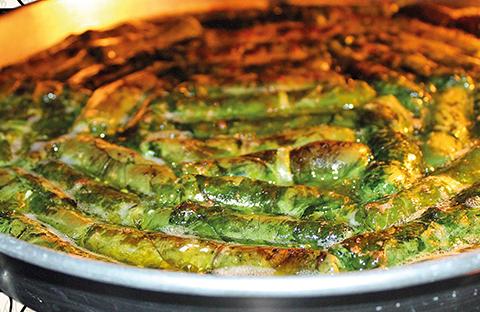
Bayburt Lor Dolması
Preparation Time | Approximately 2 hours | ||||||||
|---|---|---|---|---|---|---|---|---|---|
Cooking Method(s) | Baking | ||||||||
Presentation Format | Served hot | ||||||||
Cultural Role | A winter dish consumed on special occasions | ||||||||
Main Ingredients | Beet leaves, lor cheese, bulgur | ||||||||
Bayburt Lor Dolması is a traditional dish unique to Bayburt Province in Türkiye’s Eastern Black Sea Region, prepared with lor cheese and wild spinach (evelik) leaves. This dish emerged as a reflection of the region’s rich pastoral culture and natural vegetation. Particularly consumed during winter months, it is an important component of Bayburt cuisine due to its nutritious content and distinctive flavor.
Bayburt Lor Dolması reflects the region’s agricultural and livestock practices as expressed in its culinary traditions. The evelik herb is abundant in Bayburt’s natural flora, while lor cheese is a product of local dairy production. This dish is especially favored during winter months to meet energy and nutritional needs. It also holds a place on family tables during traditional meals and special occasions.
Bayburt’s high-altitude geography and rich pastures have facilitated the development of livestock farming, leading to increased production of dairy products such as lor cheese, butter, and kaymak. The evelik herb (Rumex patientia) is widely found in the region’s natural vegetation and imparts a unique flavor to the dish.
Bayburt Lor Dolması was officially registered with a geographical indication by the Turkish Patent and Trademark Office in 2017. This registration aims to preserve the dish’s traditional recipe and production methods. The geographical indication also contributes to promoting Bayburt’s cultural heritage.
Today, Bayburt Lor Dolması attracts interest from both local communities and those engaged in gastronomic tourism. Through initiatives by the Bayburt Women’s Mutual Aid and Solidarity Association, the dish is produced via cooperatives and sold throughout Türkiye. These efforts contribute to both promoting the dish and supporting the local economy.

Bayburt Lor Dolması. Culture Portal. Accessed June 1, 2025.
Bayburt's registered delicacy 'lor dolması' is being branded. Anadolu Ajansı. Accessed June 1, 2025.
The flavor associated with Bayburt: Lor dolması. Ministry of Agriculture and Forestry of the Republic of Turkey. Accessed June 1, 2025.

Bayburt Lor Dolması
Preparation Time | Approximately 2 hours | ||||||||
|---|---|---|---|---|---|---|---|---|---|
Cooking Method(s) | Baking | ||||||||
Presentation Format | Served hot | ||||||||
Cultural Role | A winter dish consumed on special occasions | ||||||||
Main Ingredients | Beet leaves, lor cheese, bulgur | ||||||||
No Discussion Added Yet
Start discussion for "Bayburt Lor Dolması" article
History and Cultural Context
Geographical Indication and Registration
Contemporary Significance