


This article was automatically translated from the original Turkish version.
+2 More
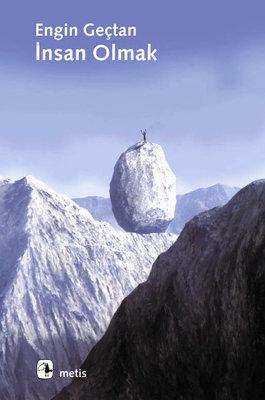
Author(s) | Engin Geçtan | ||||||||
|---|---|---|---|---|---|---|---|---|---|
Publisher(s) | Metis Yayınları | ||||||||
First Publication Year | 1983 | ||||||||
Number of Pages | 192 | ||||||||
Genre | Essay Psychology | ||||||||
Engin Geçtan’s work İnsan Olmak evaluates the individual’s psychological structure, social relationships, and connections with life through various psychological theories. The book examines the relationship between the individual’s inner world and the external world, analyzing the impacts of childhood experiences, defense mechanisms, and individual and social alienation.
The work has the structure of an essay belonging to the popular psychology genre and does not contain fiction. Although the sections appear independent, they maintain conceptual coherence. Academic terminology is rarely used; instead, a simple and direct language is preferred. This characteristic enables the book to reach a broader readership.
A simple and comprehensible Turkish is employed throughout the text. The explanation of psychological concepts through everyday life examples creates an effect that popularizes the text without distancing it from scientific rigor. While the narrative adopts a personal tone, the overall style remains explanatory and inquisitive.
İnsan Olmak is a work that reflects the influences of various psychological schools. In this context:
The book analyzes the mutual interactions between the individual’s psychological structure and the society in which they live. Analyses at the social level are presented through themes such as family structure, cultural values, the education system, and the effects of modern life on the individual. The pressure of social norms, role-playing behaviors, and alienation are discussed in detail.
The work can be associated with key concepts of existential philosophy. In particular, it draws parallels with the views of thinkers such as Jean-Paul Sartre, Rollo May, and Erich Fromm regarding human nature. Concepts such as meaning, freedom, responsibility, death, and reality are approached from a philosophical perspective.
İnsan Olmak is among the influential works in Türkiye that have successfully brought psychological knowledge beyond academic circles to a wider audience. By simplifying theoretical content for presentation, the book has become a functional resource for psychology students, professionals, and general readers alike. Moreover, it is regarded as a high-quality example within Turkish-language psychological literature.
Geçtan, Engin. İnsan Olmak. İstanbul: Metis Yayınları, June 12, 2023.

Author(s) | Engin Geçtan | ||||||||
|---|---|---|---|---|---|---|---|---|---|
Publisher(s) | Metis Yayınları | ||||||||
First Publication Year | 1983 | ||||||||
Number of Pages | 192 | ||||||||
Genre | Essay Psychology | ||||||||
Structural Features and Narrative Style
Psychological and Theoretical Background
Social Context
Philosophical Foundations
Academic and Cultural Significance of the Work