

This article was automatically translated from the original Turkish version.
+2 More
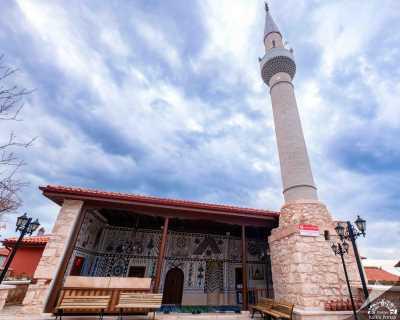
The Belenardıç Mosque, located in the Belenardıç Neighborhood of Pamukkale District in Denizli, is one of the notable examples of 19th-century Ottoman provincial architecture. Its inscription states that it was built in 1884 by Halil Ağa. The structure, one of fifteen painted mosques in the region, features a near-square rectangular plan, a wooden ceiling, ink drawings executed with root dye, and original architectural elements, carrying both religious and cultural heritage value. It was officially registered as a historical monument in 1996 and was restored faithfully to its original form by Pamukkale Municipality between 2020 and 2021, after which it was reopened for worship.
The mosque is situated in the center of Belenardıç Neighborhood, 41 kilometers from the city center of Denizli. The neighborhood was historically known as Torapan and dates back to the 16th century. Positioned in the village square, the mosque serves as the focal point of both religious and social life.
The structure has rubble stone walls, wooden supports, and a wooden ceiling. The prayer hall adjoins the rear congregation area to the north, while the minaret is located at the western end. Originally covered with a earthen roof, it was later renovated with a broken roof and tiled cladding. Entry to the prayer hall is through a round-arched rectangular doorway. The walls are plastered and divided horizontally into two sections by zigzag-patterned bands; these sections are further subdivided vertically into panels adorned with botanical and geometric motifs.
Colorful ink drawings executed with root dye in the prayer hall and rear congregation area are particularly striking. The panels are painted in green, brown, black, and blue tones, containing stylized plant imagery, calligraphic bands, and religious symbols. The names of the four caliphs, depictions of Paradise and Hell, a balance scale, and a representation of the Selimiye Mosque in Edirne are key components of the decorative scheme. Decorative elements are also present in the women’s section.
The ink drawings in the mosque consist of botanical motifs, geometric patterns, and calligraphic panels.
Fine examples of woodwork are visible on the ceiling bosses, beams, and column capitals.
Although the Belenardıç Mosque was registered as a historical monument in 1996, it remained without maintenance for many years. In 2019, a protocol signed between Pamukkale Municipality and the Provincial Muftiate initiated the restoration process, which was implemented in 2020. During restoration, survey, restitution, and conservation projects were approved; wall decorations were cleaned and reinforced using conservation techniques; the wooden ceiling and supports were repaired; the minaret was strengthened; and the garden was landscaped.
Artifacts attributed to Halil Ağa are preserved on the eastern wall of the rear congregation area on the upper floor:
Following the completion of restoration in 2021, the mosque began welcoming its first tourist groups in 2022 and has been incorporated into regional cultural tourism routes. As one of only two painted mosques in Denizli, it attracts both local and international visitors due to its unique ink artwork.
The Belenardıç Mosque reflects the artistic sensibility of 19th-century Ottoman provincial mosques through its architecture and decorative program. The use of root dye and religious imagery in the ink drawings provides insight into the aesthetic values of the period, while the personal artifacts belonging to Halil Ağa reinforce the building’s individual historical narrative.
Pamukkale Belediyesi. "Tarihi Belenardıç Camisi Ziyaretçilerini Ağırlamaya Başladı." Accessed August 16, 2025. https://www.pamukkale.bel.tr/h-2461-tarihi-belenardic-camisi-ziyaretcilerini-agirlamaya-basladi.
Pamukkale Municipality. (2020, October 11). *Restoration begins at the historic Belenardıç Mosque in Denizli*. Anadolu Ajansı. Accessed https://www.aa.com.tr/tr/turkiye/denizlideki-tarihi-belenardic-camisinde-restorasyon-basliyor/2002585
Pamukkale Municipality. (2021, October 8). *Pamukkale Belediyesi tarihe sahip çıkıyor*. Pamukkale Municipality. Accessed https://www.pamukkale.bel.tr/h-2279-pamukkale-belediyesi-tarihe-sahip-cikiyor
Pamukkale Municipality. 2021. "Belenardıç Camii Restorasyonu Sürüyor." Pamukkale Belediyesi. Accessed August 16, 2025. https://www.pamukkale.bel.tr/h-2090-belenardic-cami-restorasyonu-suruyor.
“Belenardıç Köyü Camii – Denizli.” Kültür Portalı (T.C. Kültür ve Turizm Bakanlığı). Accessed August 16, 2025. https://beta.kulturportali.gov.tr/turkiye/denizli/gezilecekyer/belenardic-koyu-camii-.
Location and Environmental Characteristics
Architectural Features
Interior Space and Decorative Program
Ink Drawing Program
Woodwork
Historical Development and Restoration Works
Historical Artifacts
Opening and Role in Tourism
Cultural and Religious Significance