


This article was automatically translated from the original Turkish version.
+1 More
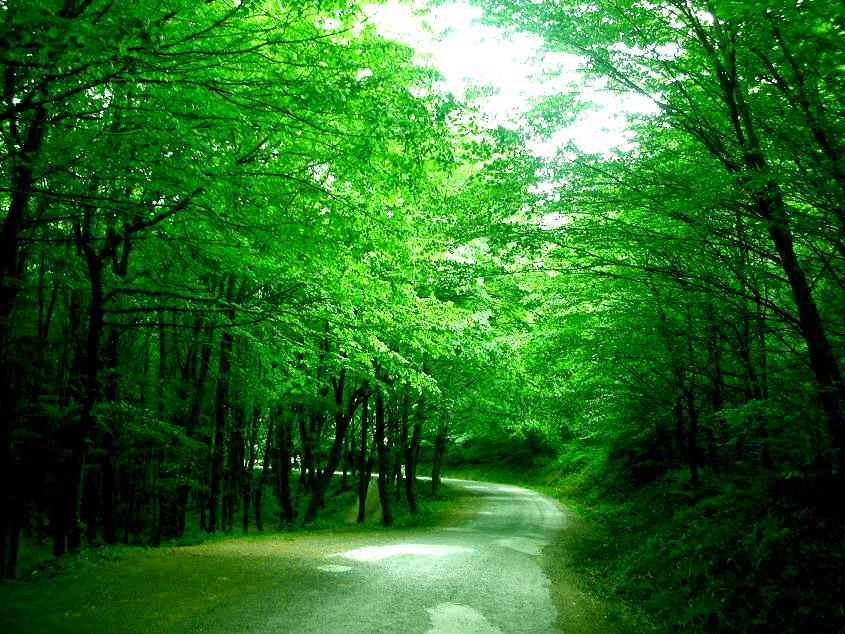
Location | Istanbul Türkiye | ||||||||
|---|---|---|---|---|---|---|---|---|---|
Coordinate(s) | 41°11′41″N 28°57′5″E | ||||||||
Elevation(s) | 135 m | ||||||||
Area(s) | 54.42 km2 | ||||||||
Responsible | Istanbul Forest Regional Directorate | ||||||||
Status | Publicly accessible | ||||||||
Belgrade Forest is a natural area with its original vegetation cover, located in the Europe side of Istanbul, in the east section of the Çatalca Peninsula, preserving its historical significance. During the Byzantine and Ottoman periods, this region was of importance for drinking water supply. Today, it is primarily used for recreation and daily leisure. Due to its geographic location, climatic transition characteristics, water sources, and historical dams, Belgrad Forest is regarded as an area studied within the contexts of both natural conservation policies and urbanization processes.
Belgrad Forest is a wooded area with natural forest cover, situated at the easternmost point of Istanbul’s European side in the Çatalca Peninsula. The region is bordered by the Bosphorus to the east and the Black Sea to the north, giving it a unique ecological and environmental position. This forested area, which was one of the main drinking water sources for Istanbul during the Byzantine and Ottoman periods, is now used mainly for recreation and walking due to its limited contribution to the city’s current water supply.

【1】
The historical development of Belgrad Forest holds significant importance both in terms of Ottoman water engineering heritage and Istanbul’s urbanization dynamics. The forest derives its name from Belgrad Village, established after the 1521 Serbian Campaign of Kanuni Sultan Süleyman, when Serbs from Belgrade were settled in the area. This settlement, founded in the northeastern part of the forest, persisted for years with a lifestyle closely tied to the forest environment. However, in the early 18th century, the settlement was relocated to another region due to concerns that its inhabitants were polluting local water sources, marking one of the earliest administrative interventions aimed at protecting the forest area.
During the Ottoman Empire, Belgrad Forest played a key role in supplying clean drinking water to Istanbul and surrounding settlements. To this end, streams flowing through the forest were harnessed through the construction of aqueducts, dams, and distribution systems. The water structures built especially between the 16th and 19th centuries reflect the engineering understanding of the period and the central administration’s mechanisms for controlling water resources. Some sources also note the involvement of Mimar Sinan and other leading architects and engineers of the time in the construction of these structures.
Due to its location in northern Istanbul, Belgrad Forest lies under the influence of the Black Sea climate; however, it also occupies a transitional zone between Mediterranean and continental climate types, giving it a distinct microclimate. This climatic transition manifests through high humidity levels, abundant rainfall, and moderate average temperatures throughout the year. Average annual temperatures range between 13–14°C, while annual precipitation can exceed 1000 mm. This high level of moisture and rainfall enables the forest to sustain a rich and diverse vegetation cover.
In terms of vegetation, Belgrad Forest presents a typical example of a deciduous broadleaf forest formation. Dominant tree species in the forest include sessile oak (Quercus petraea), hornbeam (Carpinus betulus), chestnut (Castanea sativa), and lime tree (Tilia argentea). In addition, species such as oriental beech (Fagus orientalis) and field maple (Acer campestre) are found in moist areas. The understory is characterized by shrub formations, herbaceous plants, and shade-tolerant species such as Pontic rhododendron (Rhododendron ponticum).
The floristic composition of the forest varies significantly with seasonal cycles. A rich flowering period is observed in spring and summer months, while leaf fall in autumn creates habitats and shelter for different microfauna within the ecosystem. This cycle deepens not only the forest’s only plant diversity but also its impact on wildlife. Moreover, the forest’s complex structure serves as an important natural laboratory for observing the effects of climate change.
The region is a significant natural area notable for its ecological importance due to its rich ecosystem structure. Belgrad Forest supports a wide variety of birds, reptiles, mammals, and invertebrates through the diverse habitat species it harbors. Commonly observed bird species include the sparrowhawk, song thrush, magpie, and various raptors. Mammal populations include fox, wild boar, squirrel, badger, and occasionally the wolf. Additionally, certain reptile and amphibian species contribute to the ecological balance of the region.
Current conservation policies and seasonal av restrictions play a decisive role in ensuring the sustainability of wildlife. These protective measures aim to safeguard the breeding and living habitats of species considered endangered or ecologically sensitive. Furthermore, certain sections of the forest are closed to human activity to prevent disturbance to wildlife, and ecosystem health is regularly assessed through scientific monitoring programs.
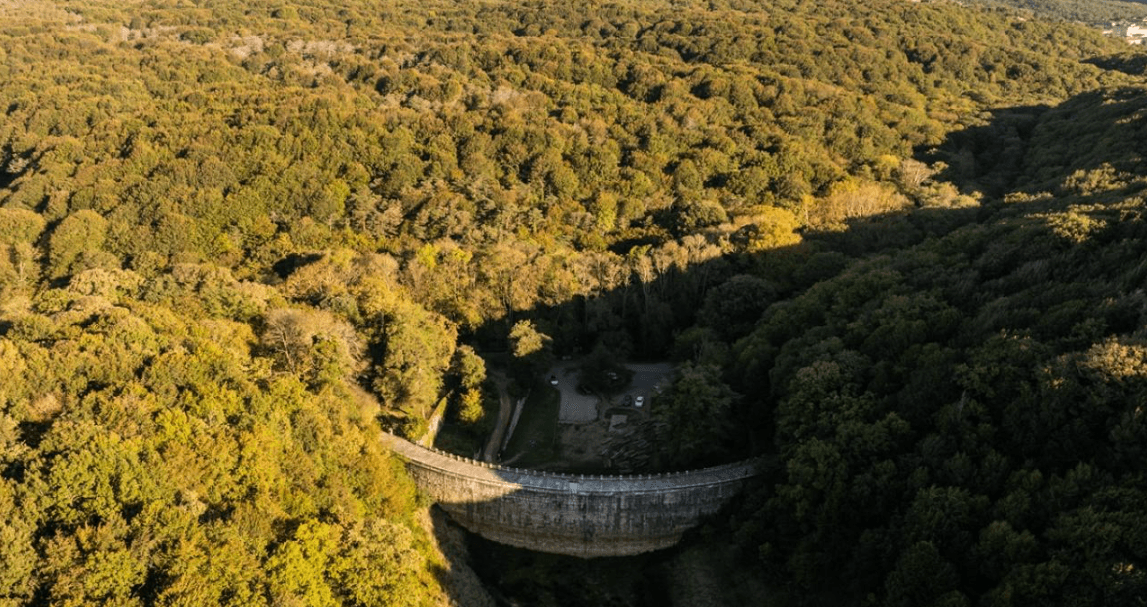
A Photograph from Belgrad Forest
【2】
Belgrad Forest has played a vital role in Istanbul’s historical development as a natural area rich in water resources. Within its boundaries, numerous springs, streams, and natural watercourses are found. These waterways were systematically utilized during the Ottoman period to meet Istanbul’s drinking water needs. The construction of water infrastructure, initiated during the reign of Kanuni Sultan Süleyman in the 16th century, evolved over time into engineering systems of remarkable sophistication and scale.
Six historical water dams have survived in the forest to the present day. Among the most well-known are the Topuzlu Dam (1750), Valide Dam (1796), and Yeni Dam (1839). These dams were constructed to store surface and groundwater and embody the aesthetic and functional characteristics of Ottoman water architecture. Built using Stone masonry and arch techniques, these structures are regarded not only as functional water systems but also as reflections of the urban planning concepts of their time.
Today, these historical dams are preserved as cultural heritage elements, and some retain partial functionality. Moreover, as important documents for understanding Istanbul’s water history and traditional infrastructure systems, these structures attract tourism interest alongside documentation and preservation efforts.
【3】
Today, Belgrad Forest functions as an important urban green space in Istanbul, meeting the city’s need for recreational areas connected with nature. After being declared a recreational area in 1956, various arrangements have been made to facilitate public use throughout the forest. Within this framework, numerous open-air activities open to individual and group participation are conducted.
Walking and Running:
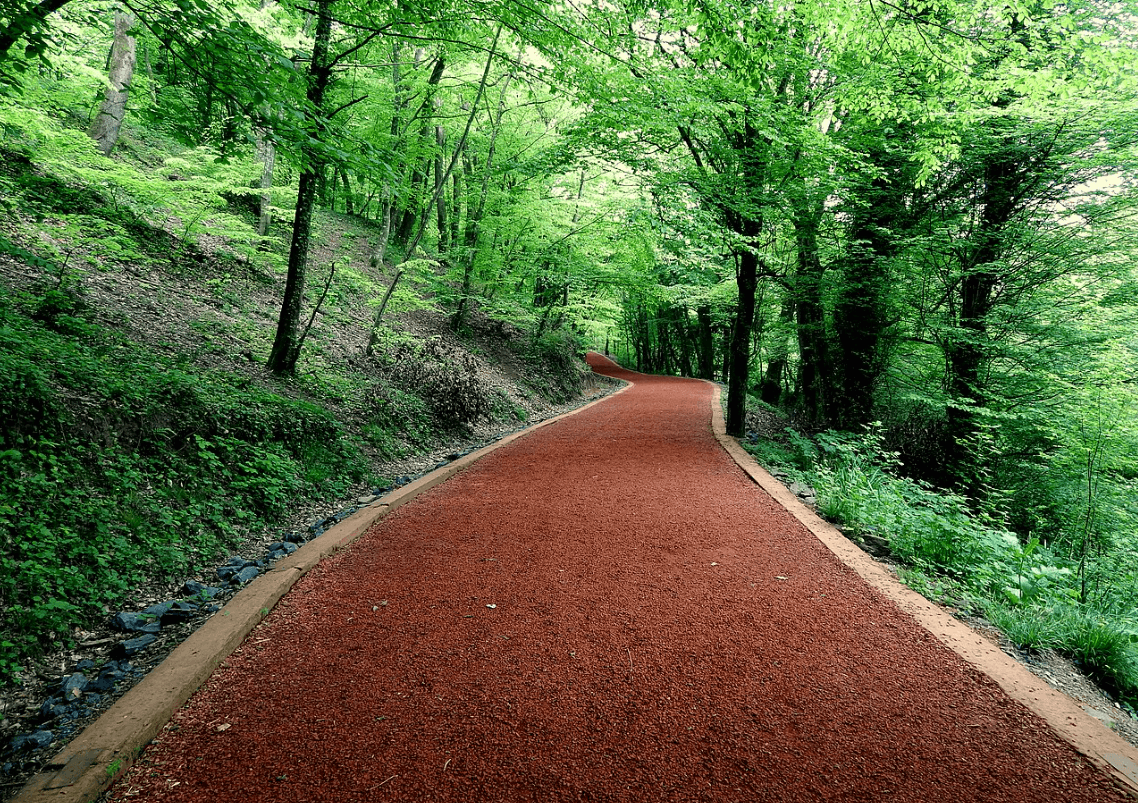
A approximately 6-kilometer trail around Neşet Stream is regularly used by walkers and runners. The trail is surrounded by dense forest cover and is designed to suit natural ground conditions.
Bicycle Use:
Gravel roads and gently sloping routes within the forest are preferred by bicycle users. Sections between Bahçeköy and Kemerburgaz are among the routes designated for cycling.
Picnicking and Day Use:
Natural parks within the forest boundaries—such as Irmak, Kömürcübent, Kirazlıbent, and Mehmet Akif Ersoy—are designated for picnicking and day-use activities. These areas provide basic services such as seating groups, waste collection systems, and parking facilities.
Motorized and Equestrian Activities:
ATV tours and horseback riding excursions are conducted in controlled conditions in certain parts of the forest. These activities are carried out along designated trails and at specific hour intervals.
Nature Photography and Observation:
The region’s biological diversity and seasonal variability offer numerous opportunities for flora and fauna observation. Birdwatching and documentation of plant species are prominent activities in this context.
Children’s and Sports Areas:
Some natural parks feature child game areas and basketball, volleyball and other sports facilities suitable for family recreation. These areas are considered social usage zones where families can spend time together.
All these activities are monitored within the framework of the forest’s carrying capacity, principles of maintaining natural balance, and relevant legislation regulations. In this regard, Belgrad Forest represents a disciplined model both for natural source management and urban green space utilization.
【4】
Karadeniz, Selami, and Ayşe Yıldırım. "Kent Ormanlarında Rekreasyonel Kullanım ve Doğal Denge: Belgrad Ormanı Örneği." Çevre ve Şehircilik Dergisi 23, no. 2 (2019): 75–90.
Koçu, Reşat Ekrem. "Belgradcık Köyü." İstanbul Ansiklopedisi, Cilt 5, 2476. İstanbul: Türkiye Turing ve Otomobil Kurumu Yayınları, 1968.
Kırca, Simay, Seyit Ali Kahraman, Nurhan Atasoy, and Alper Hüseyin Çolak. Belgrad Ormanı Tarihçesi. İstanbul: İstanbul Kalkınma Ajansı, 2013. PDF erişimi
Sarıyer Kaymakamlığı Governorship, "Belgrad Ormanı," Accessed April 17, 2025. http://www.sariyer.gov.tr/belgrad-ormani.
Turoğlu, Hayati. "Belgrad Ormanı’nın Klimatolojik Özellikleri ve Mikroklima Potansiyeli." İstanbul Üniversitesi Coğrafya Dergisi 38 (2020): 77–94.
Yücel, Mustafa, and Ekin Demir. "Belgrad Ormanı’nın Biyolojik Çeşitliliği ve Ekosistem Hizmetleri Açısından Önemi." İstanbul Üniversitesi Orman Fakültesi Dergisi 68, no. 1 (2018): 45–62.
Yücel, Mustafa. "Osmanlı Dönemi İstanbul Su Mimarisi: Belgrad Ormanı’ndaki Bentler ve Su Yapıları." İstanbul Teknik Üniversitesi Mimarlık Fakültesi Dergisi 15, no. 2 (2019): 112–129.
Çepel, Nüzhet. Ekosistem Ekolojisi ve Türkiye Ormanları. İstanbul: İÜ Orman Fakültesi Yayınları, 1995.
Öztürk, Said. İstanbul’un Tarihi Su Yolları. İstanbul: İSKİ Yayınları, 2006.
İstanbul Büyükşehir Belediyesi. Belgrad Ormanı ve Tarihî Bentler Envanteri. İstanbul: İBB Kültür A.Ş. Yayınları, 2020.
İstanbul Büyükşehir Belediyesi. İstanbul’un Doğal Alanları Envanteri: Belgrad Ormanı Bölgesi. İstanbul: İBB Çevre Koruma Müdürlüğü, 2020.
İstanbul Orman Bölge Müdürlüğü. Belgrad Ormanı Floristik Raporu. İstanbul: T.C. Tarım ve Orman Bakanlığı Yayınları, 2020.
İstanbul Orman Bölge Müdürlüğü. Belgrad Ormanı ve Koruma Faaliyetleri Raporu. İstanbul: T.C. Tarım ve Orman Bakanlığı Yayınları, 2021.
İstanbul Orman Bölge Müdürlüğü. Orman Amenajman Planı: Belgrad Ormanı 2016–2035. İstanbul: T.C. Tarım ve Orman Bakanlığı Yayınları, 2016.
[1]
OpenStreetMap. “Belgrad Forest.” Accessed 17 April 2025. https://www.openstreetmap.org/#map=11/41.1083/28.9318
[2]
TRT News.“From the Ottoman Empire’s ‘Flowing Water’ Structures in the Belgrade Forests: Yenibent.” TRT News, 6 November 2024.
[3]
Anadolu Agency. “From the Waterworks of the Ottoman Empire in the Belgrade Forests: Yenibent.” Anadolu Agency, 7 August 2023. https://www.aa.com.tr/tr/kultur/osmanlinin-belgrad-ormanlarindaki-akan-su-eserlerinden-yenibent/3385717
[4]
Konhaber. “Management of Belgrade Forest Taken from IBB: Statement from the Ministry.” Konhaber, 23 December 2024.


Location | Istanbul Türkiye | ||||||||
|---|---|---|---|---|---|---|---|---|---|
Coordinate(s) | 41°11′41″N 28°57′5″E | ||||||||
Elevation(s) | 135 m | ||||||||
Area(s) | 54.42 km2 | ||||||||
Responsible | Istanbul Forest Regional Directorate | ||||||||
Status | Publicly accessible | ||||||||
Location and Natural Boundaries
Historical Background
Climate and Vegetation
Wildlife
Water Resources and Historical Dams
Current Activities