


This article was automatically translated from the original Turkish version.
+2 More
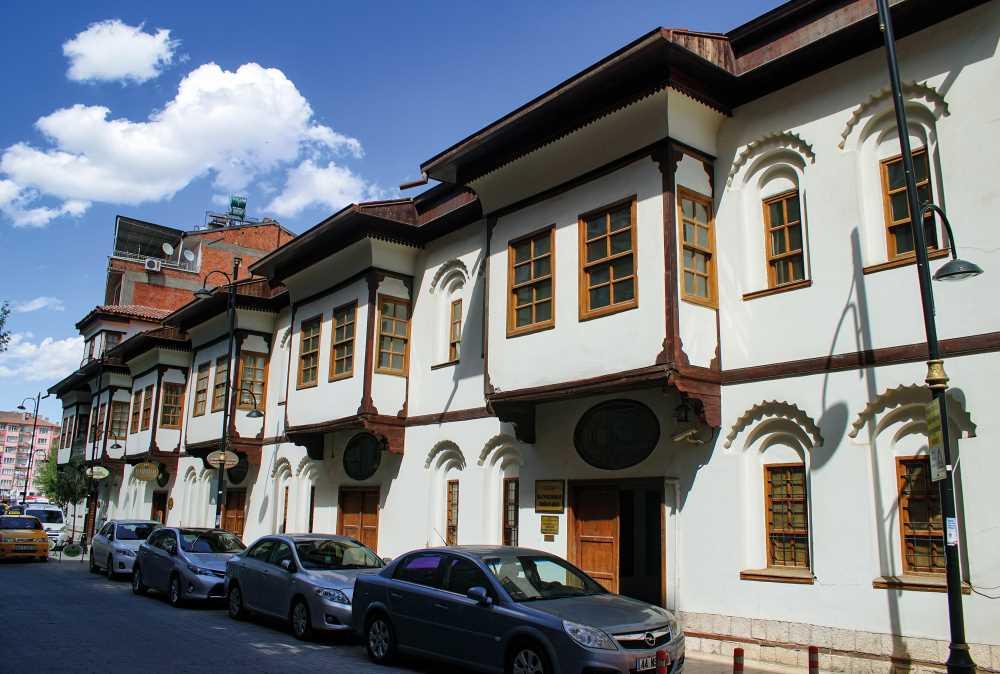
Beşkonaklar Ethnography Museum
Location | Kernek Neighborhood Beşkonaklar Street | ||||||||
|---|---|---|---|---|---|---|---|---|---|
Founding Date | 08 August 2008 | ||||||||
Founder | Hacı Sait Efendi (Turfanda) and his siblings | ||||||||
Architectural Feature | Cumbalı, cihannümalı, traditional mansions made of adobe and wood mixture | ||||||||
Registration | 1978, Immovable Cultural Property | ||||||||
Beşkonaklar Etnografya Müzesi ve Geleneksel Malatya Evi is a cultural structure located in the Battalgazi district of Malatya, representing an example of traditional civil architecture and housing ethnographic artifacts. This group of mansions was constructed in the early 20th century by Hacı Sait Efendi (Turfanda) and his siblings from prominent Malatya families and was opened to the public as a museum in 2008.

Beşkonaklar were built approximately 120 years ago by Hacı Sait Efendi (Turfanda) and his siblings, among the leading families of Malatya. Initially, a cihannümali mansion with an upper floor open in all directions was constructed, followed by the addition of four adjacent mansions to form a group of five. The complex was registered as an immovable cultural heritage site in 1978. Restored by the Ministry of Culture and Tourism between 2007 and 2008, the mansions were opened to the public on 8 August 2008 under the name Beşkonaklar Etnografya Müzesi. Additional exhibition and arrangement modifications were carried out in 2015.
The structure sustained damage during the earthquake centered in Kahramanmaraş on 6 February 2023 and was temporarily closed to visitors for restoration works.

Beşkonaklar Etnografya Müzesi (T.C. Malatya Valiliği)
Beşkonaklar are two-story buildings constructed on cut-stone foundations with adobe walls. The structural beams, joinery, windows, doors, ceiling beams, flooring, and ceilings were crafted using traditional woodwork. Doors are double-leaved and feature a wind-ventilation section above. Windows are gabled and latticed. The entrance opens into a spacious sofah known as hayat or taşlık, which leads to the kitchen, pantry, and sitting rooms. The upper floors contain rooms known as kış damı, used during winter, as well as spaces with cedar ceilings, ceiling beams, and built-in cupboards.
In some of the mansions, streams flow through the courtyards, and stone-paved paths and passageways once used by carriages are notable. The layout of the buildings was shaped according to Malatya’s local climate and lifestyle.
Administrative functions are carried out in Building No. 3, while Mansions No. 13 and No. 15 are open to visitors. Building No. 13 is arranged for consultation, security, and entry. Its upper floor features reconstructions of a traditional Malatya home. From there, visitors proceed to the exhibition halls on the upper floor of Building No. 15. Stone artifacts from the Seljuk and Ottoman periods are displayed in the courtyards of the mansions.

İç Mekan (Kültür Portalı)
Designed based on urban life in the early 1900s, the scene depicts the master of the house drinking coffee while a guest plays the ud. A charcoal brazier stands in the center. A clock and a gas lamp are placed on a cabinet with drawers.

Baş Oda (Kültür Portalı)
This room, where women gathered and performed daily tasks, features a scene of a grandmother braiding her granddaughter’s hair while holding a baby. Elements such as a cradle, ceiling beam, and sewing machine are included.
The stove features a hood, with shelves on either side for storing pots and utensils. Dried vegetables hang from the ceiling. Grains are stored in a Zahire chest. A child eats around a large tray while a woman stirs soup.
Walls display tools such as sieves, a yogurt strainer, a teşt, and cauldrons. Products like grape molasses, pickles, and oil are stored in earthenware jars. A scene depicting yogurt fermentation is also presented.
The museum features six thematic exhibition groups:
Traditional Handicrafts: Weaving looms and examples of fabric printing.
Lighting and Locking Systems: Gas lamps, seals, and keys.
Kitchen Utensils: Pots, trays, jugs, and grinding stones.
Women’s Clothing and Accessories: Regional attire, jewelry, and headwear.
Men’s Clothing and Accessories: Şalvar trousers, pocket watches, and accessories.
Weapons: Firearms, swords, and daggers.

Silahlar T.C. Malatya Valiliği)
Address: Beşkonaklar Street, Kernek Neighborhood, Malatya
Email:
Phone:
0422 321 3006
0422 324 9898
Beş Konaklar Ethnography Museum and Traditional Malatya House. Ministry of Culture and Tourism of the Republic of Türkiye. Accessed May 5, 2025.
“Beş Konaklar.” Kültür Portalı. Accessed May 5, 2025.
“Beşkonaklar Etnografya Müzesi ve Geleneksel Malatya Evi.” Malatya Valiliği. Accessed May 5, 2025.
“Malatya Beşkonaklar Etnografya Müzesi ve Geleneksel Malatya Evi.” Türk Müzeler Portalı. Accessed May 5, 2025.

Beşkonaklar Ethnography Museum
Location | Kernek Neighborhood Beşkonaklar Street | ||||||||
|---|---|---|---|---|---|---|---|---|---|
Founding Date | 08 August 2008 | ||||||||
Founder | Hacı Sait Efendi (Turfanda) and his siblings | ||||||||
Architectural Feature | Cumbalı, cihannümalı, traditional mansions made of adobe and wood mixture | ||||||||
Registration | 1978, Immovable Cultural Property | ||||||||
No Discussion Added Yet
Start discussion for "Beşkonaklar Ethnography Museum and Traditional Malatya House" article
History
Architectural Features
Museum Layout and Functions
Thematic Reconstructions
Main Room (Male Guest Room)
Daily Room (Female Living Space)
Kitchen
Pantry
Exhibition Halls
Contact