

+2 More

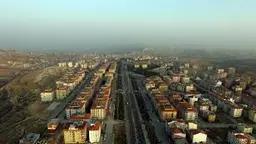
Besni
Province(s) | Adıyaman | ||||||||
|---|---|---|---|---|---|---|---|---|---|
Area(s) | 1.409 km² | ||||||||
Population (2020) | 88.531 | ||||||||
Height(s) | 900 meters | ||||||||
Mayor(s) | İsmail Aydın | ||||||||
District Governor | Çağlar Partal | ||||||||
Besni is a district of Adıyaman province. Located in the southeast of Anatolia, at the foothills of the Southeastern Taurus Mountains, Besni offers a life intertwined with nature, with its altitude reaching up to 900 meters.
With its settlement history thought to date back to 5,000 BC, the region has been influenced by many ancient civilizations. Known as "Bahsna" during the Commagene Kingdom, Besni gained importance during the Ottoman period and was annexed to Ottoman territory in 1516. Later, Besni was ruled by different governments such as the Mamluks, Byzantines, Seljuks, and Ayyubids. Today, the history of Besni is reflected in many historical monuments such as castles, bridges, mosques, and tombs.

Besni Castle ( Culture Portal )
The district is surrounded by forests, agricultural lands, and mountains. This geographical structure provides Besni with a rich natural environment. The district's climate is influenced by the typical Mediterranean climate, with hot and dry summers and mild and rainy winters. While temperatures exceed 30°C in summer, temperatures can drop to around 5°C in winter.
Besni's population exceeded 10,000 in the early 20th century and reached 26,076 according to the 1990 census. Towards the end of the 1980s, there were changes in the population structure due to migration. As of 1990, the total population of the Besni district reached 88,531. The population density is 63 people/km² according to its geographical size. In recent years, the increase in settlements has continued, and the population growth has accelerated, especially due to the effects of industrial activities.
The economy of Besni is largely shaped by agriculture and animal husbandry. Among the agricultural products, wheat, barley, chickpeas, lentils, cotton, and grapes are prominent. In addition, tobacco and cotton production specific to the region also have an important place. In the industrial sector, activities such as spinning mills, blacksmithing, and weaving are common. In recent years, industrial investments have increased in Besni in addition to agriculture, contributing to the diversification of the local economy. In addition, the mining sector is also developed in the district. Agricultural production and the industrial sector constitute the cornerstones of the economic structure of the district.

Harvest of Besni Grapes (Adıyaman Provincial Directorate of Agriculture and Forestry)
Besni is an important region that draws attention with its historical structures and cultural elements. Besni Castle and Göksu Bridge (Kızılin Bridge), located in the region, attract the attention of tourists every year. Besni also stands out with its unique cuisine. In Besni cuisine, where the influences of traditional Mediterranean cuisine are seen, olive oil dishes, kebab varieties, various salads, and local flavors have an important place. In addition, traditional woven products and carpet weaving are other important elements that reflect Besni's cultural heritage.
Besni Castle is an important defensive structure located in the Besni district of Adıyaman province, with a very old history. The castle, which is thought to have been first built in the Middle Ages, has attracted the attention of many civilizations due to its strategic location. It was annexed to the Ottoman lands by Yavuz Sultan Selim in 1516 and then restored. During this period, a mosque and a bathhouse were built within the castle, but these structures have not survived to the present day.
The towers of Besni Castle were built by a famous master named "Kel Tıraş". The castle was built using a mixture of cut stone and rubble. Today, only the ruined parts of the castle remain standing. In particular, the Toktamış Mosque, which is in the foreground, dates back to the 17th century and only has a minaret made of cut stone that has survived to the present day, and is one of the striking structures in the immediate vicinity of the castle.
Besni has been famous for its bravery and heroism throughout history, and was even awarded a certificate of appreciation for these features during the reign of Yıldırım Bayezid. However, in 1933-1934, due to reasons such as the settlement not being suitable for expansion and the inadequacy of the transportation network, the location of the town of Besni was changed, and the new town of Besni was established.

Adıyaman Provincial Directorate of Culture and Tourism
Located on the Göksu River, the Göksu Bridge, also known as the Kızılin Bridge, is a historical stone bridge. The bridge, which draws attention with its architectural structure, was built of cut stone. Dating back to the Middle Ages, the bridge facilitated transportation and played an important role in the commercial life of Besni. Today, it is under protection as a historical heritage.

Goksu Bridge ( AA )
Besni has changed places and received migration many times under the influence of different civilizations. It has witnessed major migration movements, especially since the 1980s. Besni's developing industry and increasing job opportunities have increased migration to the district, and as a result, the population structure has also changed dynamically. With migration, there has been a cultural diversification in Besni's demographic structure, especially due to people coming from metropolitan cities.
Adıyaman Provincial Directorate of Agriculture and Forestry. "Harvest of Besni Grape, One of Our Geographically Registered Products, Has Started." Accessed 25 April 2025. https://adiyaman.tarimorman.gov.tr/Haber/623/Cografi-Tescilli-Urunlerimiz-Besni-Uzumunde-Hasat-Basladi .
Besni Municipality. "Besni History." Accessed 25 April 2025. http://www.besni.gov.tr/besni-tarihi .
Besni Municipality. "Geographical Structure." Accessed 25 April 2025. http://www.besni.gov.tr/cografi-yapisi .
Harran University. "Besni History." Accessed 25 April 2025. http://acikerisim.harran.edu.tr:8080/xmlui/bitstream/handle/11513/3191/686473.pdf?sequence=1&isAllowed=y .
Cultural Inventory. "Göksu Bridge." Accessed 28 April 2025. https://kulturenvanteri.com/yer/goksu-koprusu/#17.1/37.446259/38.163487 .
Republic of Turkey Ministry of Culture and Tourism, Adıyaman Provincial Directorate. "Besni." Accessed 25 April 2025. https://adiyaman.ktb.gov.tr/TR-61336/besni.html .
Republic of Turkey Ministry of Culture and Tourism. "Besni Castle." Culture Portal. Accessed 28 April 2025. https://www.kulturportali.gov.tr/portal/besni-kalesi .

Besni
Province(s) | Adıyaman | ||||||||
|---|---|---|---|---|---|---|---|---|---|
Area(s) | 1.409 km² | ||||||||
Population (2020) | 88.531 | ||||||||
Height(s) | 900 meters | ||||||||
Mayor(s) | İsmail Aydın | ||||||||
District Governor | Çağlar Partal | ||||||||
History
Geography - Climate
Population - Demography
Economy
Tourism - Culture - Cuisine
Besni Castle
Goksu Bridge (Kizilin Bridge)
Special Situation of the District: Migration and Population Mobility