This article was automatically translated from the original Turkish version.
+2 More
Product / Product Group(s) | Bakery and confectionery products sweets dough products | ||||||||
|---|---|---|---|---|---|---|---|---|---|
Place of Origin | Bilecik, Türkiye | ||||||||
Registration Date | 5 March 2025 | ||||||||
Registration Number | 1709 | ||||||||
Registration Type | Mahreç mark | ||||||||
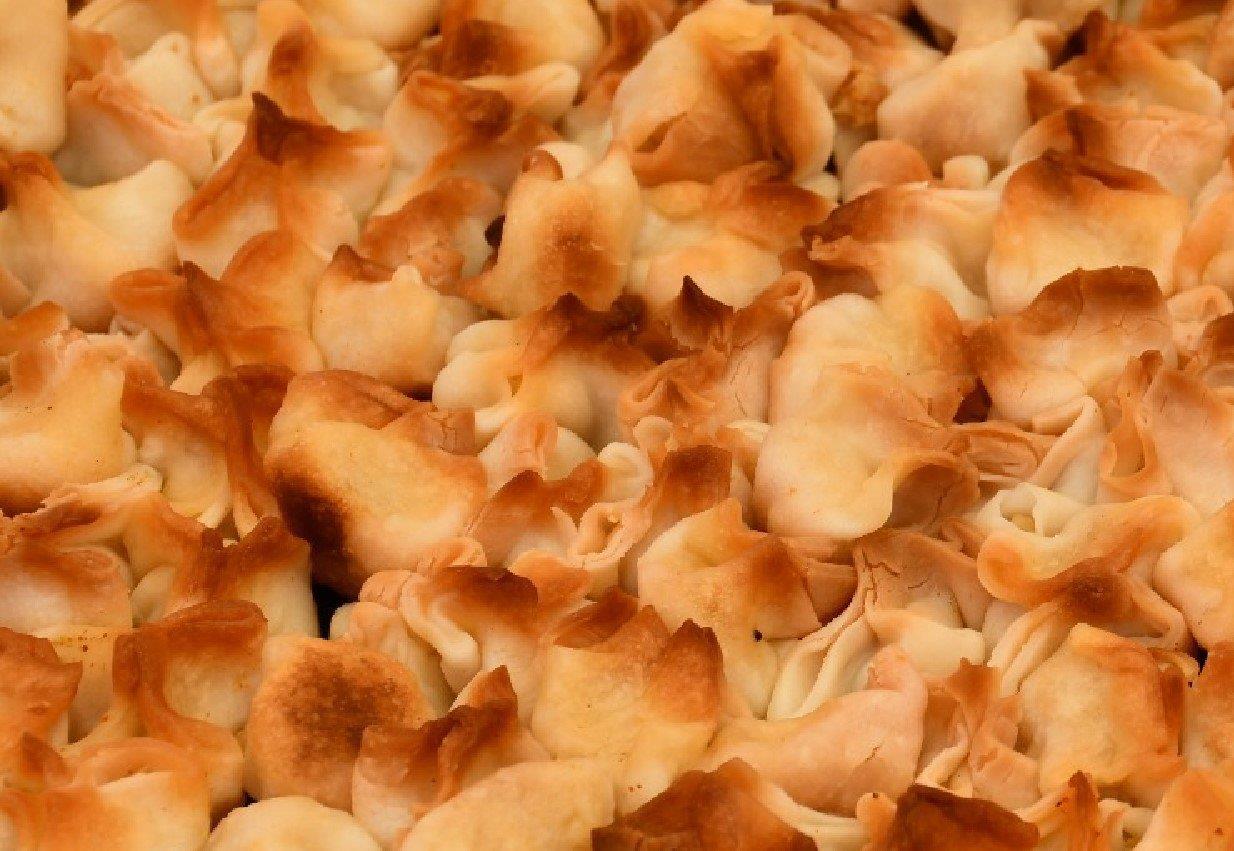
Bilecik nohutlu mantısı, buğday unundan hazırlanan hamurun, haşlanmış nohutlu iç harçla doldurulup elde büzülerek şekillendirilmesi, ardından fırında pişirilip yoğurt ve sos eşliğinde servis edilmesiyle hazırlanan geleneksel bir hamur yemeğidir. Bu özel pişirme tekniği, mantının fırında pişirilmesini öne çıkarır ve Anadolu mutfağında benzerlerinden ayrılmasını sağlar.
Bilecik nohutlu mantısı is traditionally prepared in the region during socially significant occasions such as weddings, holidays, and farewells to soldiers. Its preparation demands both skill and considerable time and care. The hand-shaped form and oven-baking method reflect the continued vitality of traditional culinary culture. In this way, it is not merely a daily dish but a cultural element embedded in the collective memory of the people of Bilecik.

Bilecik Nohutlu Mantı(Türkiye Culture Portal)
– 1 kg special-purpose wheat flour
– 2 eggs
– 400 ml water
– 10 g salt
– 500 g boiled chickpeas
– 10 g salt
– 7 g black pepper
– 750 ml chicken or meat broth
– 500 g garlic yogurt
– 150 g butter
– 80 ml water
– 20 g tomato and/or pepper paste
– 5 g red pepper flakes or powder
The kneaded dough is divided into portions and rolled out into thin sheets using a rolling pin. The sheets are cut into small squares. A portion of the chickpea filling is placed in the center of each square, which is then folded and sealed into a pouch shape. The shaped mantı are arranged on a greased baking tray and baked until golden brown. After removal from the oven, they are moistened with hot meat or chicken broth and returned to the oven for a second baking. In the final stage, garlic yogurt is spread over the top, followed by the sauce prepared with tomato or pepper paste and pepper. Traditionally served hot.
Bilecik nohutlu mantısı differs from similar dishes in numerous aspects, from its cooking method to its chickpea filling. The most distinctive feature is its baking in an oven rather than boiling in water. Additionally, the use of legumes instead of meat renders this dish both lighter and nutritionally richer. The hand-shaped dough reflects a culinary tradition passed down through skilled craftsmanship. The dish’s reputation rests not only on its geographical origin but also on its cultural continuity.
Bilecik nohutlu mantısı was officially registered as a geographical indication on 5 March 2025 under registration number 1709. The holder of the registration is the Bilecik Chamber of Commerce and Industry. Production and inspection processes are carried out under the coordination of relevant local institutions. During inspections, the dough structure, ingredients used in the filling, and cooking technique are all evaluated. Thanks to this registration, the authentic character of this traditional dish is preserved and unauthorized use is prevented.
Bilecik İl Directorate of Culture and Tourism. "Yöresel Mutfak." Bilecik Kültür ve Turizm Müdürlüğü. Accessed July 11, 2025. https://bilecik.ktb.gov.tr/TR-69091/yoresel-mutfak.html.
Ministry of Culture and Tourism. "Nohutlu Mantı." *Culture Portal*. Accessed July 11, 2025. https://www.kulturportali.gov.tr/turkiye/bilecik/neyenir/nohutlu-manti.
Turk Patent and Trademark Office. "Bilecik Nohutlu Mantısı." Accessed July 11, 2025. https://ci.turkpatent.gov.tr/Files/GeographicalSigns/39550f90-b4e4-4123-8cad-fa8cbb7217a4.pdf.
Turk Patent and Trademark Office. "Bilecik Nohutlu Mantısı." Accessed July 11, 2025. https://ci.turkpatent.gov.tr/cografi-isaretler/detay/11446.

Product / Product Group(s) | Bakery and confectionery products sweets dough products | ||||||||
|---|---|---|---|---|---|---|---|---|---|
Place of Origin | Bilecik, Türkiye | ||||||||
Registration Date | 5 March 2025 | ||||||||
Registration Number | 1709 | ||||||||
Registration Type | Mahreç mark | ||||||||
No Discussion Added Yet
Start discussion for "Bilecik Nohutlu Mantı" article
History and Cultural Context
Ingredients (for 10 servings)
For the Dough
For the Filling
For Serving
For the Sauce
Preparation
Distinguishing Features
Geographical Indication Information