


This article was automatically translated from the original Turkish version.
+1 More
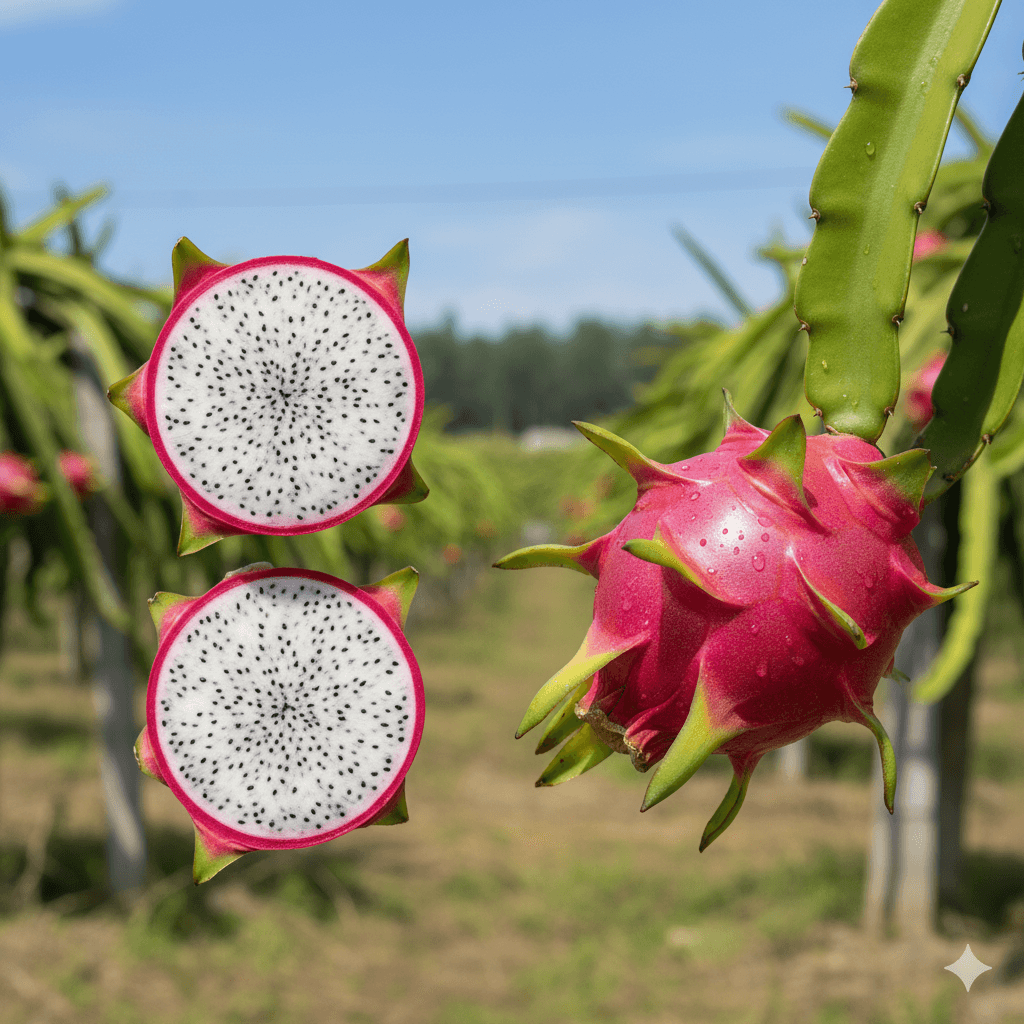
Binh Thuan Ejder Meyvesi (Yapay Zeka ile Oluşturuldu)
Binh Thuan Dragon Fruit (Vietnamese: Thanh long Bình Thuận) is a fruit cultivated in Binh Thuan Province of the Socialist Republic of Vietnam and holds international geographical indication protection. It is registered in Japan under registration number 110 in the "Fruit" category (Overseas). The product differs in sensory and physical characteristics from dragon fruits produced in other regions of Vietnam.
Binh Thuan is Vietnam’s largest dragon fruit production center. According to 2021–2022 data, production occurs on approximately 33,750 hectares within the province, with annual total output exceeding 700,000 tons.
Geographical Location and Terrain The geographically indicated production area is located in the southernmost part of Vietnam’s South Central Coast. Administratively, this area includes the districts of Ham Tan, Ham Thuan Nam, Ham Thuan Bac, and Bac Binh, as well as the city of Phan Thiet in Binh Thuan Province.
Binh Thuan Dragon Fruit (YouTube-Geographical Indication Product Information Website)
The region’s climate falls within the monsoon tropical zone and is classified as “very hot,” with high annual average temperatures. The key climatic feature distinguishing Binh Thuan from other dragon fruit production areas is its relatively lower annual rainfall. These climatic conditions are said to resemble those of the desert environment, the native habitat of the dragon fruit.
Historical Background Dragon fruit cultivation in the Binh Thuan region began in the early 20th century. Commercial production in the area gained momentum in 1990.
Sensory Profile Binh Thuan Dragon Fruit is characterized by a sweeter and less sour taste profile compared to dragon fruits grown in other regions of Vietnam.
Physical Morphology The physical properties of the fruit are critical for transportation and shelf life. The fruit has a thick skin structure and thick, tightly packed bracts (leaf-like extensions on the fruit’s surface). This physical structure enables the fruit to retain its characteristic “dragon-like” appearance and freshness even after long-distance transportation. Resistance to long-distance transport is a noted feature by distributors.
Binh Thuan Dragon Fruit production follows specific agricultural practices and standards:
In response to challenges such as drought and water scarcity caused by climate change, producers in the region are transitioning to sustainable agricultural practices with support from organizations such as the United Nations Development Programme (UNDP). These practices include:
Dragon fruit is one of Binh Thuan Province’s key export products. Today, the fruit is exported to various regions worldwide, including Asia (China, Japan, Korea), the Middle East, Europe, North America, and Australia.
Binh Thuan Dragon Fruit enjoys strong legal protection at the international level. It was first registered as a geographical indication in Vietnam in 2006. Following the entry into force of the EU–Vietnam Free Trade Agreement (EVFTA), it has held Protected Geographical Indication (PGI) status across the European Union (EU) since 2020. The GI registration in Japan was completed in 2021.

Binh Thuan Ejder Meyvesi (Yapay Zeka ile Oluşturuldu)
No Discussion Added Yet
Start discussion for "Binh Thuan Dragon Fruit" article
Origin and Production Area
Distinctive Characteristics
Cultivation and Harvesting Methods
Sustainability and Modernization
Economic Importance and International Protection