This article was automatically translated from the original Turkish version.
+1 More
Location | Tekirdağ | ||||||||
|---|---|---|---|---|---|---|---|---|---|
Historical Names | Banados Panidos Panion Bisanthe | ||||||||
Foundation | 5th–4th century BC | ||||||||
Ancient Civilization | Byzantine Roman Greek Thracian | ||||||||
Archaeological Findings | walls from the late Roman and Byzantine periods remains of a 13th-century church black-painted ceramics from the 5th century BC equestrian marble stele Greek inscriptions from the 4th century BC | ||||||||
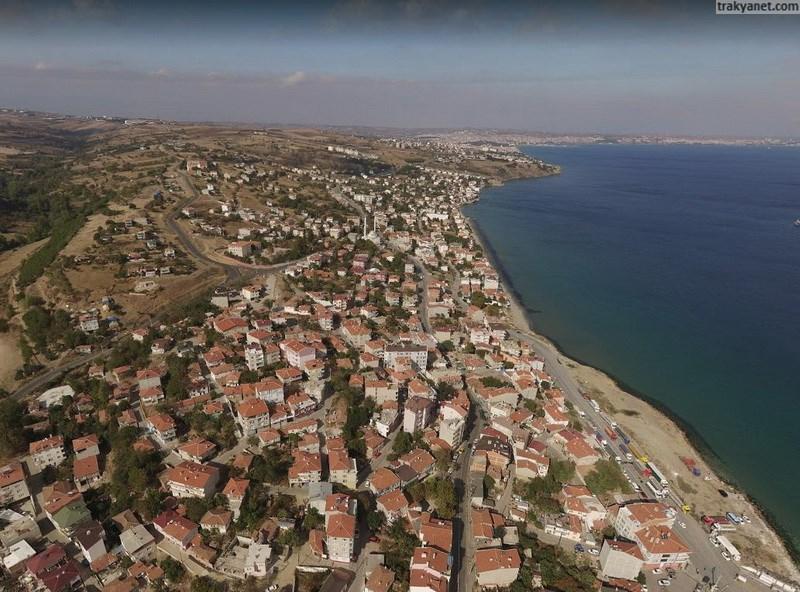
The Bisanthe Settlement Area is located within the boundaries of Barbaros Neighborhood, Süleymanpaşa District, Tekirdağ Province. Situated on the coast of the Sea of Marmara, approximately 10 kilometers from the city center of Tekirdağ, this site was a small coastal settlement in antiquity and gradually came to be known as Panion, then Panidos, and finally Barbaros. The ancient settlement lies beneath the modern urban area, with cultural remains present at the Madenler and Mezarlık locations in the region.
Barbaros (Süleymanpaşa Municipality)
According to ancient sources, Bisanthe was founded by colonists from Samos. The name of the city first appears in Herodotus’s Histories in the context of events dating to 430 BCE. Xenophon’s Anabasis notes that Seuthes, Prince of the Odrysians, described Bisanthe as “one of the most beautiful cities on the coast.” Some ancient sources and maps also mention a settlement named Panion located west of Bisanthe. It is suggested that this settlement was established by migrants from the Panionion region opposite the island of Samos.
Numerous cultural artifacts from antiquity have been identified along the Barbaros coastline, particularly in the cemetery and Madenler areas. In 2006, excavations uncovered the remains of a church dated to the 13th century. Additionally, sections of ancient walls extending westward along the coast have been identified. These findings indicate that the ancient city of Bisanthe had a substantial settlement area during the Late Roman and Byzantine periods. Among the earliest artifacts transferred to the Tekirdağ Archaeology and Ethnography Museum are Greek inscriptions from the 4th century BCE and high-relief marble stelae depicting horsemen. At the Barbaros Madenler site, black-painted and glazed ceramics dating to the 5th century BCE have been discovered.
During the Roman period, the city was known as Rahidestus, and later it came under Byzantine rule. According to Procopius, Emperor Justinian ordered the construction of walls around the city because it lacked fortifications. In 1305, the Catalan mercenaries who invaded the region caused significant damage to Bisanthe and nearby Panion (modern-day Barbaros).
The region was incorporated into Ottoman territory between 1357 and 1358 and was peacefully captured by Prince Murad. In Ottoman tax registers, Barbaros appears as Banados. By the early 16th century, it had developed into a settlement comprising six neighborhoods, with the majority of its population consisting of Rum (Greek Orthodox) communities. Subsequently, Muslim populations began settling alongside the Câmi-i Şerif neighborhood. During this period, Banados was recorded as an important settlement under the jurisdiction of the Rodosçuk (Tekirdağ) district. By the end of the 16th century, the Rum population had declined while Muslim settlement increased, altering the demographic balance.
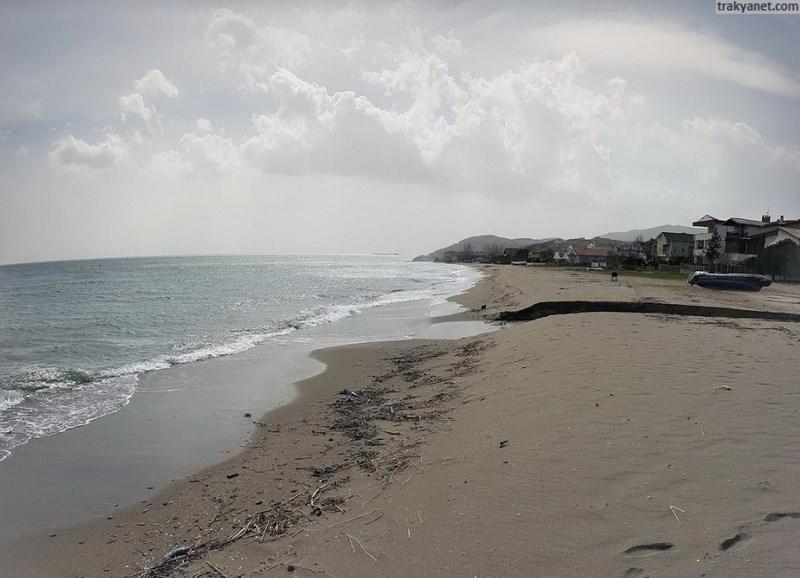
Today, Barbaros is a fishing town with a population of approximately 5,000. Agriculture, animal husbandry, and fishing remain the primary sources of livelihood. Since its opening in 2015, the Asyaport Port has transformed the region into a major logistics center. During summer months, the town experiences increased activity due to seaside tourism and has become a favored destination for domestic vacationers, thanks to its clean beaches and coastline. The “Kral Yolu,” stretching along the shore, functions as a natural breakwater, protecting the coast from waves due to its parallel alignment with the sea.
Barbaros stands out for its multi-layered settlement history extending from antiquity to the present. This area, known by various names such as Bisanthe, Panion, and Panidos, bears numerous traces from the Roman, Byzantine, and Ottoman periods. Archaeological finds and historical documents confirm that the region served as a long-standing center of habitation and trade.
Ministry of Culture and Tourism of the Republic of Türkiye. "Bisanthe (Barbaros) Settlement Area." Kültür Portalı. Accessed July 4, 2025. https://www.kulturportali.gov.tr/turkiye/tekirdag/gezilecekyer/bisanthe--barbaros--yerlesim-alani
Süleymanpaşa Belediyesi. "Barbaros." Süleymanpaşa Municipality. Accessed July 4, 2025. https://www.suleymanpasa.bel.tr/bilgi/Barbaros--217
TDV İslâm Ansiklopedisi. “Tekirdağ.” Türkiye Diyanet Vakfı İslâm Ansiklopedisi. Accessed July 4, 2025. https://islamansiklopedisi.org.tr/tekirdag
Tekirdağ Büyükşehir Municipality. "Kentte Turizm." Tekirdağ Metropolitan Municipality. Accessed July 4, 2025. https://www.tekirdag.bel.tr/kentte_turizm

Location | Tekirdağ | ||||||||
|---|---|---|---|---|---|---|---|---|---|
Historical Names | Banados Panidos Panion Bisanthe | ||||||||
Foundation | 5th–4th century BC | ||||||||
Ancient Civilization | Byzantine Roman Greek Thracian | ||||||||
Archaeological Findings | walls from the late Roman and Byzantine periods remains of a 13th-century church black-painted ceramics from the 5th century BC equestrian marble stele Greek inscriptions from the 4th century BC | ||||||||
No Discussion Added Yet
Start discussion for "Bisanthe (Barbaros) Settlement Area" article
Foundation and Antiquity
Archaeological Discoveries
Byzantine and Medieval Period
Ottoman Period
Modern Era and Current Status
Cultural and Historical Value