


This article was automatically translated from the original Turkish version.
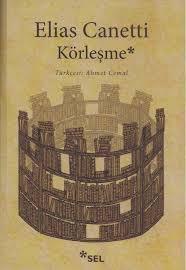
Blindness
Author(s) | Elias Canetti | ||||||||
|---|---|---|---|---|---|---|---|---|---|
Translator(s) | Ahmet Cemal | ||||||||
Publisher(s) | Sel Yayıncılık | ||||||||
Number of Pages | 568 | ||||||||
Written in 1935 by Nobel Prize in Literature winner author Elias Canetti, this modern classical novel explores the solitude of the human mind, alienation from society, and the intellectual collapse of the individual. Work portrays, through a multilayered and allegorical narrative, how the individual becomes isolated, detached from reality, and ultimately “blinded” in the face of the corruption of culture, language, and thought. At the center of the novel is character Peter Kien, who leads a life devoted to books and knowledge, having almost entirely severed his ties with the external world.
Roman revolves around the story of Peter Kien, a sinologist (China culture expert). Kien is an academic who lives almost entirely cut off from the outside world, immersed in his only books. He has assembled a personal library of 25,000 volumes in his home. He avoids human contact and shuns emotional and physical relationships. However, his connection with Therese, a cleaning woman in his building, upends his life and inner world.
Kien marries Therese, an irrational decision that nonetheless feels logically inevitable. Her materialistic, vulgar, and passionate nature clashes violently with Kien’s spiritual devotion to books. This marriage becomes the beginning of his downfall. As Therese removes him from his home and his books, Kien gradually confronts the cruelty of society and his own inner darkness. The conflict between Therese’s crude and greedy character and Kien’s intellectual, sterile existence symbolizes the individual’s inner collapse.
As the novel progresses, Kien’s perception of reality fractures, his mental world disintegrates, and the process of “blinding” is completed. In the final section, Kien, who sees his books as “a single whole,” burns both himself and his library in an attempt to save them. This action represents the ultimate consequence of intellectual isolation and individual idealism.
Peter Kien: The main character of the novel. A scholar obsessed with knowledge, avoiding human relationships, solitary and fixated. Having chosen to live within his mind, he has become blind to the external real world.
Therese: Kien’s cleaning woman and later his wife. A character consumed by materialism, coarse, greedy, and controlling Kien’s life through emotional manipulation. Her indifference to books and her materialist lifestyle pose a direct threat to Kien’s spiritual world.
Fischerle: A Small dwarf and conman who exploits Kien’s weaknesses. A caricatured figure driven by the desire to climb social ranks. He embodies the exploitative and corrupted aspects of society.
Elias Canetti’s prose is philosophically profound, intense, and symbolic. The novel unfolds through the stream-of-consciousness technique, with detailed renderings of the characters’ mental chaos and inner monologues. Descriptions focus less on external reality and more on the portrayal of inner worlds. Rather than adhering to a classical event structure, the narrative centers on the characters’ internal transformation and intellectual disintegration. Canetti’s language is layered and place, filled with grotesque elements.
The novel was written in the 1930s, during a period when Europe was witnessing the rise of totalitarian ideologies. Canetti, by examining the rupture between the individual and society and the corruption of thought, offers not merely a personal story but a critique of the political and cultural atmosphere of the era. “Blindness” can be read as an allegorical representation of the process by which masses in Nazi Germany abandoned critical thinking and submitted unquestioningly to authority.
Canetti, Elias. Körleşme. Çev: Ahmet Cemal. İstanbul: Sel Yayıncılık, 2015. 568 pp.

Blindness
Author(s) | Elias Canetti | ||||||||
|---|---|---|---|---|---|---|---|---|---|
Translator(s) | Ahmet Cemal | ||||||||
Publisher(s) | Sel Yayıncılık | ||||||||
Number of Pages | 568 | ||||||||
Summary of the Novel
Character Typology
Themes
Narrative and Style
Historical Context