


This article was automatically translated from the original Turkish version.
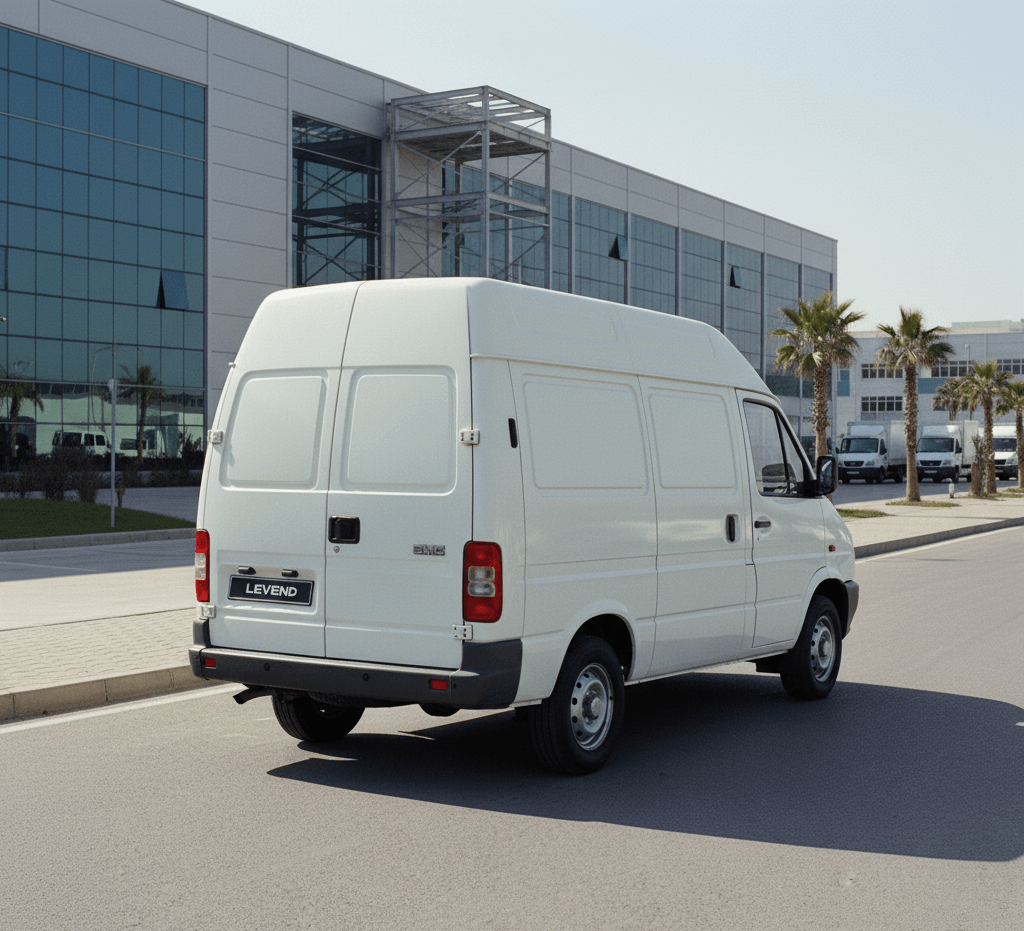
BMC Levend (Yapay zeka ile oluşturulmuştur)
BMC Levend is a light commercial minibus/midibus family produced by Turkish manufacturer BMC from the 1980s through the 2000s. It offered seating capacities ranging from 14+1 to 22+1 in various lengths and seat configurations and found widespread use in public transport school services and urban transit.

BMC Levend(Generated by artificial intelligence.)
Development of the BMC Levend began in the mid-1970s at BMC’s Izmir Pınarbaşı facilities. Until then, BMC had produced vehicles under license from Austin–Morris and Leyland. With the Levend project, the company shifted toward a fully indigenous bus design without licensing. The goal was to create a durable economical and easily maintainable vehicle to meet growing intercity transportation demands.
The first prototype was completed in 1975 and quickly entered service on municipal routes and private transport operations. In 1987 the upgraded Levend 2 variant was introduced featuring a rounded front end replacing the square body design an improved diesel engine and a refreshed interior. Production was transferred to the BMC Belde and Probus series in the early 1990s.
The Levend featured a simple yet robust monocoque body mounted on a rigid steel chassis. Its flat surfaces facilitated easy repairs while large window areas enhanced interior spaciousness.
The Levend was widely used in both public and private transportation across Türkiye.
Municipalities in Ankara İzmir Bursa and Adana operated these models in large fleets. Due to their durability they remained in service on rural routes until the end of the 1990s.
The Levend is regarded as the bus that launched Türkiye’s era of “unlicensed domestic production.” This platform derived from BMC’s truck technology strengthened the country’s ability to develop its own engines and drivetrain components.
The Levend’s technical legacy was directly carried forward into the Belde series of the 1990s and the Procity series of the 2000s.

BMC Levend (Yapay zeka ile oluşturulmuştur)
Development Process and Historical Context
Design and Technical Specifications
Production and Usage Areas
Industrial and Cultural Significance