

This article was automatically translated from the original Turkish version.
Type of Geographical İndication | Traffic Sign | ||||||||
|---|---|---|---|---|---|---|---|---|---|
Registration Number | 556 | ||||||||
Registration Date | 05.10.2020 | ||||||||
Product / Product Group(s) | Dairy products other than cheeses and butter | ||||||||
Province(s) | Bolu | ||||||||
Applicant/Registrant(s) | Bolu Chamber of Commerce and Industry | ||||||||
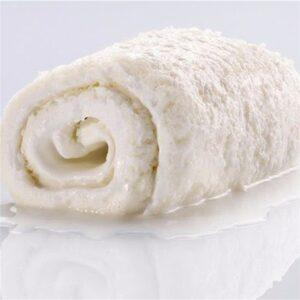
Bolu Buffalo Cream is a dairy product made from milk obtained from buffaloes raised in Bolu province, using traditional regional methods that yield a high fat and dry matter content. The product was officially registered with a geographical indication on 5 October 2020 by the Bolu Chamber of Commerce and Industry and is protected under Law No. 6769 on Industrial Property.

Bolu Buffalo Cream (Bolu Municipality)
Bolu’s landscape, covered with forests and shaped by mountains, plateaus and wetlands, provides an ideal environment for raising buffaloes, which thrive in water-rich habitats. The buffaloes in Bolu are fed with limited amounts of artificial feed during winter and, in other seasons, with cottonseed cake, grass, hay, oats, cracked corn, wheat bran and oilseed cakes. This feeding regimen directly positively influences the composition of buffalo milk.
Bolu Buffalo Cream is consumed as a breakfast item or used in desserts. No additives or flavoring agents are used in its production. On average, approximately 10 litres of buffalo milk are required to produce 1 kg of cream.
Main components of the cream:
The raw buffalo milk used in cream production contains at least 7% milk fat, 5.5% protein and 8.5% fat-free dry matter.
The production process requires traditional knowledge and craftsmanship. The steps can be summarized as follows:
Bolu Buffalo Cream is a perishable product. It can be stored for 4–5 days in a refrigerator, and up to 6–7 days during winter months. Cold storage is mandatory.
The reputation, production method and craftsmanship associated with the product are intrinsically linked to Bolu province. All production stages must be carried out within this geographical boundary. Inspections are conducted at least once a year under the coordination of the Bolu Chamber of Commerce and Industry. These inspections verify that the cream is sourced from buffaloes raised in Bolu, that the production method is correctly followed, and that storage conditions are adequate.
Bolu Municipality. "Manda Kaymağı." Bolu Municipality Website. Accessed October 24, 2025. https://www.bolu.bel.tr/gastronomi/manda-kaymagi/.
Turk Patent and Trademark Office. "Bolu Manda Kaymağı." Geographical Indications Portal. Accessed October 24, 2025. https://ci.turkpatent.gov.tr/cografi-isaretler/detay/302.
Turkish Patent and Trademark Office. "Bolu Manda Kaymağı Coğrafi İşaret Sicil Belgesi." October 5, 2020. PDF file. Accessed October 24, 2025. https://ci.turkpatent.gov.tr/Files/GeographicalSigns/7b25510d-b721-4b20-b0c5-eb04861acf6d.pdf.

Type of Geographical İndication | Traffic Sign | ||||||||
|---|---|---|---|---|---|---|---|---|---|
Registration Number | 556 | ||||||||
Registration Date | 05.10.2020 | ||||||||
Product / Product Group(s) | Dairy products other than cheeses and butter | ||||||||
Province(s) | Bolu | ||||||||
Applicant/Registrant(s) | Bolu Chamber of Commerce and Industry | ||||||||
Geographical and Ecological Basis
Product Characteristics
Production Method
Shelf Life and Storage
Geographical Boundary and Oversight