This article was automatically translated from the original Turkish version.
+1 More
Author(s) | Mustafa Kutlu | ||||||||
|---|---|---|---|---|---|---|---|---|---|
Publisher(s) | Dergâh Yayınları | ||||||||
Publication Year | May 2025 (14th Edition) | ||||||||
Number of Pages | 192 | ||||||||
Type(s) | Novel / Social Study | ||||||||
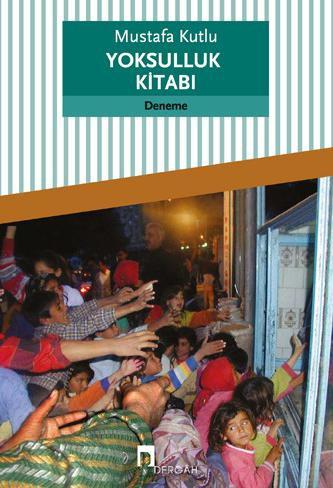
The Book of Poverty is a socially profound and deeply reflective essay by Mustafa Kutlu, one of the leading figures in Turkish short story writing, published as part of Dergâh Publications’ “Turkish Literature” series. The book focuses on the theme of poverty, offering a powerful appeal and social critique directed at various segments of society. First published in March 2004, the work consists of 192 pages and has reached its fourteenth edition as of May 2025.
The Book of Poverty examines poverty as a social phenomenon through multiple dimensions. In this work, Mustafa Kutlu directly addresses different strata of society—the healthy, the affluent, the successful, the powerful, the influential, the wealthy, the politicians, the scientists, and those who observe religious rituals. He reminds them that despite their comfort and privilege, “winter has come and the poor are waiting for them.” This appeal functions not only as a critique of material poverty but also as a condemnation of social indifference and the erosion of human connections.
The book treats poverty not merely as an economic issue but as a moral, conscientious, and social problem. The author invites readers to resist apathy in the face of poverty, to assume responsibility, and to cultivate empathy. Mustafa Kutlu’s observations and social analyses elevate the work beyond the status of a mere story or essay, transforming it into a reference text that prompts reflection on contemporary social issues. The book aims to heighten social awareness, revive a spirit of solidarity, and remind individuals and communities of their collective and personal responsibilities in combating poverty.
The language and style employed by Mustafa Kutlu in The Book of Poverty reflect his distinctive, intense, and thought-provoking narrative approach. While possessing literary depth, the text is designed to convey its social message directly and powerfully. The prose is enriched with short, striking sentences, ironic expressions, and potent metaphors. When addressing the reader, the author adopts a questioning and provocative tone at times, reinforcing the work’s dimension of social critique. The text deliberately avoids advertising or eulogistic language; instead, it presents the reality of poverty through a descriptive and objective perspective. The Book of Poverty is a powerful literary text that compels readers to think, question, and confront their own conscience.
Mustafa Kutlu is one of the foremost representatives of modern Turkish short story writing. His works commonly explore social issues, traditional values, the challenges brought by modernization, and the depths of the human psyche. The Book of Poverty stands as one of his most prominent works in revealing his social sensitivity and critical perspective. By examining poverty through a unique lens, the book opens a discussion not only on its economic dimensions but also on its moral and human dimensions. It serves as a significant example in Turkish literature of addressing social issues through literary expression.
Kutlu, Mustafa. *Yoksulluk Kitabı*. İstanbul: Dergah Yayınları, 2004. Accessed July 8, 2025. https://www.dergah.com.tr/kitaplar/yoksulluk-kitabi.

Author(s) | Mustafa Kutlu | ||||||||
|---|---|---|---|---|---|---|---|---|---|
Publisher(s) | Dergâh Yayınları | ||||||||
Publication Year | May 2025 (14th Edition) | ||||||||
Number of Pages | 192 | ||||||||
Type(s) | Novel / Social Study | ||||||||
No Discussion Added Yet
Start discussion for "Book of Poverty (Book)" article
Content and Thematic Structure
Language and Style
The Author’s Position and the Significance of the Work