


This article was automatically translated from the original Turkish version.
+1 More
Bor
Location | İç Anadolu Region a district of Niğde Province | ||||||||
|---|---|---|---|---|---|---|---|---|---|
Area(s) | 1 522 km² | ||||||||
Population | 999 (district center) 41 948 (entire district) 60 | ||||||||
District Governor | Mehmet Yavuz | ||||||||
Mayor(s) | Serkan Baran | ||||||||
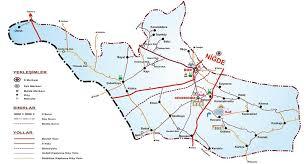
Bor is a district in the Central Anatolia Region of Türkiye, subordinate to Niğde Province. It is approximately 21 kilometers from the provincial center. The district covers an area of 1,432.6 km² and has an average elevation of 1,050 meters above sea level. According to 2023 data, the population of the district center is 41,116 and the total district population is 60,233.
Bor is surrounded by Hasan Dağı and Melendiz Dağları to the north and by the extensions of the Taurus Mountains, Aladağlar and Bolkar Dağları, to the south and southeast. The district lies on a plateau with an average elevation of 1,000 to 1,500 meters. The Bor Plain, extending from east to west, continues the Ereğli Plain and covers an area of approximately 55 km². In addition to the district center, the villages of Bahçeli, Kemerhisar, Bereke, Narazan, Kızılca, Emen, Çukurkuyu and Kayı are located within this plain.
The Humam Çayı, flowing from the direction of Niğde, traverses the entire district of Bor and disappears within the Bor Plain. The region has been continuously inhabited throughout history due to its wetlands, fertile soils, and pastures suitable for animal husbandry.
The characteristic continental climate of Central Anatolia prevails in the district of Bor. Summers are hot and dry, while winters are cold. Although spring is short, it receives the highest amount of precipitation. The annual average temperature is 12 °C and the annual rainfall is approximately 335 mm.
The history of Bor district extends back to prehistoric times. Archaeological excavations at Köşk Höyük and Pınarbaşı Höyüğü within the district boundaries have revealed Neolithic settlements dating back to 5000 BCE. This demonstrates that Bor and its surroundings have experienced uninterrupted human settlement for at least 10,000 years.
Throughout history, the region was successively ruled by the Hittites, Phrygians, Persians, Kingdoms of Cappadocia and Romans. Following the division of the Roman Empire, the region became part of the Byzantine Empire. It remained under Byzantine administration for a long period before coming under Seljuk control in the 11th century. During the Seljuk period, it became an important military and administrative center.
After the Battle of Manzikert, the region was fully brought under Turkish rule in 1077 by Kutalmışoğlu Süleyman Şah and his brother Mansur, followed by settlement activities. Although Turkish settlement occasionally declined due to the Crusades, it intensified again from the 12th century onward.
With the decline of the Seljuks, the region changed hands between the Ertuğrul Beylik and the Karamanids in the 14th century. As the Ottomans gained power in Anatolia, Niğde and its surroundings came under Ottoman rule during the reign of Yıldırım Bayezid. However, after the Battle of Ankara in 1402, the region temporarily reverted to the Karamanids before being permanently incorporated into Ottoman territory in 1470–1471 through campaigns led by Ottoman armies under İshak Paşa and Gedik Ahmed Paşa.
In 1475, Şehzade Mustafa, son of Fatih Sultan Mehmed, stayed in Bor while traveling to Konya due to illness and died there. This event is one of the significant occurrences in Bor’s history.
During the reign of II. Bayezid (1481–1512), Bor was recorded as a nahiye under Niğde Livası with 12 mahalles. In 1518, the administrative structure was reorganized and Bor Nahiye, along with its dependent villages and mezzas, was separated from Niğde Kazası and elevated to the status of an independent kaza. The 1574 endowment records indicate the presence of structures such as a mosque and a bedesten in Bor, demonstrating that Bor had the status of a town and deserved its kaza rank.
With the founding of the Republic of Türkiye in 1923, Bor became a district under Niğde Province within the administrative structure. Significant developments occurred in education, health, infrastructure and cultural fields following the proclamation of the Republic.
There are various theories regarding the origin of the name Bor. Some researchers suggest that it derives from the Greek word Poros, meaning passage or entrance; others propose that it comes from the Hittite and Phrygian word Boris, meaning “a place surrounded by walls” or “the residence of a regional lord.” In Turkish dictionaries, the word “Bor” carries multiple meanings such as clayey-limestone soil, gypsum, field, brownish terrain, wetland and green area. This suggests that the name may be linked to the local physical conditions.
The famous traveler Evliya Çelebi, in his 17th-century work Seyahatnâme, describes Bor as follows:
“The town of Bor was conquered during the reign of Kılıçarslan bin Mesud, one of the great Seljuk conquerors; it was later lost during the decline of the Seljuk state, then recaptured by Orhan Gazi, and finally incorporated into Ottoman territory by Yıldırım Bayezid. Bor has numerous neighborhoods, markets, mills and public buildings. The Hamam Çayı flows through the town. The Bor Castle has fallen into ruin over time but still stands due to its sturdy construction.”
Bor Kaymakamlığı. "Tarihçe." Bor Kaymakamlığı. Accessed May 27, 2025. http://www.bor.gov.tr/tarihce.
Bor Municipality. "Tarihçe." *Bor Belediyesi*. Accessed May 27, 2025. http://www.bor.bel.tr/tarihce.
Niğde Kültür and Tourism Provincial Directorate. “Bor.” Niğde Culture and Tourism Provincial Directorate. Accessed May 27, 2025. https://nigde.ktb.gov.tr/TR-214990/bor.html.
Niğde Valiliği. “Bor.” Niğde Valiliği. Accessed May 27, 2025. http://www.nigde.gov.tr/bor.
Niğde Yatırım Support Office. “Bir Bakışta Niğde: İlçeler.” Invest in Niğde. Accessed May 27, 2025. https://www.investinnigde.com/bir-bakista-nigde/ilceler.

Bor
Location | İç Anadolu Region a district of Niğde Province | ||||||||
|---|---|---|---|---|---|---|---|---|---|
Area(s) | 1 522 km² | ||||||||
Population | 999 (district center) 41 948 (entire district) 60 | ||||||||
District Governor | Mehmet Yavuz | ||||||||
Mayor(s) | Serkan Baran | ||||||||
Climate
History
Administrative Structure in the Ottoman Period
Republican Period
Origin of the Name
Observations by Evliya Çelebi