


This article was automatically translated from the original Turkish version.
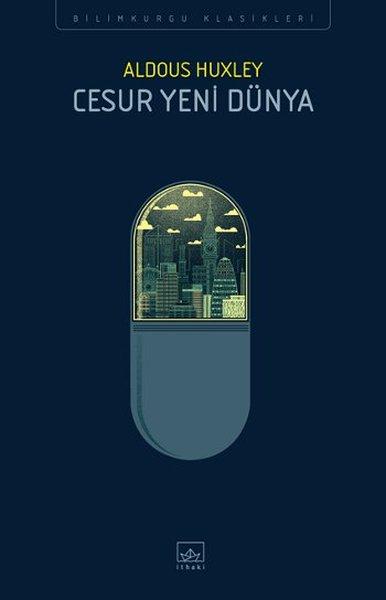
Brave New World
Author(s) | Aldous Huxley | ||||||||
|---|---|---|---|---|---|---|---|---|---|
First Publication Date(s) | 1932 | ||||||||
Genre | Dystopia Science Fiction | ||||||||
Main Characters | Bernard Marx, John (Savage), Lenina Crowne, Mustafa Mond | ||||||||
Theme(s) | Individuality Freedom Technology | ||||||||
Original Title | Brave New World | ||||||||
Brave New World is a dystopian science fiction novel written by British author Aldous Huxley and first published in 1932. The novel is set in a future in which technology is highly advanced but individual freedom has been almost entirely eradicated. It depicts a society in which humans are genetically engineered happiness is chemically induced through soma and social order is rigidly maintained. The novel is regarded as a critical reflection on modern civilization.
The story takes place in the early 26th century within a global superstate known as the World State. Individuals are no longer born naturally but are artificially produced in Hatchery and Conditioning Centres. Society is divided into five distinct castes ranging from Alpha to Epsilon. Each individual is physically and mentally designed according to their caste. One of the main characters Bernard Marx is an Alpha but is ostracized by society due to his physical inferiority. He begins to question the artificiality of the system. Another character Lenina Crowne is a loyal adherent to the system. During a journey they encounter John who was born naturally and raised in a “savage” region. Known as “the Savage” John is brought to the World State and clashes with its values. He is ultimately driven to a tragic end.
Aldous Huxley wrote the novel in 1931 and it was published in 1932 by Chatto & Windus in London. While writing this work Huxley was influenced by early 20th century industrialization totalitarian regimes the eugenics movement and Henry Ford’s principles of mass production. Many concepts in the novel directly reference Fordism and the scientific developments of the era.
Brave New World is regarded as one of the foundational texts of modern dystopian literature. Alongside George Orwell’s 1984 it occupies a central place in discussions about the individual-society relationship and totalitarianism. It has been extensively referenced in education philosophy media criticism and popular culture. The novel has been translated into many languages and adapted numerous times for stage television and film.
Huxley, Aldous. Brave New World. London: Chatto & Windus, 1932.
Huxley, Aldous. Cesur Yeni Dünya. İstanbul: İthaki Yayınları, 2021.

Brave New World
Author(s) | Aldous Huxley | ||||||||
|---|---|---|---|---|---|---|---|---|---|
First Publication Date(s) | 1932 | ||||||||
Genre | Dystopia Science Fiction | ||||||||
Main Characters | Bernard Marx, John (Savage), Lenina Crowne, Mustafa Mond | ||||||||
Theme(s) | Individuality Freedom Technology | ||||||||
Original Title | Brave New World | ||||||||
No Discussion Added Yet
Start discussion for "Brave New World (Book)" article
Summary
Characters
Themes
Writing and Publication History
Influence