

+1 More

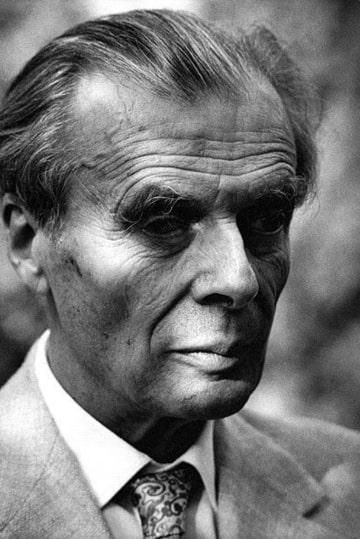
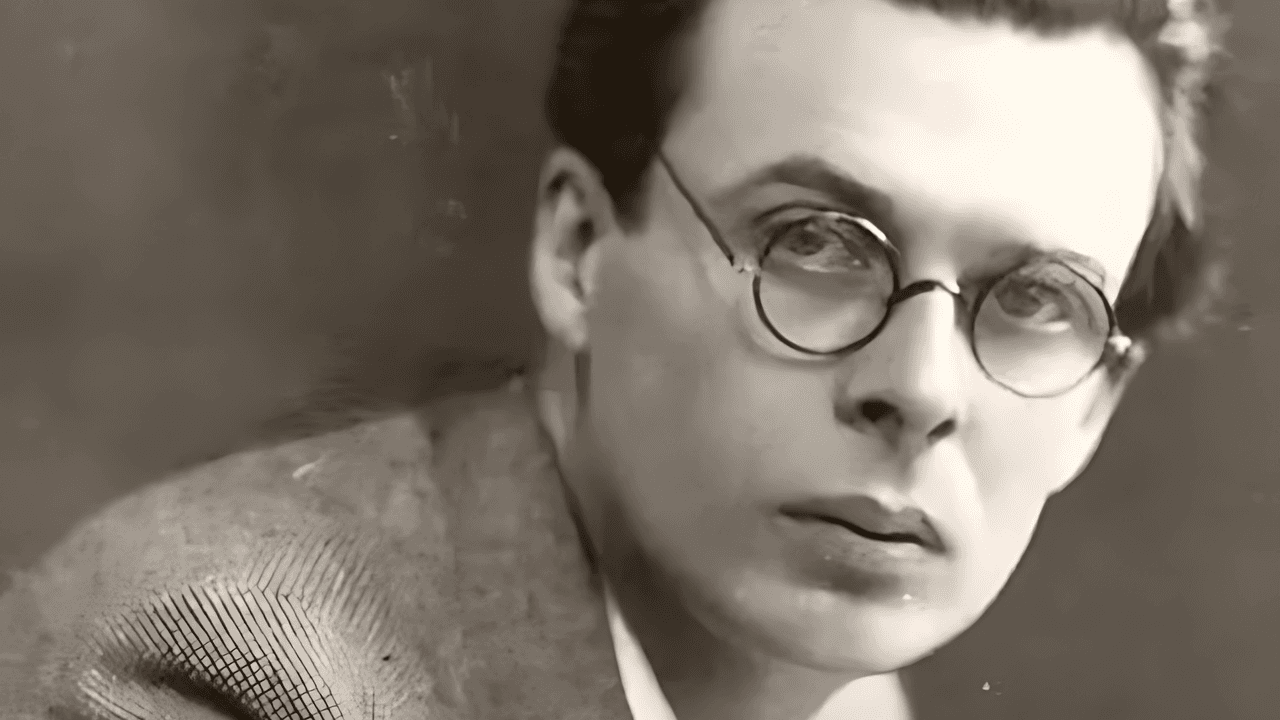
Aldous Huxley
Eş | Laura Archera Huxley (marriage: 1956 – Aldous’s death: 1963) Maria Nys Huxley (marriage: 1919 – Maria’s death: 1955) | ||||||||
|---|---|---|---|---|---|---|---|---|---|
Date of Birth | 26 July 1894 | ||||||||
Place of Birth | Godalming, Surrey, United Kingdom | ||||||||
Date of Death | 22 November 1963 | ||||||||
Place of Death | Los Angeles, California, United States | ||||||||
Nationality | United Kingdom (England) | ||||||||
Education | University of Oxford (English Literature) Eton College Balliol College | ||||||||
Profession(s) | Writer Screenwriter Critic | ||||||||
Literary Genres | Novel, Essay, Science Fiction, Dystopia, Criticism | ||||||||
Most Famous Work | Brave New World (Cesur Yeni Dünya, 1932) | ||||||||
Mother(s) | Julia Arnold (member of an educational and literary family) | ||||||||
Father(s) | Leonard Huxley (writer and editor) | ||||||||
Paternal Grandfather | Thomas Henry Huxley (biologist and defender of Darwin) | ||||||||
Child | Matthew Huxley (1920–2005) | ||||||||
Sibling | Julian Huxley (biologist, first director-general of UNESCO) | ||||||||
Aldous Leonard Huxley was a novelist, screenwriter, and critic whose works contributed to the intellectual context of the 20th century and engaged with diverse themes in literature and philosophy. Through essays, novels, and philosophical texts, Huxley questioned both the inner world of the individual and the contradictions of social structures, particularly analyzing in depth the tensions between scientific progress, technological rationalism, and individual freedom. In his writings, Huxley sought to encompass both the material and spiritual dimensions of human existence, advocating a critical modernism on one hand while emphasizing the importance of traditional wisdom and mystical intuition on the other.
Aldous Huxley was born on 26 July 1894 in Godalming, England. He was the grandson of the naturalist Thomas Henry Huxley and the son of the writer and editor Leonard Huxley. Raised in this intellectual environment, Huxley lived immersed in science, literature, and literature from an early age. While studying at Eton College, he contracted keratitis, which resulted in a significant loss of vision; this condition profoundly affected his life and literary career. He pursued a degree in English literature at Balliol College, Oxford, where he further developed his skills in critical thinking and literary analysis.
Huxley began his literary career with poetry but soon turned to narrative forms. His novels published in the 1920s—Crome Yellow (1921), Antic Hay (1923), and Point Counter Point (1928)—established him as a prominent voice in English literature. These works offer an ironic critique of the intellectual circles of the time, social disintegration, and cultural decay. However, the work that most clearly reveals Huxley’s intellectual and philosophical depth is his 1932 novel Brave New World. This dystopian text, centered on the conflict between technological advancement and individual freedom, is regarded as a profound critique of the fundamental contradictions of modern society.
Brave New World most clearly expresses Huxley’s intellectual tensions. In this novel, he demonstrates how scientific progress and technological order can transform into instruments that suppress individuality. He explores a search for balance between rationality and emotion, utilitarianism and spirituality, conformity and freedom. Huxley critiques both positivist worldviews and extreme romanticism, rejecting rigid rationalism as well as traditional mysticism as paths to salvation. Within this context, the characters of Brave New World—particularly John the Savage, Bernard Marx, and Mustapha Mond—serve as symbolic representations of Huxley’s inner conflicts.
Huxley’s dystopian vision faced criticism from contemporaries such as H.G. Wells, who accused him of misrepresenting science and rationality and of promoting a despairing rejection of progress. However, the social and political developments following the Second World War reinforced the validity of Huxley’s predictions. In the preface he wrote for the 1946 reissue of Brave New World, Huxley argued that a reasonable balance between science, technology, and spirituality was still possible. This statement signals a softening in his intellectual stance.
In the 1950s, Huxley pursued his quest to explore the boundaries of human consciousness through psychoactive substances. His experiments with mescaline and later LSD were philosophically examined in his books The Doors of Perception (1954) and Heaven and Hell (1956). Huxley argued that these substances could temporarily disable perceptual filters and allow access to a deeper, more intuitive level of reality. Psychedelic experiences played a central role in his personal search for enlightenment and in his effort to develop an alternative epistemology. In this regard, Huxley left a lasting impact on consciousness research and the counterculture movement.

In 1937, Huxley moved to the United States and supported himself through screenwriting in California. His involvement in projects such as Pride and Prejudice (1940) exemplifies his attempt to merge his literary talents with cinematic language. Yet this period also coincided with a sharpening of his critiques of American life. Themes such as consumer culture, shallow individualism, and spiritual emptiness emerged prominently in works written during these years, including After Many a Summer Dies the Swan (1939). His Hollywood experience deepened his cultural criticism.
Huxley’s intellectual orientation took a distinctly mystical and metaphysical turn from the 1940s onward. His book The Perennial Philosophy (1945) systematically articulates a shared “eternal wisdom” found across traditions such as Vedanta, Christian mysticism, Buddhism, and Sufism. According to Huxley, this wisdom can be accessed not only through reason but also through intuition and inner experience. This perspective led him to propose an alternative regime to Western rationalism. He viewed mysticism not merely as a path to personal salvation but also as the foundation for social transformation.
During this period, Huxley’s mystical orientation ceased to be purely theoretical and acquired an experiential dimension. In particular, during the final years of his life, he turned to LSD (lysergic acid diethylamide), arguing that it could carry human consciousness beyond the limits of ordinary perception. For Huxley, LSD was not a means of escape or escapism; rather, it possessed the quality of a tool for spiritual insight, aesthetic intuition, and mystical experience.
On 22 November 1963, in the final moments of his life, his request to his wife Laura Huxley to administer LSD to him was a practical manifestation of this philosophy. This orientation demonstrates that Huxley embraced a holistic philosophical stance that developed consciousness, perception, and existential awareness not only on an intellectual level but also through lived practice.
Biyografiler.com. "Aldous Huxley." Accessed March 26, 2025. https://www.biyografiler.com/kimdir/aldous-huxley.
Ege, Sema E. "Aldous Huxley ve Eserlerindeki Eleştirel Yaklaşımlar." Ankara Üniversitesi Dil ve Tarih-Coğrafya Fakültesi Dergisi 40, no. 3–4 (2000): 137–148.

Aldous Huxley
Eş | Laura Archera Huxley (marriage: 1956 – Aldous’s death: 1963) Maria Nys Huxley (marriage: 1919 – Maria’s death: 1955) | ||||||||
|---|---|---|---|---|---|---|---|---|---|
Date of Birth | 26 July 1894 | ||||||||
Place of Birth | Godalming, Surrey, United Kingdom | ||||||||
Date of Death | 22 November 1963 | ||||||||
Place of Death | Los Angeles, California, United States | ||||||||
Nationality | United Kingdom (England) | ||||||||
Education | University of Oxford (English Literature) Eton College Balliol College | ||||||||
Profession(s) | Writer Screenwriter Critic | ||||||||
Literary Genres | Novel, Essay, Science Fiction, Dystopia, Criticism | ||||||||
Most Famous Work | Brave New World (Cesur Yeni Dünya, 1932) | ||||||||
Mother(s) | Julia Arnold (member of an educational and literary family) | ||||||||
Father(s) | Leonard Huxley (writer and editor) | ||||||||
Paternal Grandfather | Thomas Henry Huxley (biologist and defender of Darwin) | ||||||||
Child | Matthew Huxley (1920–2005) | ||||||||
Sibling | Julian Huxley (biologist, first director-general of UNESCO) | ||||||||
Early Life and Education
Literary Career and Intellectual Evolution
Huxley’s Intellectual Contradictions
Criticism and Later Developments
Huxley and Psychedelic Experiences
Hollywood Period and Screenwriting
Main Works
Novels
Essays and Philosophical Works
Short Story Collections
Poetry Collections
Screenplays and Nonfiction Writings
Mysticism and Spiritual Quest
Final Years and Mystical Phase