


This article was automatically translated from the original Turkish version.
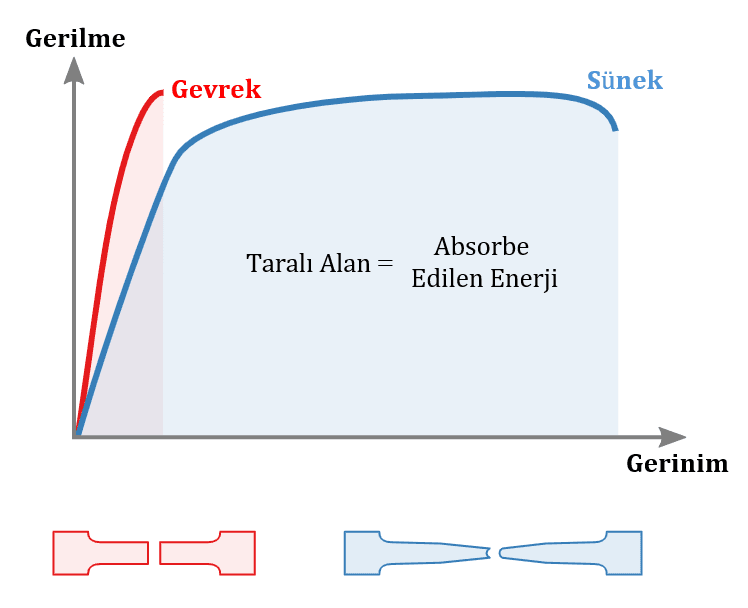
Figure 1 | Stress-Strain Diagram of Brittle and Ductile Materials | ||||||||
|---|---|---|---|---|---|---|---|---|---|
Brittle materials are materials that generally have low deformation capacity, exhibit elastic behavior behavior, and are prone to fracture under high stress. Such materials are commonly used in engineering applications where hardness and durability requirements are paramount. However, the fracture behavior of brittle materials presents challenges in time engineering design.

【1】
The most prominent characteristic of brittle materials is their low plasticity. These materials exhibit minimal plastic deformation after exceeding the elastic region and typically undergo sudden fracture. This feature complicates the study of fracture and cracking behavior in brittle materials. Often, the strength of such materials is determined by microstructural defects and stress stress concentration points within the material.

Sünek ve Gevrek Hasar Tipi
【2】
Brittle materials are used in numerous engineering applications. They are preferred in situations where high hardness is required but low deformation capacity is acceptable. For example:
Brittle materials are generally characterized by low deformation capacity and a tendency to fracture. Their tension-strain diagram typically lacks a distinct plastic deformation region and usually results in sudden fracture immediately after the elastic region.

Sünek ve Gevrek Malzeme Gerilme-Gerinim Diyagramı
【3】
Brittle materials, while maintaining important a place in engineering applications, require accurate prediction of fracture and cracking behavior, which is critical for their use. Consequently, a thorough understanding of the mechanical properties of brittle materials and the implementation of appropriate design strategies carry significant importance.
Beer, Ferdinand P., E. Russell Johnston Jr., John T. Dewolf, and David F. Mazurek. Cisimlerin Mukavemeti. Translation from the 6th edition. Trans. Ayşe Soyuçok and Özgün Soyuçok. Istanbul: Literatür Yayıncılık, 2019.
[1]
Knyamed. "Ductile vs. Brittle Fracture." Accessed February 26, 2025. https://knyamed.com/blogs/difference-between/ductile-vs-brittle-fracture.
[2]
ResearchGate. "Ductile and Brittle Failure of A709 Non-Weathering Steel Specimens." Accessed February 26, 2025. https://www.researchgate.net/figure/Ductile-and-brittle-failure-of-A709-non-weathering-steel-specimens-Ductile-failure-is_fig7_340161292.
[3]
Beer, Ferdinand P., E. Russell Johnston Jr., John T. Dewolf, and David F. Mazurek. Strength of Materials. Translated from the 6th edition by Ayşe Soyuçok and Özgün Soyuçok. Istanbul: Literatür Yayıncılık, 2019.

Figure 1 | Stress-Strain Diagram of Brittle and Ductile Materials | ||||||||
|---|---|---|---|---|---|---|---|---|---|
Mechanical Properties of Brittle Materials
Applications of Brittle Materials
Stress-Strain Diagram of Brittle Materials
Elastic Region (Linear Elastic Behavior)
Plastic Deformation Region