This article was automatically translated from the original Turkish version.
Realm | Animalia | ||||||||
|---|---|---|---|---|---|---|---|---|---|
Branch | Arthropoda | ||||||||
Class | Insecta | ||||||||
Team(s) | Hymenoptera | ||||||||
Family | Apidae | ||||||||
Genus | Bombus | ||||||||
Specie(s) | Bombus melanopygus Nylander | ||||||||
Bombus melanopygus is a medium-sized bumblebee species commonly found across western North America, characterized by prominent fur. It is now considered the same species as B. edwardsii, which was previously regarded as a separate species due to genetic similarities. The only genetic difference between its two morphological variants lies in the gene determining the color of the abdominal fur.
Bombus melanopygus is found over a wide range extending from the western coast of the United States to western Canada and Alaska. Dispersed populations are also present in high-elevation desert regions such as Arizona, Utah, and New Mexico, as well as areas near Canada’s northern polar region. Records of its presence in Ontario and New Brunswick are incorrect.
This species inhabits a variety of habitats including meadows, alpine meadows, urban parks, gardens, shrublands, and open areas. It typically forms colonies in underground rodent nests or abandoned bird nests. It is among the earliest species to establish nests and produce males.
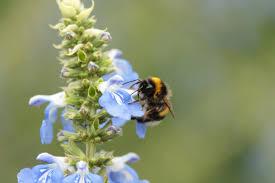
Food Plants (examples): Arctostaphylos, Ceanothus, Lupinus, Penstemon, Salvia, Trifolium, Vaccinium, etc.
Colonies are annual; only mated queens survive the winter. In the following spring, these queens forage for pollen and nectar to establish new colonies. The species employs “buzz pollination,” a technique in which it vibrates flowers to release pollen.

Image of a Bumblebee Perched on a Rock (Pexels)
This species is widespread within its range and shows no significant population decline. Therefore, it is currently not considered to pose any special conservation risk.
Bombus melanopygus is resilient to urbanization and certain agricultural activities. Studies in San Francisco, Vancouver, and Oregon have demonstrated that the species remains common in these environments. Currently, no specific threats are known. However, bumblebees in general face risks such as habitat loss, pesticides, infectious diseases, competition, and climate change.
Although commercial colonies of Bombus terrestris have become indispensable for greenhouse crop production, young queens and males from these colonies pose a risk of mating, dispersal, and nest establishment in natural fauna. Commercial bumblebees have been marketed to 57 countries, 16 of which are outside their natural range. The potential negative impacts of these invasive bees on natural ecosystems are under debate. Their tendency to spread into areas where they do not naturally occur may lead to competition with other pollinators or native fauna. This competition arises from limited food and shelter resources. Additionally, the introduction of natural predators and pathogens into new regions may become easier. Another significant impact is genetic disruption caused by hybridization between native populations and introduced ones. Hybridization between species and subspecies has been reported to result in genetic contamination. These risks include the transfer of parasites and pathogens, competition with native pollinators for nesting sites, reduced pollination of native flora, and hybridization leading to the decline or extinction of local species.
Image of a Bumblebee (Peter Clyne)
Bumblebee breeding is a process requiring specialized knowledge and technological infrastructure. Commercial companies gain access to this knowledge and technology through partnerships with global firms. In Türkiye, commercial breeding of bumblebees is regulated by the Ministry of Agriculture and Ministry of Forestry.
A regulation published in the Official Gazette No. 28143 on December 15, 2011, prohibited the collection of bees from the wild and encouraged breeding under controlled conditions. Breeding facilities are laboratories with no external environmental connection, where temperature and humidity are artificially controlled.
These facilities include preparation units, climate chambers, mating rooms, cold storage rooms, research laboratories, and storage areas.
Breeding stages include colony formation from queens, production of queens and males, mating, and controlled diapause of mated queens. Queens are transferred individually into numbered breeding boxes measuring 30 x 21 x 22 cm, consisting of two compartments: one for egg-laying and one for rearing. To encourage egg-laying, a newly emerged worker bee may be added. Colonies are fed sugar syrup and fresh pollen. Optimal temperature for successful breeding is 28–30 °C, with relative humidity of 50–60%. Queens and males produced in colonies are mated in mating cages at appropriate ages (queens at 5–8 days old, males at 10–14 days old).
Unlike honeybees, bumblebees can mate in enclosed environments. To prevent inbreeding, males and queens from the same colony are not mated with each other. The diapause period of mated queens — maintained at 2–5 °C for 1–5 months — must be carefully controlled to ensure successful colony establishment.
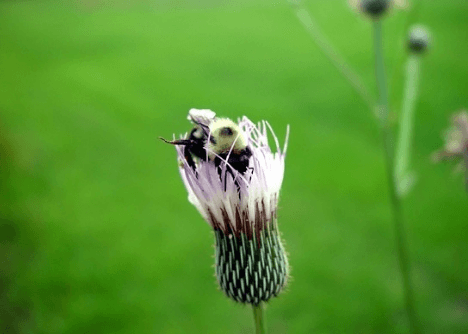
Image of a Bumblebee in Nature (PIXNIO)
Bombus terrestris is naturally distributed in the western Palearctic zoogeographic region and is found in all countries surrounding the Mediterranean Sea, except Egypt. Its natural life cycle differs from that of honeybees. Queens that mate in autumn enter diapause — a physiological dormancy — underground during winter.
Diapause is an adaptive mechanism that suppresses development under unfavorable environmental conditions such as low winter temperatures, high summer temperatures, drought, and food scarcity.
In spring, the queen establishes a nest, foraging for nectar and pollen to nourish herself and build food stores for brood production. After the first workers emerge, the queen continues laying eggs while the workers take over brood care and foraging. By late summer, colonies begin producing new queens and males. These sexually mature individuals leave the colony to mate. The old queen, males, and workers die, while young, mated queens enter diapause to survive the winter. Thus, colony life is limited to a single season. The life cycle and colony development of B. terrestris can exhibit flexibility depending on the climate and flora of the region where they live.
Clyne, Peter. "Common Carder Bee 'Bombus pascuorum' April 2020." YouTube video, 1:34. April 15, 2020. Accessed July 11, 2025. https://www.youtube.com/watch?v=S_qTzVN7YFw.
Hatfield, Rich, Sarina Jepsen, Robbin Thorp, Leif Richardson, and Sheila Colla. Bombus melanopygus. The IUCN Red List of Threatened Species 2014: e.T44937809A68983638. 2014. Accessed July 11, 2025. https://www.iucnredlist.org/species/44937809/68983638.
Tarım ve Orman Bakanlığı Arıcılık Araştırma Enstitüsü. *Bombus Arısı*. Ordu: Tarım ve Orman Bakanlığı, 2019. Accessed May 30, 2025. https://arastirma.tarimorman.gov.tr/aricilik/Belgeler/kitapc%C4%B1klar/bombusson.pdf

Realm | Animalia | ||||||||
|---|---|---|---|---|---|---|---|---|---|
Branch | Arthropoda | ||||||||
Class | Insecta | ||||||||
Team(s) | Hymenoptera | ||||||||
Family | Apidae | ||||||||
Genus | Bombus | ||||||||
Specie(s) | Bombus melanopygus Nylander | ||||||||
Geographic Distribution
Countries of Occurrence:
Habitat and Ecology
Conservation Status
Threats
Conservation Measures and Recommendations
Potential Impacts on Natural Ecosystems
Controlled Breeding
Natural Life Cycle