


This article was automatically translated from the original Turkish version.
+2 More
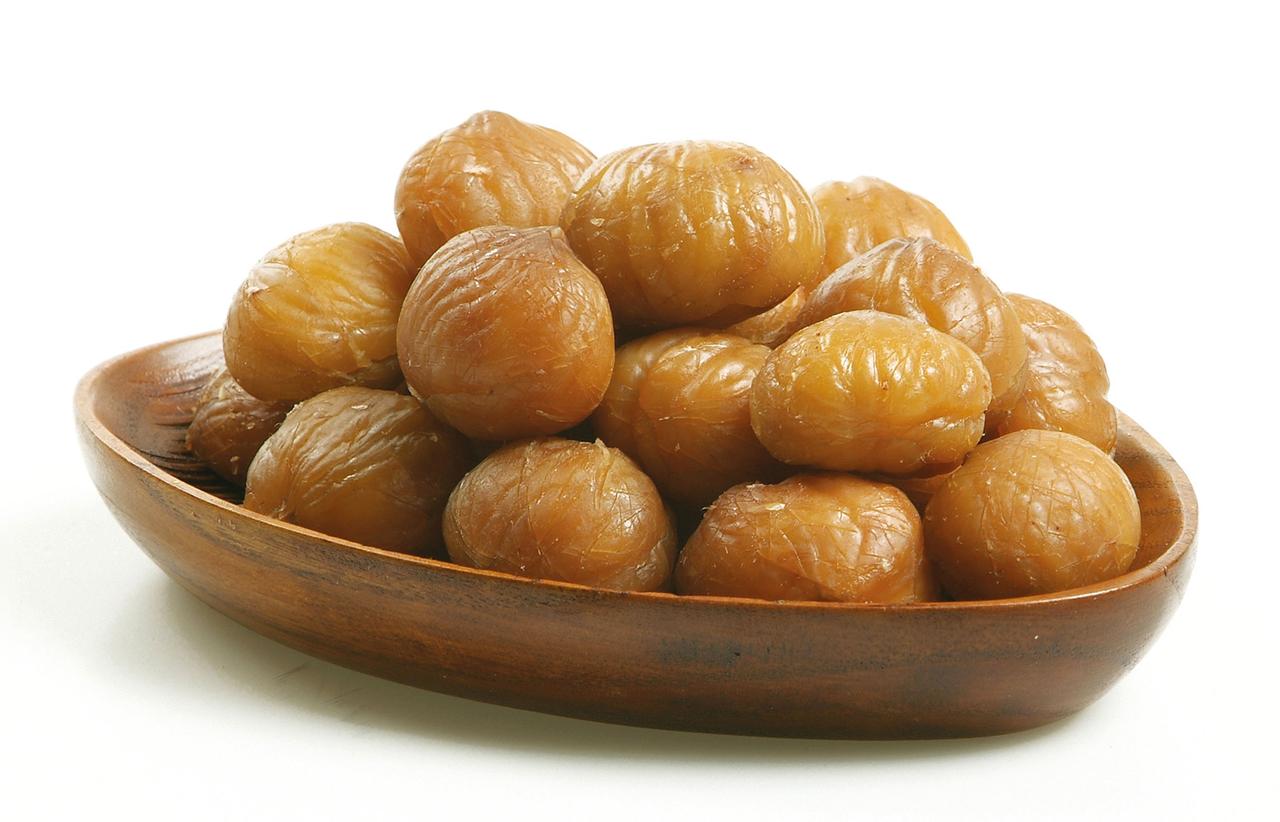
Bursa Chestnut Candy
Registration Number | 652 | ||||||||
|---|---|---|---|---|---|---|---|---|---|
Registration Date | 20.01.2021 | ||||||||
Application Number | C2019/037 | ||||||||
Application Date | 25.03.2019 | ||||||||
Name of the Geographical Indication | Bursa Chestnut Sugar | ||||||||
Product / Product Group(s) | Chestnut Sugar/Chocolate Confectionery and Related Products | ||||||||
Type of Geographical Indication | Geographical Indication | ||||||||
Applicant/Registrant(s) | Bursa Chamber of Commerce and Industry | ||||||||
Address of the Registrant | Organized Industrial Zone, Mavi Cad. 2.Sk. No.2 Nilüfer BURSA | ||||||||
Geographical Boundary | Bursa Province | ||||||||
Bursa Kestane Şekeri is a traditional dessert unique to Bursa province in Türkiye, prepared by cooking chestnuts in sugar syrup. It is commonly consumed directly as a snack; packaged products are served as offerings at home or to guests. Additionally, it may be found in some pastry shops and cafés, presented on dessert plates or as a garnish accompanying sweets.

Bursa Kestane Şekeri (Generated by Artificial Intelligence)
The production of Bursa Kestane Şekeri dates back to the early 20th century, particularly to the Bursa Confectioners’ Bazaar. Over many years, Bursa has served as the central production hub for chestnut candy, playing a pivotal role in its historical development and establishing a geographical link between the product and its place of origin.
Bursa Kestane Şekeri is a semi-solid food product made by peeling chestnuts and cooking them in syrup. The chestnuts used are selected from varieties that are easy to peel and have thin shells. The shell content must be below 25% and the shell color must not be excessively dark. The overall color of the product ranges from amber to yellowish tones and exhibits a non-caramelized appearance.
The fruit content must be between 63% and 71% for plain chestnut candy and at least 60% for syrupy versions. The final product’s pH must range between 5 and 5.8. The product is classified by size as small (5–10 g), large (10–20 g), and extra large (30–40 g), with this information clearly indicated on the packaging.
Chestnuts can be peeled manually or with machinery. For mechanical peeling, the chestnuts must first reach a specific dryness level. Dried chestnuts are scored in machines to separate their outer shells. They are then transported via conveyors to a steam unit where they are softened by steam and cleaned of their inner membranes. Chestnuts with removed membranes are transferred onto a conveyor belt, where workers use specialized knives to remove any remaining residues. Once peeled, the chestnuts are either directly sent to production or stored temporarily at -18°C in 8–10 kg bags. Chestnuts preserved this way remain usable for 2 to 3 years.
After processing, the peeled chestnuts must have a light color (creamy) and must not exhibit undesirable characteristics such as sourness, bitterness, or fermentation.
Peeled chestnuts are sorted into four groups by weight: small (4–7 g), medium (7–10 g), large (10–15 g), and extra large (15 g and above). For Bursa Kestane Şekeri production, medium and large chestnuts are preferred. Depending on the production method, they may be prepared either by tying them in cloth bundles—a traditional technique used in home production during the first half of the 20th century—or by placing them directly in baskets. The cloth-bundling method allows the chestnuts to cook evenly without damage.
Chestnuts sorted by size are placed in stainless steel baskets and transferred to boiling vats. The water used must be purified, softened, and treated with ultraviolet light. Boiling times vary depending on how long it takes for the chestnut tissues to soften. During this stage, the sugar syrup required for the next phase is prepared separately in another container.
After boiling, the water is drained from the chestnuts. The chestnuts are then cooked in the prepared syrup for approximately 45 minutes to one hour, either in open or closed vats. The syrup composition can be adjusted to contain approximately 10–12 kg of sugar and 4 kg of water per 10 kg of chestnuts. After cooking, the chestnuts are left to rest.
Chestnut candies are classified by weight: small (5–10 g), large (10–20 g), and extra large (30–40 g). This classification is clearly stated on the packaging. The product is sold in various packaging types, including boxes, bowls, glass jars, metal tins, vacuum-sealed bags, or plastic containers. The shelf life of the product varies between 30 days and 3 years, depending on the packaging method and thermal treatment applied.
Due to its historical background, traditional production techniques, and the skilled craftsmanship required in its preparation, all stages of Bursa Kestane Şekeri production must be carried out exclusively within the boundaries of Bursa province. This fulfills one of the fundamental criteria for geographical indication: production based on local knowledge, skills, and resources.
Monitoring of the product is conducted at least once a year by a commission composed of at least three experts from the Bursa Provincial Directorate of Agriculture and Forestry, Food and Feed Branch, and the Bursa Food and Feed Control Center Research Institute, under the coordination of the Bursa Chamber of Commerce and Industry. Inspections may be carried out at any time if necessary or upon complaint.
In cases of suspicion, chemical analyses may be performed on the product. These analyses must ensure that the glucose content does not exceed 1% and that the pH remains within the 5–5.8 range.
Turk Patent and Trademark Office. "Bursa Kestane Şekeri." *Coğrafi İşaretler Bilgi Sistemi*. Accessed May 23, 2025. https://ci.turkpatent.gov.tr/cografi-isaretler/detay/405.
Turk Patent and Trademark Office. Bursa Kestane Şekeri Coğrafi İşaret Tescil Belgesi. Ankara: TÜRKPATENT, 2021. Accessed May 23, 2025. https://ci.turkpatent.gov.tr/Files/GeographicalSigns/1272a85d-2221-4b40-b1cb-f36f79c4b34f.pdf.

Bursa Chestnut Candy
Registration Number | 652 | ||||||||
|---|---|---|---|---|---|---|---|---|---|
Registration Date | 20.01.2021 | ||||||||
Application Number | C2019/037 | ||||||||
Application Date | 25.03.2019 | ||||||||
Name of the Geographical Indication | Bursa Chestnut Sugar | ||||||||
Product / Product Group(s) | Chestnut Sugar/Chocolate Confectionery and Related Products | ||||||||
Type of Geographical Indication | Geographical Indication | ||||||||
Applicant/Registrant(s) | Bursa Chamber of Commerce and Industry | ||||||||
Address of the Registrant | Organized Industrial Zone, Mavi Cad. 2.Sk. No.2 Nilüfer BURSA | ||||||||
Geographical Boundary | Bursa Province | ||||||||
No Discussion Added Yet
Start discussion for "Bursa Chestnut Candy" article
Geographical Indication
Product Definition and Distinctive Characteristics
Production Process
Peeled Chestnuts:
Classification by Size:
Boiling Stage:
Cooking in Syrup:
Packaging and Storage:
Geographical Boundary and Production Requirement
Monitoring Mechanism
Inspection criteria are as follows: