


This article was automatically translated from the original Turkish version.
+2 More
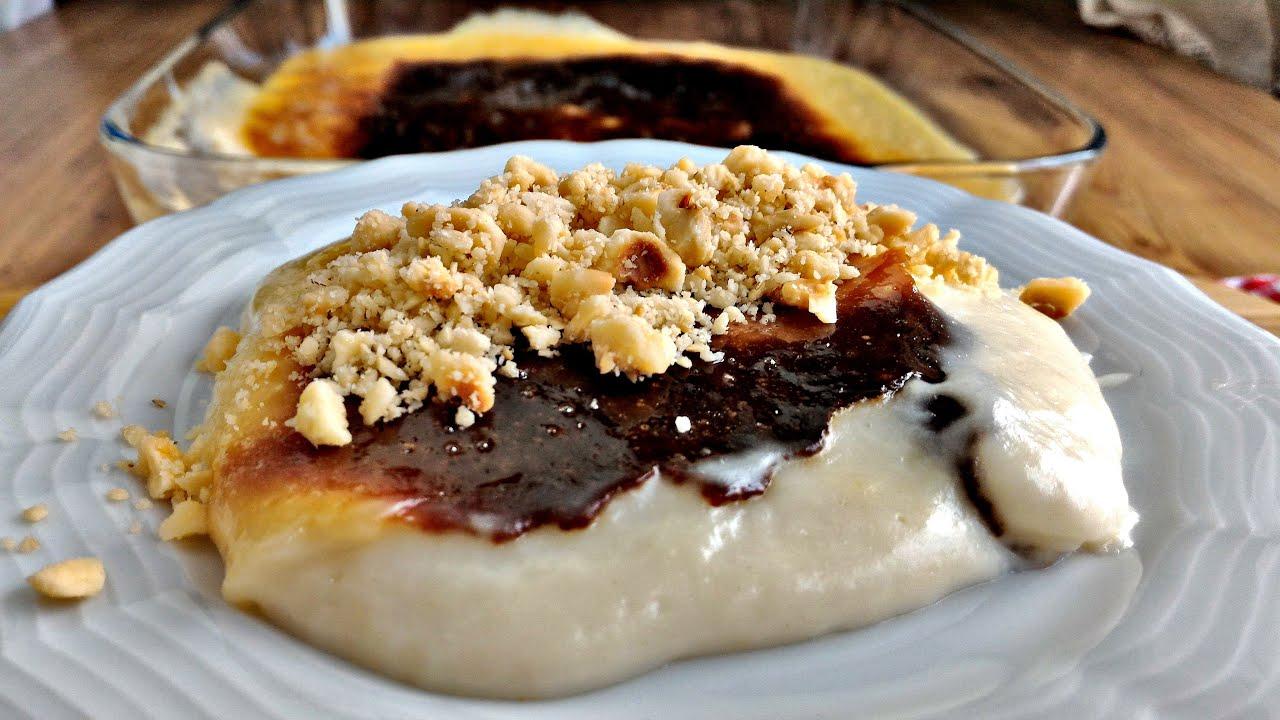
Bursa Milk Halva
Registration Number | 912 | ||||||||
|---|---|---|---|---|---|---|---|---|---|
Registration Date | 04.10.2021 | ||||||||
Application Number | C2020/236 | ||||||||
Application Date | 20.08.2020 | ||||||||
Name of the Geographical Indication | Bursa Süt Helvası | ||||||||
Product / Product Group(s) | Helva / Baking and Confectionery Products Dough Products and Desserts | ||||||||
Type of Geographical Indication | Trademark | ||||||||
Applicant/Registrant(s) | Bursa Chamber of Commerce and Industry | ||||||||
Address of the Registrant | Organized Industrial Zone, Mavi Cad. 2. Sok. No:2 Nilüfer/BURSA | ||||||||
Geographical Boundary | Bursa Province | ||||||||
Bursa Süt Helvası is a traditional dessert prepared by cooking a mixture of raw cow’s milk, flour, butter, and sugar, then baking it until the top is browned, and serving it warm. This product, unique to the province of Bursa, is officially registered with a geographical indication mark and traces its historical origins to the Ottoman imperial kitchen. In addition to daily consumption, it is commonly served during special occasions in the region such as births, weddings, and holidays.

Bursa Süt Helvası (generated by artificial intelligence.)
Bursa Süt Helvası is a dessert composed primarily of raw cow’s milk, butter, flour, and white sugar. These ingredients are cooked in specific proportions and then baked at high temperature. The core stage of production involves mixing the ingredients until they reach a custard-like consistency, followed by baking at 250 °C to brown the surface. This step is essential in determining both the texture and visual appearance of the dessert.
Optionally, before serving, crushed walnut kernels, hazelnut kernels, or cinnamon may be sprinkled on top. The dessert is typically served warm, either in a serving dish or in individual portions baked in ovenproof containers. This traditional sweet is consumed not only on special occasions but also as part of everyday meals in Bursa.
Bursa Süt Helvası appears in recipes from the Ottoman imperial kitchen and is frequently served during various social and religious ceremonies in the Bursa region, including births, weddings, funerals, Hıdrellez, mevlit, kandil, village blessings, and holidays.
The production process follows specific steps.
In the first stage, 80 to 190 grams of butter or an equal mixture of sunflower oil and butter is melted in a pan. Then, 80 to 100 grams of wheat flour is added and stirred until the raw flour smell disappears. Pre-boiled 1 litre of fresh raw cow’s milk is gradually added to this mixture. The mixture is continuously stirred with a wooden spoon suitable for food contact to achieve a smooth consistency. Finally, 225 to 280 grams of white sugar is added and the mixture is blended until homogeneous.
This custard-like mixture is poured into a tray and left to rest for at least 15 to 20 minutes. It is then baked in a preheated oven at approximately 250 °C until the top turns brown. Optionally, 5 to 10 grams of pine nuts and 5 grams of vanilla may be incorporated during production. The product is served warm immediately after baking.

Bursa Süt Helvası (generated by artificial intelligence.)
To comply with geographical indication registration requirements, the term “Bursa Süt Helvası” and the geographical indication emblem must appear either directly on the product or its packaging. If direct application is not feasible, these markings must be placed in a clearly visible location at the production site.
The production of Bursa Süt Helvası may only take place within the boundaries of Bursa province. This requirement arises from the dessert’s regional characteristics, historical heritage, and the specific production method tied to its geographical origin.
Monitoring of the production and registration process for Bursa Süt Helvası is coordinated by the Bursa Chamber of Commerce and Industry. The monitoring board includes experts from the Bursa Provincial Directorate of Agriculture and Forestry, the Faculty of Agriculture at Uludağ University, and the Department of Food Engineering at the Faculty of Engineering and Natural Sciences of Bursa Technical University. The board consists of at least four members.
Inspections are conducted at least once annually. Additional inspections may be carried out at any time if necessary or upon complaint. During these inspections, the suitability of raw materials, adherence to the defined production method, and the correct use of labeling and emblems are verified. The monitoring board may engage experts from public or private institutions to assist in its duties. The registering institution is responsible for protecting the product’s rights and managing any legal proceedings.
Turk Patent and Trademark Office. "Bursa Süt Helvası." *Geographical Indications Information System*. Accessed May 22, 2025. https://ci.turkpatent.gov.tr/cografi-isaretler/detay/2483.
Turkish Patent and Trademark Office. "Bursa Süt Helvası Coğrafi İşaret Tescil Belgesi ve Teknik Şartnamesi." Accessed May 22, 2025. https://ci.turkpatent.gov.tr/Files/GeographicalSigns/80b90a4c-90f6-41aa-93cc-e7caac912384.pdf.

Bursa Milk Halva
Registration Number | 912 | ||||||||
|---|---|---|---|---|---|---|---|---|---|
Registration Date | 04.10.2021 | ||||||||
Application Number | C2020/236 | ||||||||
Application Date | 20.08.2020 | ||||||||
Name of the Geographical Indication | Bursa Süt Helvası | ||||||||
Product / Product Group(s) | Helva / Baking and Confectionery Products Dough Products and Desserts | ||||||||
Type of Geographical Indication | Trademark | ||||||||
Applicant/Registrant(s) | Bursa Chamber of Commerce and Industry | ||||||||
Address of the Registrant | Organized Industrial Zone, Mavi Cad. 2. Sok. No:2 Nilüfer/BURSA | ||||||||
Geographical Boundary | Bursa Province | ||||||||
Characteristics
Recipe and Production Method
Ingredients
Preparation
Usage and Labeling
Geographical Production Boundary
Monitoring and Protection