


This article was automatically translated from the original Turkish version.
+2 More
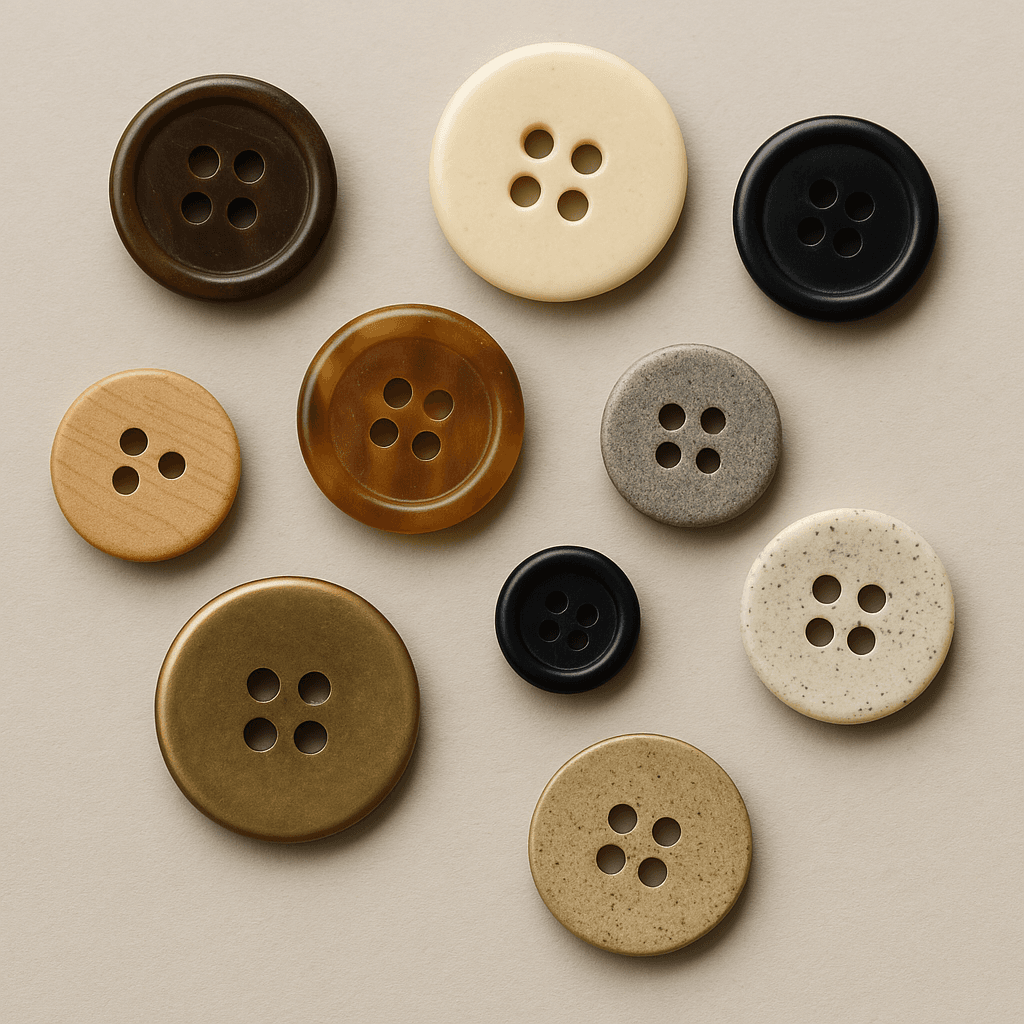
Button
Type(s) | Clothing item – accessory | ||||||||
|---|---|---|---|---|---|---|---|---|---|
Function(s) | Joining carrying symbolic and cultural meaning decorating clothing parts fastening | ||||||||
Historical Origin | Extends back to the 2000s BCE; uses are documented in Ancient China, Mesopotamia, and the Caspian region | ||||||||
Origin (Etymology) | Derived from the Old Turkish root "tüg-mek" (to fasten, to tie) | ||||||||
A button is a clothing accessory, typically round and perforated, used to fasten two pieces of fabric together. While serving a functional role in garments, it has also acquired aesthetic, symbolic, and cultural meanings over time.
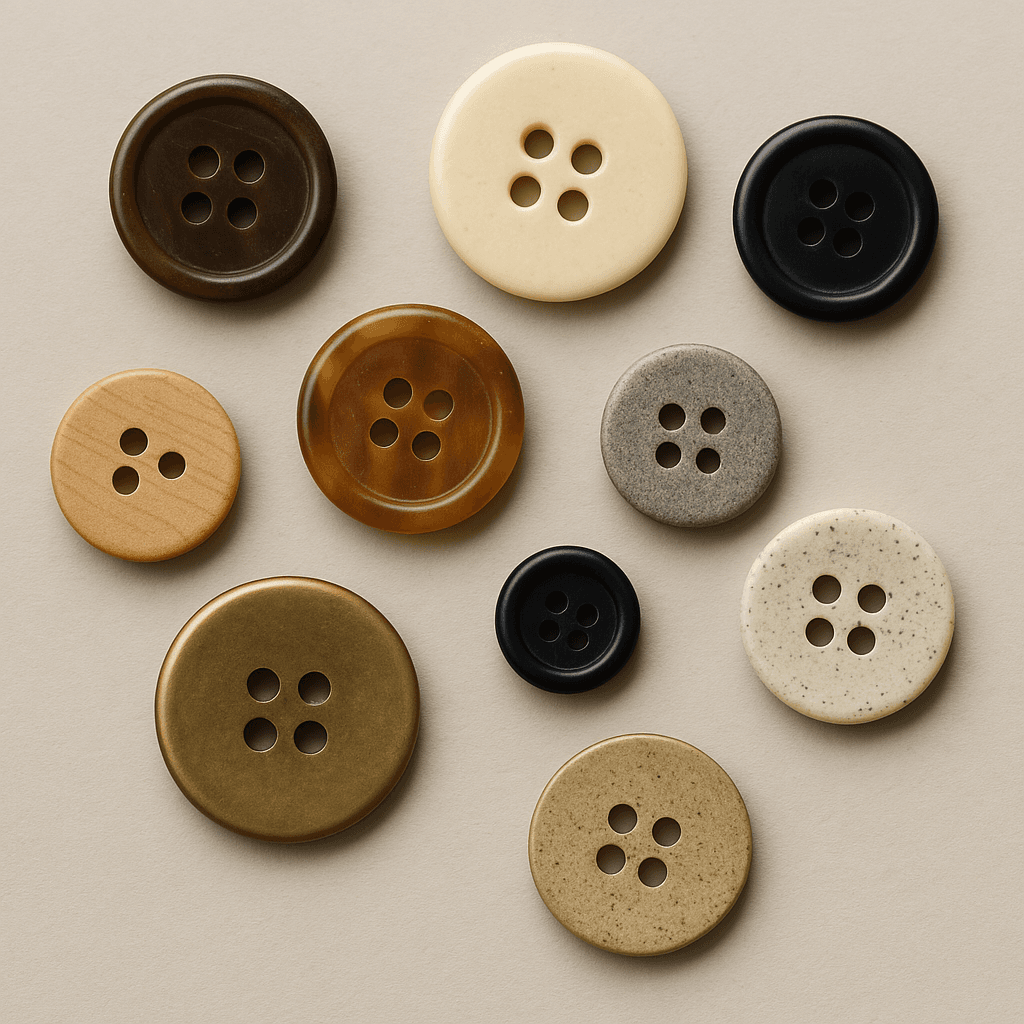
An Image Showing Buttons – Generated by Artificial Intelligence
The exact origins of the button cannot be definitively established, but archaeological evidence suggests its use dates back to around 2000 BCE. Buttons used to join two cords have been found in ancient Chinese tombs, while in Mesopotamian and Egyptian civilizations, buttons were used not only to fasten garments but also for decorative purposes. Some studies propose that buttons emerged in the region around the Caspian Sea for military purposes, facilitating practical fastening.
From the Middle Ages onward, buttons began to be widely used in men’s clothing. After the 18th century, they diversified in both artistic and craft dimensions, with types made from precious stones becoming popular as indicators of social status.
In Turkish, the word “düğme” derives from the Old Turkic root “tüg-mek” meaning to tie or fasten. During the Seljuk period, it was used in the form “tügme,” and in Kipchak and Cuman Turkic dialects, it was recorded as “tüyme” and “tüvme.”
In Türkiye, there are numerous folk beliefs associated with buttons. These beliefs vary according to the button’s shape, number, color, and position on the garment.
Both the presence and absence of a button carry symbolic meanings. When present, it represents order, connection, and unity; when missing or broken, it is associated with incompleteness, bad luck, and lack of status. These meanings are frequently encountered in Turkish folk narratives, folk poetry, and rites of passage.

Button
Type(s) | Clothing item – accessory | ||||||||
|---|---|---|---|---|---|---|---|---|---|
Function(s) | Joining carrying symbolic and cultural meaning decorating clothing parts fastening | ||||||||
Historical Origin | Extends back to the 2000s BCE; uses are documented in Ancient China, Mesopotamia, and the Caspian region | ||||||||
Origin (Etymology) | Derived from the Old Turkish root "tüg-mek" (to fasten, to tie) | ||||||||
History
Etymology
Applications
Button Beliefs in Turkish Folk Culture
Symbolic Meanings