


This article was automatically translated from the original Turkish version.
+1 More
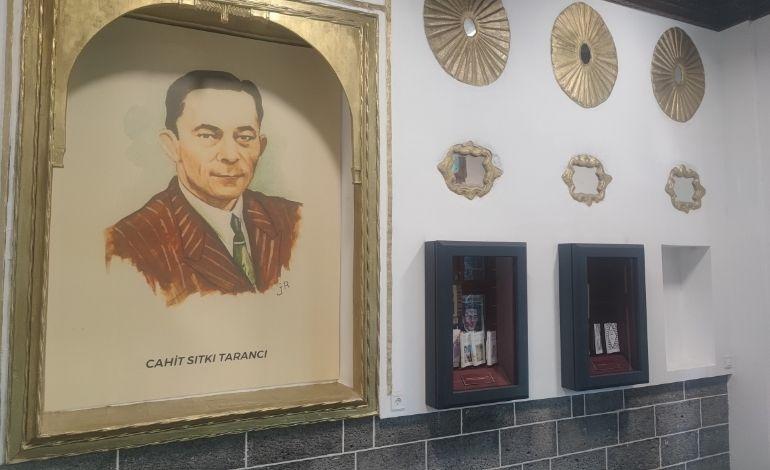
Cahit Sıtkı Tarancı Museum was established when the house where Cahit Sıtkı Tarancı, one of the prominent figures of Republican-era Turkish literature, was born and raised, was expropriated by the Ministry of Culture and converted into a museum in 1974. The house, constructed in 1733, is among the original examples reflecting the traditional architectural features of Diyarbakır.
The house where Cahit Sıtkı Tarancı was born is located at No. 3 Cahit Sıtkı Tarancı Street, in the Camii Kebir Neighborhood of the Sur District, in the city center of Diyarbakır. The structure was built in 1733 and is one of the significant examples of Diyarbakır’s traditional civil architecture. It has belonged to the Tarancı family since the late 19th century. The renowned poet was born in this house on 2 October 1910.
The house was expropriated by the Ministry of Culture in 1973. After the completion of the restoration process, it was opened to the public on 29 October 1973, in commemoration of the 50th anniversary of the Republic, under the name “Cahit Sıtkı Tarancı Culture Museum.”

Cahit Sıtkı Tarancı Museum (Culture Portal)
The Cahit Sıtkı Tarancı Museum is a traditional residential structure exhibiting typical features of Diyarbakır houses. The entire building is constructed from basalt stone and consists of a ground floor plus one additional floor, divided into four main wings. The spatial layout is organized according to a seasonal usage principle adapted to the region’s climatic conditions:
Summer wing (North wing): Positioned to receive limited sunlight, providing a cooler environment.
Winter wing (South wing): Oriented to maximize solar gain.
Spring wing (East wing) and Autumn wing (West wing): Designed for use during transitional seasons.
At the center of the building lies a large, open courtyard, which serves as the social and functional heart of the house. All rooms open onto this courtyard. Its width allows daylight to permeate the interior and supports air circulation that provides cooling during the summer months.
The building contains a total of 14 rooms of varying sizes, one kitchen, one pantry, one toilet, one eyvan, and a small hammam. The kitchen is located in the northeast corner and constructed in an open-plan, eyvan-style arrangement. The hammam is situated in the southwest corner. The hammam’s hot, warm, and cold sections are designed in accordance with the traditional Ottoman floor plan.

Interior Space (Museum.gov.tr)

Cahit Sıtkı Tarancı Museum (Culture Portal)
The most striking part of the house is the two-story summer wing located on the north side. This section holds both architectural and biographical significance for Cahit Sıtkı Tarancı. On the second floor of the summer wing is a spacious eyvan, supported by double-arched openings. The large room opening onto this eyvan is known as the main room or mabeyn.
This room is the most magnificent part of the house, both in terms of architectural detail and cultural function. Its high ceiling, large windows, niches, and basalt stone craftsmanship draw particular attention. It is known that Cahit Sıtkı Tarancı was born in this room.

Interior Space (Culture Portal)
Following the completion of restoration in 1974, the house was opened to the public as the Cahit Sıtkı Tarancı Museum and placed under protection as a cultural heritage site. The museum has been organized to shed light on the history of Turkish literature and to transmit the traditional lifestyle of Diyarbakır to future generations.
The museum displays a variety of materials related to the poet, including:
Most of these items were acquired through donations or archival research, while some were obtained directly from the Tarancı family. The museum also features reconstructed sections depicting period-appropriate seating arrangements, kitchen utensils, and bedroom setups. Thus, it offers valuable insights into both the personal history of Cahit Sıtkı Tarancı and traditional domestic life in Diyarbakır.

Interior Space (Culture Portal)
The museum serves as an important stop for both domestic and international tourists visiting Diyarbakır. In addition to visitors interested in experiencing the environment where Cahit Sıtkı Tarancı was born and raised, it is frequently visited by researchers and students with an interest in Ottoman-era stone residential architecture. The house has also been the subject of numerous academic studies, cultural events, and documentary projects.
Anadolu Ajansı. “Türk Edebiyatında Kült Şiirlerin Yazarı: Cahit Sıtkı Tarancı.” Accessed May 4, 2025. https://www.aa.com.tr/tr/kultur/turk-edebiyatinda-kult-siirlerin-yazari-cahit-sitki-taranci/3359767
T.C. Kültür ve Turizm Bakanlığı. “Cahit Sıtkı Tarancı Müzesi.” Müze.gov.tr. Accessed May 4, 2025. https://muze.gov.tr/muze-detay?SectionId=DCS01&DistId=MRK
Türkiye Kültür Portalı. "Cahit Sıtkı Tarancı Müzesi." Kültür Portalı. Accessed May 4, 2025. https://www.kulturportali.gov.tr/turkiye/diyarbakir/gezilecekyer/caht-siki-taranci-muzes

No Discussion Added Yet
Start discussion for "Cahit Sıtkı Tarancı Museum" article
Location and Historical Background
Architectural Structure and Spatial Organization
Summer Wing and Main Room (Mabeyn)
Conversion into a Museum and Exhibition Elements
Cultural and Touristic Value