This article was automatically translated from the original Turkish version.
+1 More
Location | Maçka Trabzon | ||||||||
|---|---|---|---|---|---|---|---|---|---|
Height(s) | Approximately 2 504 m | ||||||||
Notable Features | Glacial lake, alpine meadows, nature tourism | ||||||||
Tourist Activities | Alpine hiking, photography, nature observation | ||||||||
Transportation(s) | By road via Maçka district | ||||||||
Çakırgöl Yaylası, located within the boundaries of the Maçka district in Trabzon, is a significant highland plateau distinguished by its natural structure, the landscape formed around the lake, and its contribution to alpine tourism.
Çakırgöl Yaylası lies in the southeastern part of Maçka district, atop the Zigana Mountains. Situated at an elevation of approximately 2,504 meters above sea level, the plateau is positioned near the border between Trabzon and Gümüşhane. Due to its high altitude, the area maintains a cool climate even during summer months, making it a preferred destination not only for alpine pastoral activities but also for nature hiking and alpine tourism.
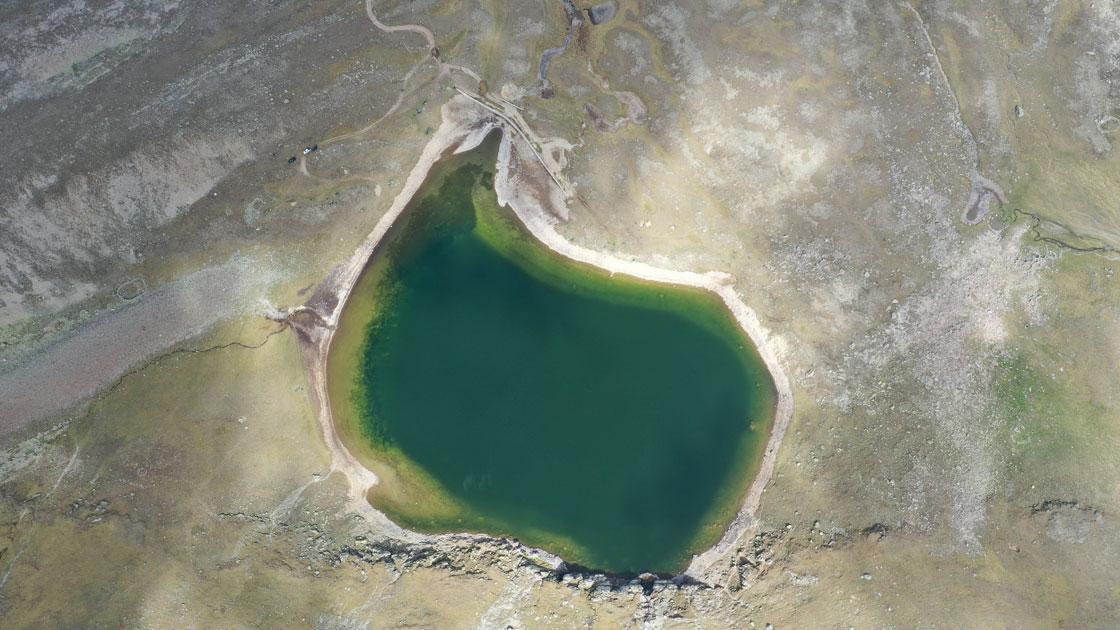
The plateau derives its name from Çakırgöl, a lake situated among the surrounding mountains. The lake is a natural formation resulting from glacial erosion and, despite its high elevation, maintains clear water throughout the year. The surrounding area, covered in meadows, transforms into extensive pastures during summer, providing vital grazing grounds for local livestock husbandry.

Aerial View of Çakırgöl Yaylası (Anadolu Agency)
Çakırgöl Yaylası is one of the primary highland areas in Trabzon province designated for alpine tourism. Especially during summer months, it attracts not only local residents but also nature enthusiasts, photography lovers, and trekking groups, drawn by its rich scenic beauty. The intermittent dispersion of dense fog layers around the lake creates a unique natural visual effect, leading many to describe the region as a “hidden paradise.”
Access to the plateau is typically via Maçka district. Despite the challenges of transportation, the area’s pristine natural environment continues to attract visitors.
Çakırgöl Yaylası and its surroundings are rich in biodiversity, featuring high-altitude flora, a glacial lake ecosystem, and distinctive alpine vegetation. The absence of any permanent construction on the plateau has largely preserved its natural integrity. With no permanent accommodation facilities near the lake, day visits are the norm, which plays a positive role in maintaining the ecological balance of the area.
Anadolu Ajansı. “Zirvedeki Saklı Cennet: Çakırgöl.” Accessed June 27, 2025. https://www.aa.com.tr/tr/turkiye/zirvedeki-sakli-cennet-cakirgol/1611924
T.C. Ministry of Culture and Tourism. "Yayla Turizmi ve Yaylalarımız." *Trabzon İl Kültür veTurizm Müdürlüğü. Accessed June 27, 2025. https://trabzon.ktb.gov.tr/TR-57698/yayla-turizmi-ve-yaylalarimiz.html
T.C. Trabzon Valiliği. "Yaylalarımız." Accessed June 27, 2025. http://www.trabzon.gov.tr/yaylalar
T.C. Trabzon Valiliği. "Yaylalarımız." Accessed June 27, 2025. http://www.trabzon.gov.tr/yaylalarimiz

Location | Maçka Trabzon | ||||||||
|---|---|---|---|---|---|---|---|---|---|
Height(s) | Approximately 2 504 m | ||||||||
Notable Features | Glacial lake, alpine meadows, nature tourism | ||||||||
Tourist Activities | Alpine hiking, photography, nature observation | ||||||||
Transportation(s) | By road via Maçka district | ||||||||
Location and Geographic Features
Touristic Potential and Access
Ecological Structure and Conservation Status