

This article was automatically translated from the original Turkish version.
+1 More
World | Animalia | ||||||||
|---|---|---|---|---|---|---|---|---|---|
Branch | Chordata | ||||||||
Class | Aves | ||||||||
Team(s) | Cathartiformes | ||||||||
Family | Cathartidae | ||||||||
Protection Status | Critically Endangered (CR) | ||||||||
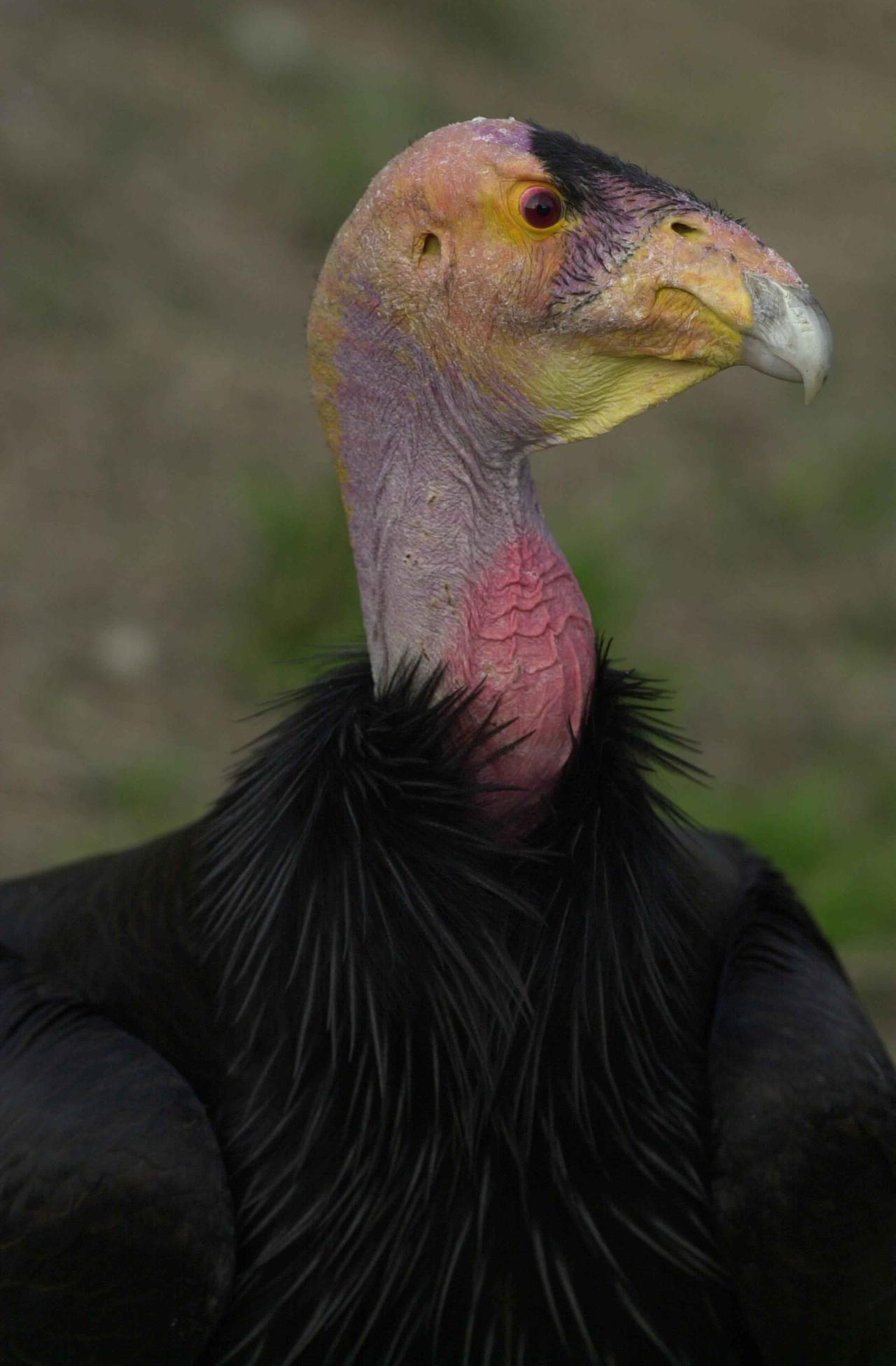
The California Condor (Gymnogyps californianus) is the largest terrestrial bird in North America and a member of the New World vultures (Cathartidae).
The California Condor, scientifically named Gymnogyps californianus, was described by Shaw in 1797. In biological classification, it belongs to the Kingdom Animalia, Phylum Chordata, Class Aves, Order Cathartiformes, and Family Cathartidae. In English it is known as the California Condor, and in Spanish/Castilian as Cóndor Californiano or Cóndor de California.
Adults measure 117 to 134 cm in length and are recognized by their large size. Their plumage is predominantly black with white underwing linings and silvery panels on the upper secondary feathers. Their heads are bare and colored orange to red. Juveniles have black heads and darkly speckled underwings. When soaring with horizontal wings, their primary feathers curve upward. In the wild, they are typically found near reintroduction areas but can extend their range hundreds of kilometers beyond these zones.
The population of the California Condor declined throughout its historical range during the 19th century. By 1937, it had disappeared from all regions outside the U.S. state of California. The population dropped to 22 individuals by 1981 and became extinct in the wild in 1987 when the last six remaining birds were captured for a captive breeding program. Intensive captive breeding and reintroduction efforts led to a population of 223 individuals by August 2003, of which 138 were in captivity and 85 had been released into the wild in California and northern Arizona. Wild reproduction resumed in 2002 and is now observed in all subpopulations in California, Arizona/Utah, and Baja Mexico. As of December 2019, the total global population reached 518 individuals, comprising 337 free-flying (wild) birds and 181 in captivity. Condors continue to persist in Mexico and the United States (Arizona, Utah, California, and temporarily Wyoming, Colorado, and New Mexico).
According to the IUCN, the number of mature individuals (breeding-capable and wild-raised birds) was 93 as of March 2020. The population trend is increasing, but this growth is sustained solely by the continuous release of captive-bred birds, as natural recruitment from wild-bred individuals has not been sufficient to offset mortality rates.
Condor habitats include rocky terrain, open scrubland, coniferous forests, and oak savannas. They nest in crevices on rocky ledges or in large tree cavities. They are scavengers that feed primarily on the carcasses of large mammals and occasionally smaller mammals. Released birds become independent after release and can establish home ranges exceeding 400 km.
The decline of the California Condor population during the 20th century is primarily attributed to lead poisoning caused by the accidental ingestion of lead bullet fragments or shot in carcasses. Lead poisoning remains a significant threat and cause of death for released birds today. Condors are particularly vulnerable to lead poisoning due to their high adult survival rates and low reproductive rates.
The California Condor is listed on CITES Appendices I and II. Ongoing conservation efforts include a comprehensive reintroduction program managed by the U.S. Fish and Wildlife Service, the Ventana Wildlife Society, the Peregrine Fund, and the Mexican government.
Key conservation actions:
IUCN Red List. “Kaliforniya Kondoru (Gymnogyps californianus).” IUCN Red List. Accessed October 26, 2025.
Lyzenga, Megan. "Gymnogyps californianus (California condor)." Animal Diversity Web. Accessed October 26, 2025. https://animaldiversity.org/accounts/Gymnogyps_californianus/
Pixnio. "California Condor Face Head Gymnogyps Californianus." Pixnio. Accessed October 26, 2025. https://pixnio.com/fauna-animals/birds/condor-bird-pictures/california-condor-face-head-gymnogyps-californianus

World | Animalia | ||||||||
|---|---|---|---|---|---|---|---|---|---|
Branch | Chordata | ||||||||
Class | Aves | ||||||||
Team(s) | Cathartiformes | ||||||||
Family | Cathartidae | ||||||||
Protection Status | Critically Endangered (CR) | ||||||||
No Discussion Added Yet
Start discussion for "California Condor (Gymnogyps californianus) " article
Taxonomy and Morphological Characteristics
Historical Decline and Geographic Distribution
Population Status and Ecology
Main Threats
Conservation Efforts