


This article was automatically translated from the original Turkish version.
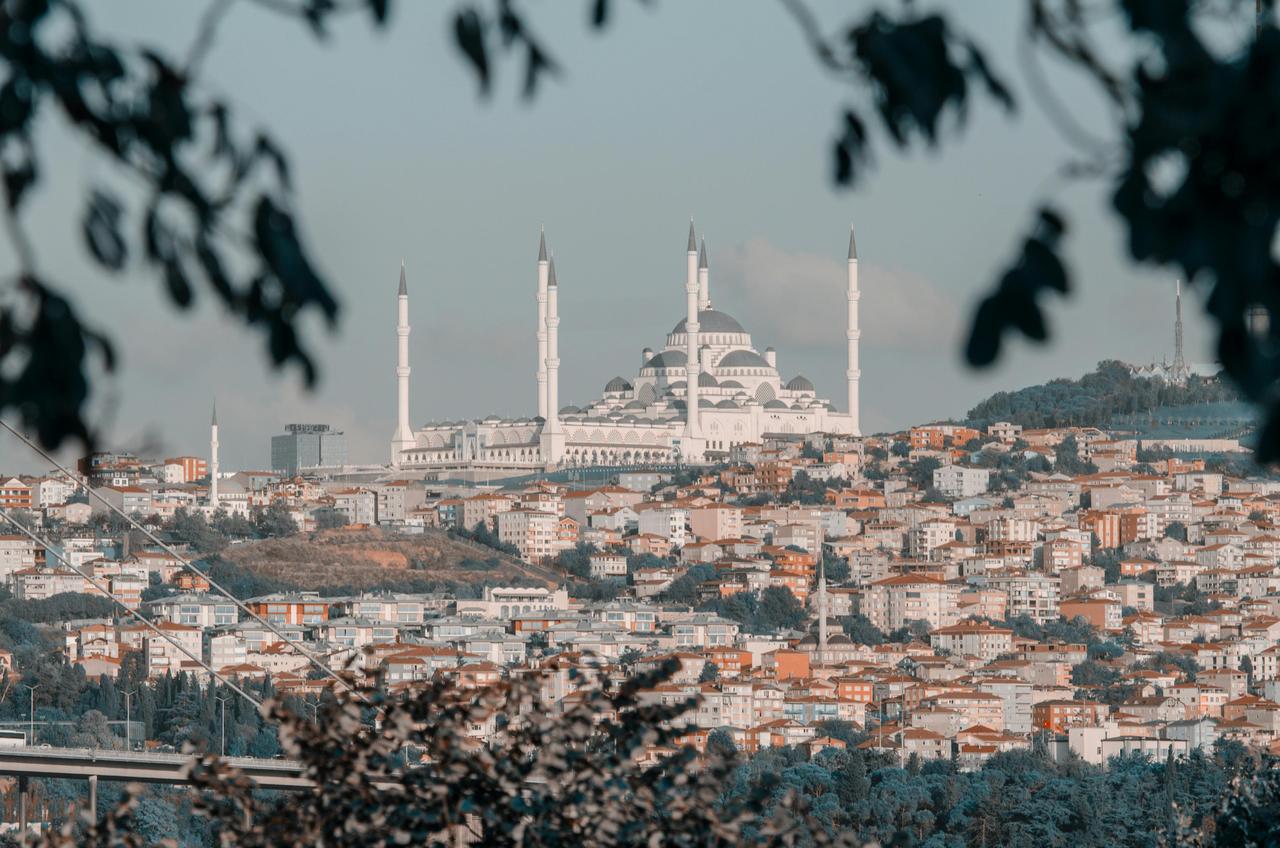
The Grand Çamlıca Mosque is a place of worship located on Çamlıca Hill in the Üsküdar district of Istanbul and holds the distinction of being the largest mosque in Türkiye. Its architecture, which blends Ottoman and Seljuk traditional styles with modern lines, has become a significant landmark in Istanbul’s skyline. The mosque was officially opened on 3 May 2019 with the participation of President Recep Tayyip Erdoğan.
Construction of the mosque, whose foundation stone was laid on 7 August 2013 on Çamlıca Hill, was completed after six years of work. The structure was built as a large külliye and serves not only as a place of worship but also integrates cultural and artistic facilities including an art gallery, a library, a conference hall, art workshops, and the Museum of Islamic Civilizations.

Çamlıca Mosque (Source : Pexels/Bozan Güzel)
The Grand Çamlıca Mosque is distinguished by its main dome, which rises 72 meters high. The dome represents the 72 nations living in Istanbul, while its 34-meter diameter symbolizes the city itself. One of the mosque’s most striking features is the world’s largest crescent symbol, measuring 3 meters 12 centimeters in width, 7 meters 77 centimeters in height, and weighing 4.5 tons, adorning the top of the main dome. This crescent has been colored using nanotechnology and consists of three sections.
The mosque’s minarets are also notable. The structure has a total of six minarets, four of which are 107.1 meters high and two are 90 meters high. The heights of the minarets were designed in honor of the Battle of Manzikert. The main entrance gate is 5 meters wide and 6.5 meters high, housing one of the largest prayer doors in the world.

Çamlıca Mosque (Source NTV)
The Grand Çamlıca Mosque is not only a place of worship but also a major center for cultural and artistic activities. The surrounding külliye includes eight art workshops, an art gallery spanning 3,500 square meters, a library of 3,000 square meters, a conference hall with a capacity of 1,071 people, and an underground parking facility for 3,500 vehicles. These features have transformed the mosque into a multifunctional complex.
In addition, the Museum of Islamic Civilizations, occupying an area of 10,000 square meters, displays over 600 artifacts, offering a rich cultural heritage. The museum exhibits the historical development of Islamic art, works from the Ottoman Empire, and religious sacred objects. It has been enriched with digital installations and interactive applications to provide a modern visitor experience.
The Grand Çamlıca Mosque was constructed based on universal design principles. The mosque has been designed to ensure easy access for people with disabilities, with all necessary measures taken to enable every individual to perform worship. Access to the mosque is provided via ramps for wheelchair users, elevators, and escalators. Additionally, special frequency systems and visual alert systems are available for individuals with hearing impairments.
Within the mosque, accessible restrooms, automatic doors, spacious interior layouts, and appropriately scaled fixtures have been designed to meet the needs of all users. Furthermore, staircases, ramps, and elevators provide access to all levels of the complex.
Since its opening, the Grand Çamlıca Mosque has attracted considerable interest, drawing visitors from both Istanbul and various parts of the world. The mosque can accommodate up to 65,000 worshippers simultaneously, and on the busiest days this number can exceed 70,000. The külliye has become a destination not only for religious visitors but also for domestic and international tourists.

Architectural Features and Structure
Külliye and Additional Facilities
Universal Design and Accessibility
Universal Design and Accessibility