


This article was automatically translated from the original Turkish version.
+1 More
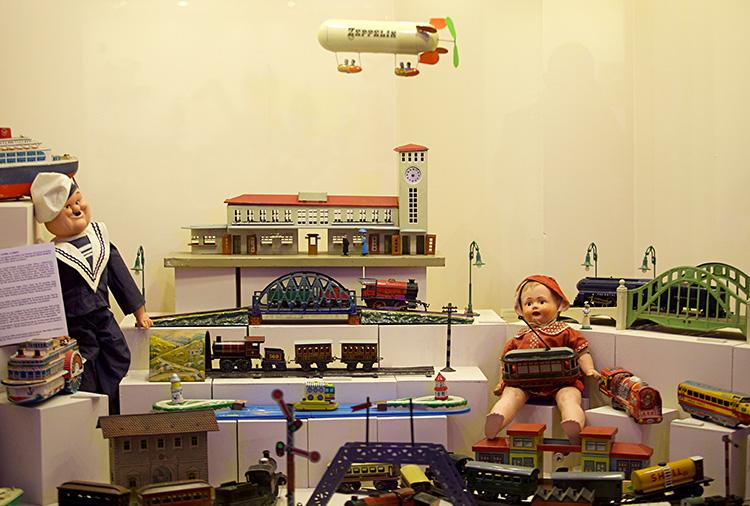
Canik Toy Museum
Year of Establishment | 2017 | ||||||||
|---|---|---|---|---|---|---|---|---|---|
Address | Canik Türkiye Samsun | ||||||||
Area(s) | Approximately 800 m² | ||||||||
Number of Toys | 770 | ||||||||
Open Days/Hours | Tuesday - Saturday 10:00 - 16:00 | ||||||||
Closed Days | Sunday Monday | ||||||||
Admission | Free | ||||||||
Canik Toy Museum opened in 2017 within the Mevlana Education, Culture and Life Campus in the Canik district of Samsun province, Türkiye. It occupies an area of approximately 800 square metres.
This museum was implemented as part of a project led by the Canik Municipality, with conceptual guidance provided by Sunay Akın, who established Türkiye’s first toy museum. Visitors to the museum can access historical and cultural narratives about the toys through a QR code application that features Sunay Akın’s voice.

Canik Toy Museum (AA)
The museum’s collection consists of 770 toys classified into five main categories: traditional, mass-produced, foreign, antique and local. The majority of the pieces are of German and Turkish origin, while examples from approximately 40 other countries including France, Japan, Russia, Poland, China and the United States are also represented in the collection.
A significant portion of the displayed toys date from between 1900 and 1920 and were manufactured in factories in and around Nuremberg, Germany, a leading centre of toy production at the time.

Canik Toy Museum (AA)
The oldest item in the museum is a German wooden doll dating from 1770 to 1790, while the most recent is a porcelain doll of Lady Diana produced in England in 2000. Additionally, seven archaeological toys discovered during excavations from the 4th century BCE Roman period — whose originals are preserved in archaeological museums — are exhibited as ceramic replicas crafted by artist H. Candan Yaraş. These replicas, made from clay and fired in kilns, depict human and animal figures with detailed joint articulation and include wheels and strings designed for child-friendly play.

Canik Toy Museum (AA)
Among the most valuable pieces in the collection is a 1920s–1930s Ford Model T toy car. The museum also features a wide array of items including dollhouses dating back to the 16th century, teddy bears produced in Germany in 1903 by Margarette Steiff, space-themed toys from 1920s America, the earliest examples of Mickey Mouse toys with realistic mouse features produced in 1926, toy soldiers manufactured in Nazi Germany before the Second World War in 1933, Native American and cowboy figures made from sawdust and glue by the Hauser company in Stuttgart, Germany during the 1930s, Barbie dolls, Tom and Jerry toys, various airplane and train models, zeppelins and merry-go-rounds.

Canik Toy Museum (AA)
The museum also houses cultural heritage items. Notable exhibits include products from the Eyüp toy makers mentioned in Evliya Çelebi’s travelogue, whose tradition dates to the 18th century, and Fatoş brand toys produced by Fatma İlhan, one of the pioneers of Turkish toy history, who was active between the 1970s and 1980s. In addition, display cases feature wooden toys and puppets from the 1950s–1960s designed by Sunay Akın in collaboration with artist Ayhan Doğan. A recreated street scene including a grocer’s shop and a bookstore is also present. Optional paid workshops, such as wooden toy painting, are offered to visitors.
As of 25 February 2019, the Canik Toy Museum became one of seven private toy museums under the supervision of the Republic of Türkiye Ministry of Culture and Tourism.
Anadolu Ajansı. "Canik Oyuncak Müzesi'nde Üç Asırlık Oyuncaklar Sergileniyor." Accessed June 10, 2025. https://www.aa.com.tr/tr/pg/foto-galeri/canik-oyuncak-muzesinde-uc-asirlik-oyuncaklar-sergileniyor.
Anadolu Ajansı. "Dünyanın Üçüncü Büyük Oyuncak Müzesi Samsun'da Kuruldu." Accessed June 10, 2025. https://www.aa.com.tr/tr/yasam/dunyanin-ucuncu-buyuk-oyuncak-muzesi-samsunda-kuruldu/1026228.
Anadolu Ajansı. "Oyuncak Müzesi Çocuklara Eğlenceli, Yetişkinlere Nostaljik Anlar Yaşatıyor." Accessed June 10, 2025. https://www.aa.com.tr/tr/kultur-sanat/oyuncak-muzesi-cocuklara-eglenceli-yetiskinlere-nostaljik-anlar-yasatiyor/2570225.
Culture Portal. "Canik Oyuncak Müzesi." Accessed June 10, 2025. https://www.kulturportali.gov.tr/turkiye/samsun/gezilecekyer/canik-oyuncak-muzesi.
Samsun İl Directorate of Culture and Tourism. "Oyuncak Müzesi." Accessed June 10, 2025. https://samsun.ktb.gov.tr/TR-362757/oyuncak-muzesi.html.
TRT Haber. "Canik Oyuncak Müzesi'nde Üç Asırlık Oyuncaklar Sergileniyor." Accessed June 10, 2025. https://www.trthaber.com/foto-galeri/canik-oyuncak-muzesinde-uc-asirlik-oyuncaklar-sergileniyor/20714/sayfa-12.html.
Türkiye Turizm Ansiklopedisi. "Samsun Oyuncak Müzesi." Accessed June 10, 2025. https://turkiyeturizmansiklopedisi.com/samsun-oyuncak-muzesi.

Canik Toy Museum
Year of Establishment | 2017 | ||||||||
|---|---|---|---|---|---|---|---|---|---|
Address | Canik Türkiye Samsun | ||||||||
Area(s) | Approximately 800 m² | ||||||||
Number of Toys | 770 | ||||||||
Open Days/Hours | Tuesday - Saturday 10:00 - 16:00 | ||||||||
Closed Days | Sunday Monday | ||||||||
Admission | Free | ||||||||