


This article was automatically translated from the original Turkish version.
+1 More

In chess, one of the oldest known strategy games, the opening moves played by White are called openings, while the initial moves played by Black are referred to as defenses. The Caro-Kann Defense is one of the variations of Black’s defensive responses in chess.
The Caro-Kann Defense derives its name from the English chess player Horatio Caro (1862–1920) and the Australian chess player Marcus Kann (1820–1886).
This defense has been employed by leading figures in the chess world, including players such as Botvinnik and Karpov.
Since White moves first, they gain an advantage by asserting control over the central squares (d4, d5, e4, e5). The primary aim of the Caro-Kann Defense is to capture White’s e4 pawn during the opening or to capture the d5 pawn in later stages of the game.
The fundamental goal of the opening is to contest control of the d5 square; however, this must be done without blocking the bishop on c8.
The Caro-Kann Defense is played in response to White’s e4 pawn opening. After White plays e4, Black responds with c6, initiating the Caro-Kann Defense. White then strengthens central control by playing d4. In reply, Black plays d5, threatening the e4 pawn. Depending on White’s subsequent moves, there are three main variations.
In the Classical Variation of the Caro-Kann Defense, White plays Nc3 to exchange the e4 pawn for the d5 pawn, thereby developing the knight to a central square. The Classical Variation has two sub-variations.
1.e4 c6
2.d4 d5
3.Nc3 dxe4
4.Nxe4

Classical Variation Piece Positions (chess.com)
1st Sub-Variation
4.Nxe4 Bf5
5.Ng3 Bg6
6.h4 h6
7.Nf3 Nd7
8.h5 Bh7
9.Bd3 Bxd3
10.Qxd3 e6
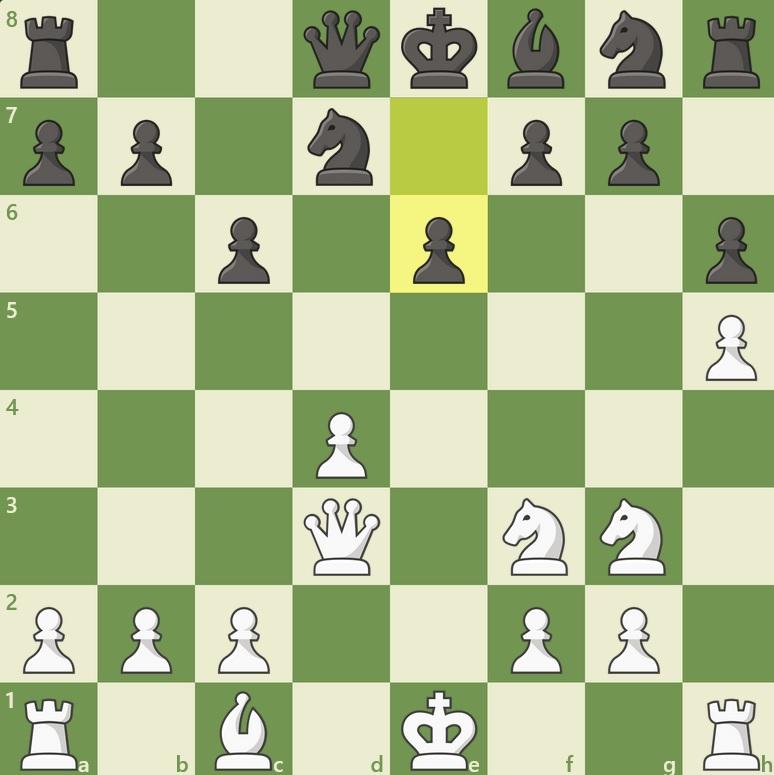
Classical 1st Sub-Variation Piece Positions (chess.com)
2nd Sub-Variation (Karpov Variation)
4.Nxe4 Nd7
5.Ng5 Nf6
6.Bd3 e6
7.Nf3 Bd6
8.Qe2 h6
9.Ne4 Nxe4
10.Qxe4

Karpov Variation Piece Positions (chess.com)
In the Exchange Variation of the Caro-Kann Defense, the e4 pawn is captured by d5, and the c6 pawn captures the d5 pawn. In this variation, White experiences a reduction in central pawns, while Black does not. The Exchange Variation has two sub-variations.
1.e4 c6
2.d4 d5
3.exd5 cxd5
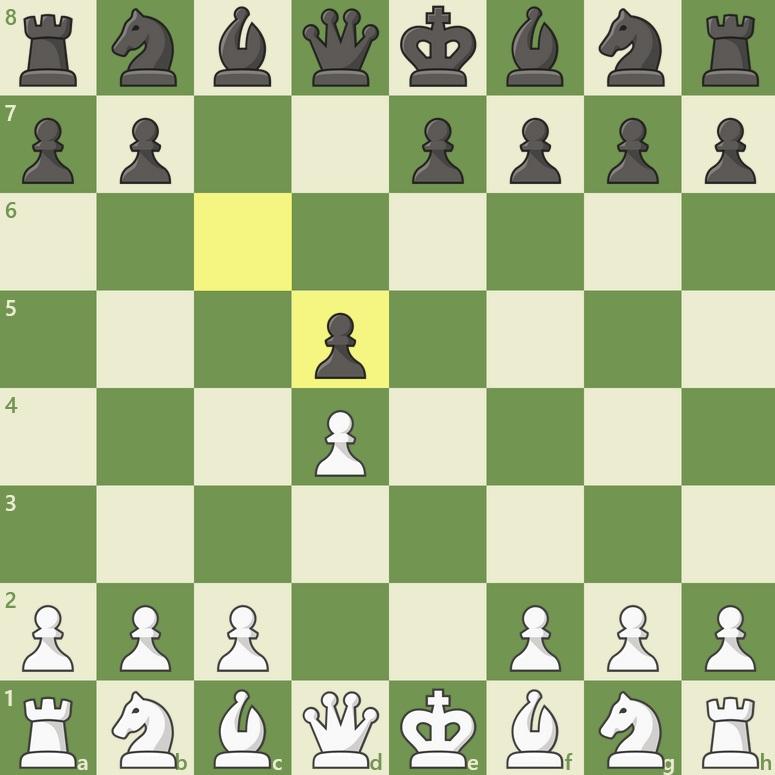
Exchange Variation Piece Positions (chess.com)
1st Sub-Variation (Rubinstein Variation)
4.Bd3 Nc6
5.c3 Nf6
6.Bf4 Bg4
7.Qb3 Qd7
8.Nd2 e6
9.Nf3

Rubinstein Variation Piece Positions (chess.com)
2nd Sub-Variation (Panov-Botvinnik Variation)
4.c4 Nf6
5.Nc3 e6
6.Nf3 Be7
7.cxd5 Nxd5
8.Bd3 0-0
9.0-0
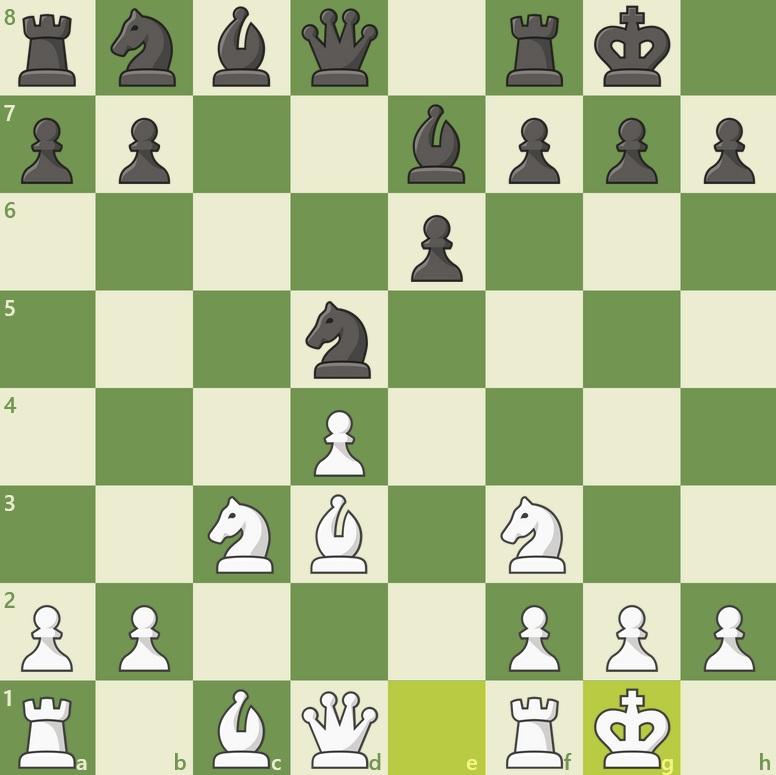
Panov-Botvinnik Variation Piece Positions (chess.com)
In the Advance Variation of the Caro-Kann Defense, White advances the e4 pawn one more square to e5. This move does not directly threaten any piece nor is it immediately threatened by any Black piece. The Advance Variation has two sub-variations.
1.e4 c6
2.d4 d5
3.e5
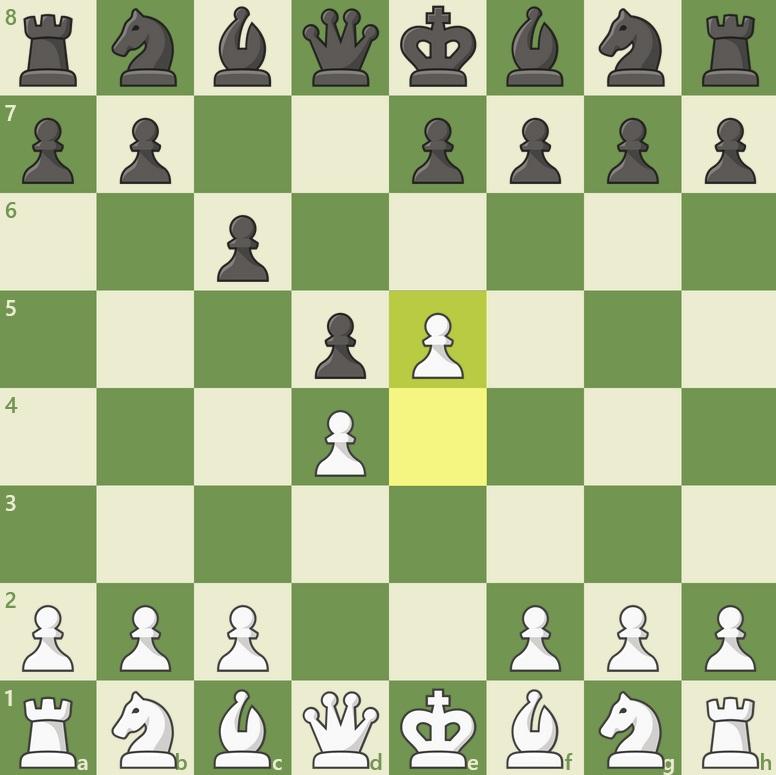
Advance Variation Piece Positions (chess.com)
1st Sub-Variation (Wing Attack)
3.e5 Bf5
4...e6
5.g4 Bg6
6.Ne2 c5
7.h4 h6
8.Be3 Nc6
9.f4 Qb6
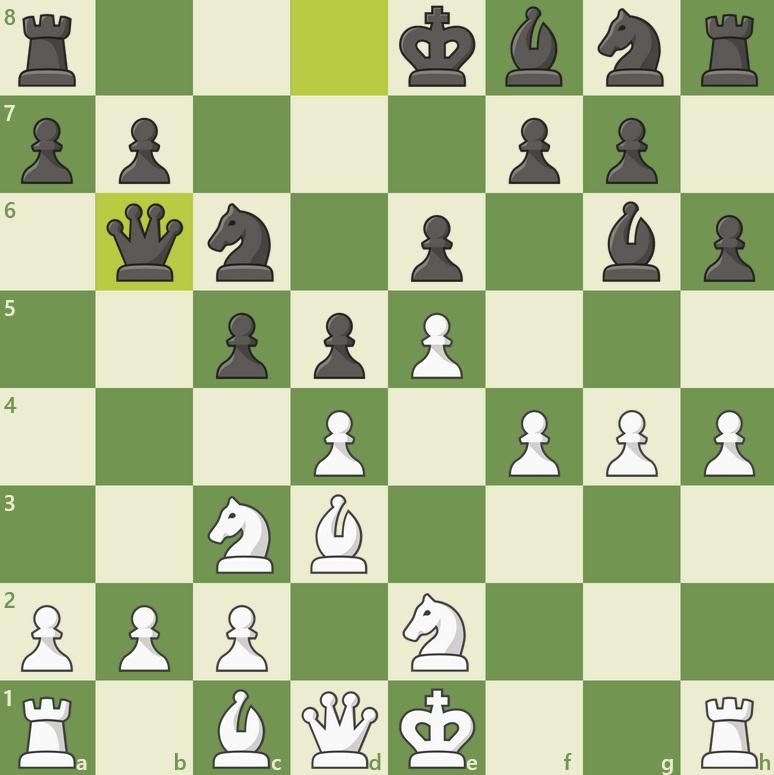
Wing Attack Variation Piece Positions (chess.com)
2nd Sub-Variation (Short Variation)
3.e5 Bf5
4.Nf3 e6
5.Be2 c5
6.0-0 Ne7
7.dxc5 Nxc5
8.a3 Bxc5
9.f4 Be7
10.c4
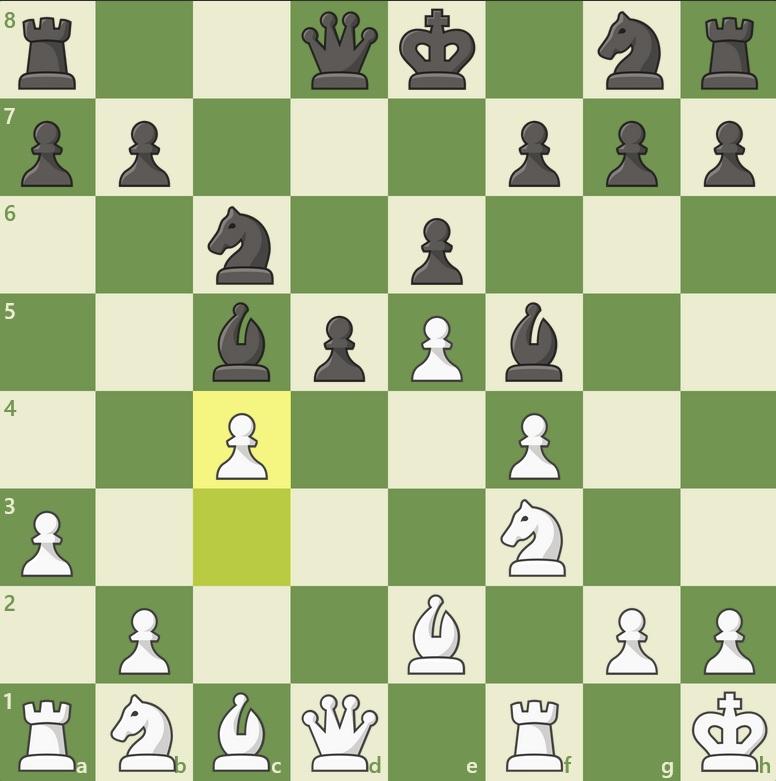
Short Variation Piece Positions (chess.com)
Examples of the Caro-Kann Defense have existed for over a century. The following are famous games played with the Caro-Kann Defense.

History
Objective
Variations
Classical Variation
Exchange Variation
Advance Variation
Examples