


This article was automatically translated from the original Turkish version.
+2 More
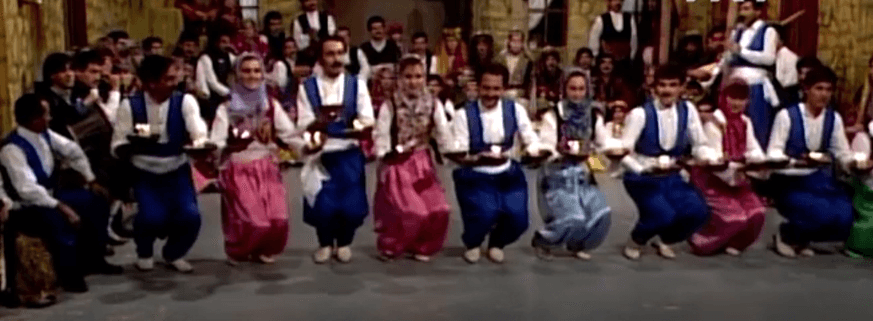
Chai and Chira Game
Type(s) | Folk Dance of the Region | ||||||||
|---|---|---|---|---|---|---|---|---|---|
Region(s) | Region of Elazığ | ||||||||
Rhythm | 10/8 Asymmetric Rhythm | ||||||||
Environment | Usually weddings, special occasions and folk performances | ||||||||
Çayda Çıra, a folk game belonging to the Elazığ region, is a ritualistic and culturally reflective folk tradition deeply embedded in the collective memory of the area. Performed by players carrying candles in their hands, this game is typically enacted during weddings, henna nights, and special ceremonies. Played according to specific rules and in harmonious coordination, Çayda Çıra holds a significant place among Elazığ’s traditional performing arts.
Çayda Çıra is a distinctive folk game of the Harput region in Elazığ. Also referred to in literature as the “candle dance,” it is most commonly performed during the henna night segment of weddings. The most prominent feature of the game is the aesthetic walking and rhythmic movements performed by participants holding lit candles placed in trays. The trays used during the performance serve visually as torches, adding a theatrical dimension to the event. Musically, the game is performed in a 10/8 irregular rhythm and is supported by specific lyrical patterns and repetitions in the form of folk songs.
The story of Çayda Çıra. (TRT Archive YouTube Channel)
Several legends circulate in popular tradition regarding the origin of the Çayda Çıra game. While these narratives do not serve as historical documents, they shape the symbolic world of the game within the collective memory of the people.
According to the first legend, a love story unfolds between two clans living on opposite banks of a river in Elazığ. At night, the young woman would light a candle-lit tray to guide her lover across, but one day, her father extinguished the flame, causing the young man to drown. Overcome with grief, the woman threw herself into the waters. The villagers’ subsequent searches along the riverbank, holding trays with candles, gradually evolved into the form of the game. This narrative bears resemblance to the “Ahtamara” legend told in the Van region.
In a second legend, during a wedding night, a lunar eclipse causes alarm among the guests. To calm the fears, the groom’s mother distributes trays with lit candles to the attendees, a gesture that eventually transforms into the game. This act is interpreted as a symbolic intervention aimed at reversing the perception of ill omen associated with the eclipse.
The third legend recounts a dramatic event within an alliance formed through marriage between two clans in Harput. During the wedding procession, the bride falls into the river and disappears. The subsequent laments and search efforts give the game its emotional depth and reveal its connection to the lament culture. This legend is directly linked to the lyrical structure of the folk songs that accompany the game.

Representative depiction of the Çayda Çıra game. (Generated by artificial intelligence.)
The Çayda Çıra game is not merely an aesthetic folk performance; it also reflects social roles, family structures, and gender relations within the community. Its performance specifically during henna nights symbolizes a ritual transition between the bride’s and groom’s families. The active participation of women arriving from the groom’s household, contrasted with the somber demeanor of the bride’s family, reinforces the ritual dimension of this passage. Furthermore, the traditional structure—where the bride does not participate initially but may join only under specific post-marriage conditions—reveals normative boundaries defining the woman’s social position.
Elazığ Valiliği. "Kültür - Folklor." Accessed April 25, 2025. http://www.elazig.gov.tr/kultur-folklor
T.C. Ministry of Culture and Tourism. "Efsaneler."Elazığ İl Directorate of Culture and Tourism. Accessed April 25, 2025. https://elazig.ktb.gov.tr/tr-58522/efsaneler.html
T.C. Ministry of Culture and Tourism. "Çayda Çıra." Ankara: T.C. Ministry of Culture and Tourism Publications, Accessed April 25, 2025. https://ekitap.ktb.gov.tr/TR-79017/cayda-cira.html

Chai and Chira Game
Type(s) | Folk Dance of the Region | ||||||||
|---|---|---|---|---|---|---|---|---|---|
Region(s) | Region of Elazığ | ||||||||
Rhythm | 10/8 Asymmetric Rhythm | ||||||||
Environment | Usually weddings, special occasions and folk performances | ||||||||
Origin and Definition
Narratives Through Legend
Legends of Love and Tragedy
Narratives Emerging from Wedding Contexts
Epic Narratives and Laments
Social and Ritual Functions of the Game