


This article was automatically translated from the original Turkish version.
+1 More
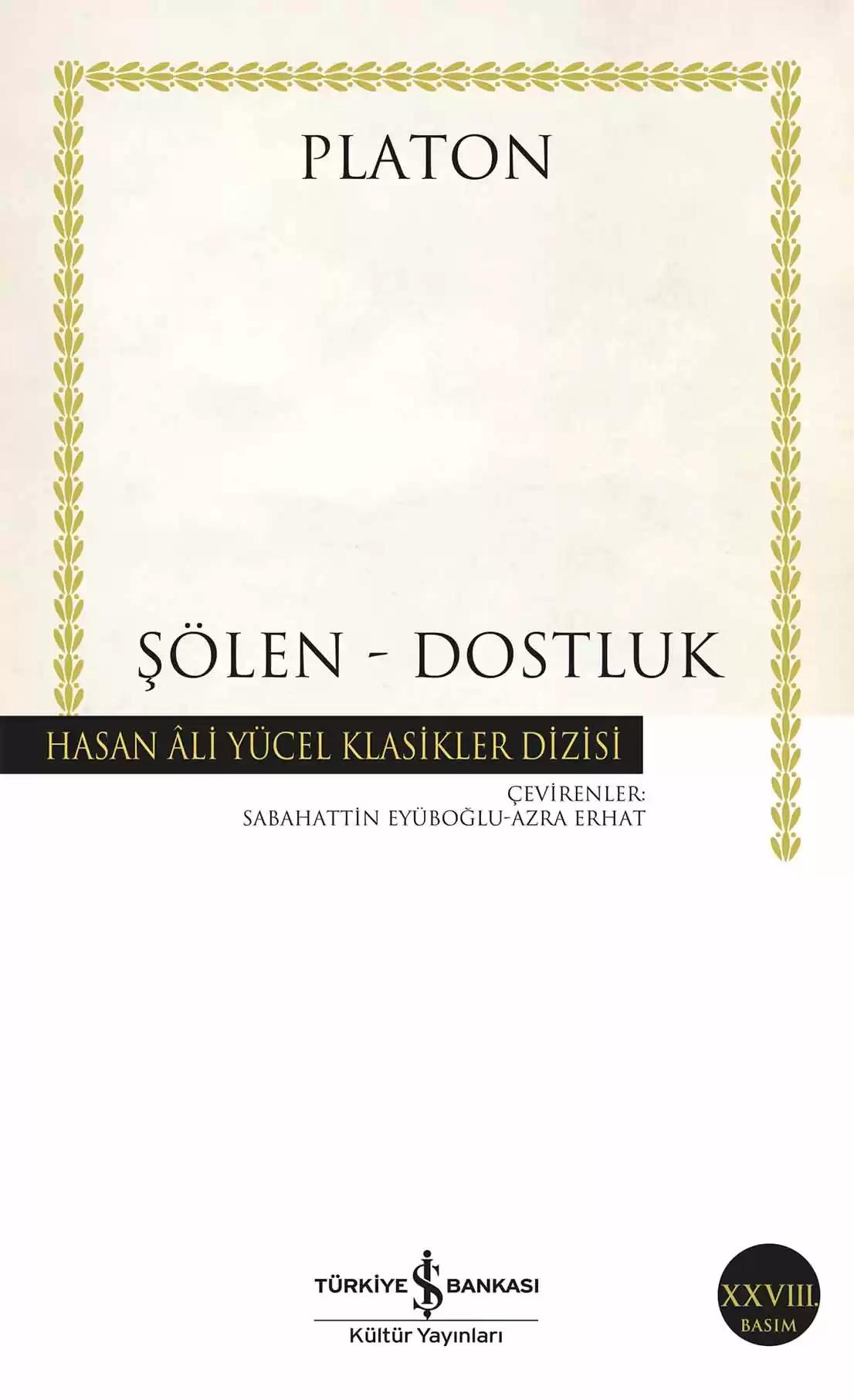
Festival – Friendship
Type(s) | Philosophy / Dialogue | ||||||||
|---|---|---|---|---|---|---|---|---|---|
Subject(s) | The relationship between eros and education virtue friendship | ||||||||
Author(s) | Plato | ||||||||
Prominent Theme | The educational function of love, the nature of beauty, the development of the soul | ||||||||
Plato’s work Symposium is one of the foundational texts of ancient Greek philosophy. Written in the form of a dialogue, it contains philosophical discussions on love (Eros), friendship, and virtue. In the work, Athenian elites engage in speeches about Eros during a drinking party. As the speeches progress, it is emphasized that love is not merely an individual emotion but is also connected to the education of the soul and the attainment of virtue. Today, it is published in Turkish translation by Ari Çoşkun through İş Bankası Kültür Yayınları in Türkiye.
Symposium is one of Plato’s works composed during his mature period. The dialogue records the speeches delivered by a group of speakers gathered at an ancient Greek symposium to discuss Eros. Each speaker approaches love from a different perspective. In the later sections of the dialogue, through Socrates’ speech, it is argued that love serves a function beyond physical desire, acting as a force that guides the soul toward the pursuit of truth.
According to the study of Ahmet Cüneyt Gültekin, the educational function of Eros is central in Symposium. In this interpretation, love is regarded as a means that contributes to the maturation of the soul and enables the individual to live a virtuous life. Thus, the work presents on a philosophical foundation how love in ancient Greek thought was linked to education and ethics.
The central axis of the work consists of speeches revolving around the concepts of love and friendship. Among the participants are renowned orators, a comic poet, and philosophers. Throughout the speeches, the definition, nature, and purpose of love are debated. With the doctrine of Diotima, as recounted by Socrates, it is stated that the highest form of love is directed toward beauty itself. In Gültekin’s analysis, this understanding is strongly linked to education. Here, love is not merely a personal emotion but a tool for self-development.
Plato (Eflatun) is one of the most prominent philosophers of ancient Greece. His dialogues have played a decisive role in shaping Western philosophy. Symposium stands among his key works that bring together his views on aesthetics, ethics, and education.
Symposium serves as a foundational text for researchers studying ancient Greek thought, the philosophy of love, and educational theory. It is suitable for philosophy students, academics, and readers interested in ancient culture. It also offers a comprehensive framework for those working in the fields of ethical, aesthetic, and educational philosophy.
Plato’s Symposium is regarded as one of the primary sources for Western philosophical discussions on love and friendship. As emphasized by Ahmet Cüneyt Gültekin, the work engages in a philosophical examination of love’s educational function and its relationship to virtue. In this regard, the work demonstrates that love and friendship are not merely personal emotions but essential elements in the development of the soul.
Gültekin, Ahmet Cüneyt. “Platon’un Şölen’inde Eros, Erdem ve Eğitim İlişkisi.” Atatürk Üniversitesi Sosyal Bilimler Enstitüsü Dergisi 25. https://dergipark.org.tr/en/download/article-file/1819686.
Platon. *Şölen-Dostluk*. Translated by Sabahattin Eyüboğlu and Azra Erhat. Istanbul: Türkiye İş Bankası Kültür Yayınları, 2006.

Festival – Friendship
Type(s) | Philosophy / Dialogue | ||||||||
|---|---|---|---|---|---|---|---|---|---|
Subject(s) | The relationship between eros and education virtue friendship | ||||||||
Author(s) | Plato | ||||||||
Prominent Theme | The educational function of love, the nature of beauty, the development of the soul | ||||||||
No Discussion Added Yet
Start discussion for "Celebration - Friendship" article
General Information About the Book
Subject Matter
About the Author
Target Audience
Significance of the Work