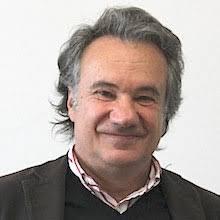

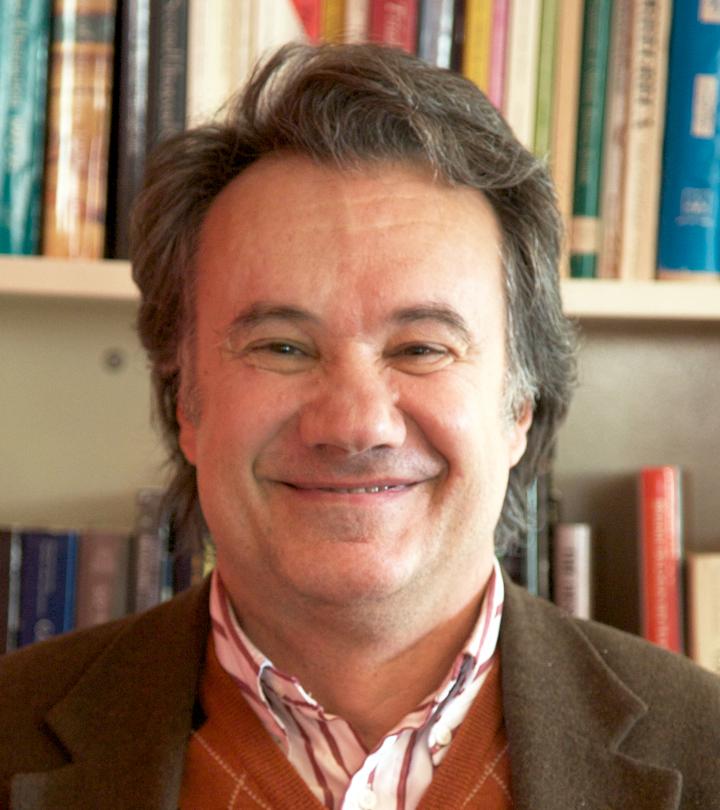
+2 More

Doğum tarihi | 1954-08-15 | ||||||||
|---|---|---|---|---|---|---|---|---|---|
Education | McGill University Hamilton College Istanbul High School for Boys Robert College | ||||||||
Research Areas | Social and Cultural History of the Ottoman Empire, Early Modern Middle East and Southeastern Europe, Urban Area, Travel, Popular Culture, Cinema, Hagiography | ||||||||
Cemal Kafadar spent his middle school years living in Istanbul’s Fatih district and attending Istanbul Boys’ High School as a boarder. His desire to explore the city by wandering through bookshops and his passion for writing poetry began at an early age. His grandfather was a significant figure in his life and in shaping his culinary habits; he listened to and watched films with his grandfather, Ümmü Gülsüm. During high school he became a member of the Sinematek, and his interest in cinema, particularly after watching Volker Schlöndorff’s Michael Kohlhaas-Der Rebell, steered him toward the history of the Celali rebellions. Influenced by intellectuals such as Nurettin Topçu in the intellectual environment of Istanbul High School, he considered studying philosophy. After high school he moved to the United States and earned a degree in philosophy at Hamilton College. During this period he also took courses in film, sociology, and physics. He began to grow disillusioned with philosophy due to its exclusionary approach in analytic philosophy, but he came to realize that philosophical questions could yield more meaningful answers when grounded in historical material.
His decision to turn to history began with his undergraduate thesis. He applied to doctoral programs in both history and anthropology, but ultimately enrolled at the Institute of Islamic Studies at McGill University to complete his doctorate on Ottoman. At McGill he began studying Arabic and took courses in Sufism, a rare opportunity in Ottoman historical training. He traveled between Boston and Montreal to work on Ottoman Turkish with Şinasi Tekin, developing his skills in philological text analysis.
Living History - Prof. Dr. Cemal Kafadar (YouTube)
Between 1985 and 1989 he taught at Princeton University. In 1990 he began teaching in the Department of Middle Eastern History at Harvard University. In 2025, Harvard University’s Center for Middle Eastern Studies dismissed Kafadar from his position after accusing the center of representing “anti-Jewish” and “anti-Israel” perspectives in some of its academic events. Kafadar continues to hold the title of Vehbi Koç Professor of Turkish Studies. Prof. Dr. Kafadar’s research focuses on the social and cultural history of the Middle East and Southeastern Europe during the late medieval and early modern periods. He teaches courses on Ottoman history, urban space, travel, popular culture, and history and cinema. His graduate thesis concentrated on the relationship between janissaries and artisans and on janissary revolts, questioning dominant narratives such as the progressive-regressive binary. His critiques of Marxist historiography and his search to understand Ottoman society through its own internal dynamics were shaped by interactions with writers such as Kemal Tahir.
He has incorporated the theoretical influences of Edward Said and Michel Foucault and reflected on the global historical significance of the Iranian Revolution in his work. He has produced studies that challenge the “stagnation and decline” paradigm in Ottoman historiography and offer alternative interpretations of the artisanal transformation of the janissaries.
He emphasizes the importance of international collaboration and the diversity of scholars from different ethnic, cultural, national, and religious backgrounds in Ottoman historiography. He also argues that world history must be rewritten from non-Western centers such as Istanbul, Cairo, and Tabriz.
Among Prof. Dr. Kafadar’s major publications are:
In addition, he curated a twelve-film thematic program titled “Rebels, Saints, Lovers” for the 2009 Istanbul Film Festival and closely collaborated on the concept and production of the historical documentaries İspirasyonlar (2005) and Gözden Görünmez (2020).
Anadolu Ajansı. "Harvard Üniversitesi Orta Doğu Çalışmaları Merkezi Direktörü Prof. Dr. Kafadar Görevinden Alınıyor." Anadolu Ajansı, July 1, 2024. Accessed July 8, 2025. https://www.aa.com.tr/tr/ayrimcilikhatti/ayrimcilik/harvard-universitesi-orta-dogu-calismalari-merkezi-direktoru-prof-dr-kafadar-gorevinden-aliniyor/1824380
Hacettepe University. “Cemal Kafadar.” *Kaynakça Kişi Veritabanı*. Accessed July 8, 2025. http://kaynakca.hacettepe.edu.tr/kisi/84081/cemal-kafadar
Harvard University Department of History. “Cemal Kafadar.” Harvard Faculty of Arts and Sciences. Accessed July 8, 2025. https://history.fas.harvard.edu/people/cemal-kafadar
Harvard University. CMES The Center for Middle Eastern Studies. "Cemal Kafadar." Accessed July 8, 2025. https://cmes.fas.harvard.edu/people/cemal-kafadar
Kırmızı, Abdulhamit. “Cemal Kafadar ile Dünyada Türk Tarihçiliği Üzerine.” *Türkiye Araştırmaları Literatür Dergisi* 15 (2010): 393–424. Accessed July 8, 2025. https://dergipark.org.tr/tr/download/article-file/653214
Turk Tarih Kurumu. "Cemal Kafadar." YouTube. Accessed July 8, 2025. https://www.youtube.com/watch?v=4YbO8EUyNlQ

Doğum tarihi | 1954-08-15 | ||||||||
|---|---|---|---|---|---|---|---|---|---|
Education | McGill University Hamilton College Istanbul High School for Boys Robert College | ||||||||
Research Areas | Social and Cultural History of the Ottoman Empire, Early Modern Middle East and Southeastern Europe, Urban Area, Travel, Popular Culture, Cinema, Hagiography | ||||||||
Academic Work
Publications and Projects