

This article was automatically translated from the original Turkish version.
+2 More
History | 2 October 2018 | ||||||||
|---|---|---|---|---|---|---|---|---|---|
Place(s) | Consulate General of Saudi Arabia in Istanbul Istanbul Levent | ||||||||
Prominent Elements | Allegation of a planned assassination, killing at the consulate building, disposal and failure to locate the body, debates on state responsibility, example of extrajudicial execution under international law | ||||||||
Legal Dimensions | State's extraterritorial responsibility, limits of diplomatic immunity, violation of the right to life and obligation of an effective investigation | ||||||||
The Jamal Khashoggi Assassination is an incident that occurred on 2 October 2018 at the Consulate General of Saudi Arabia in Istanbul and became a matter of global public concern in the fields of international law, human rights, diplomacy, and criminal justice.
The incident came to light after Jamal Khashoggi, a Saudi Arabian journalist, entered the consulate building to complete marriage procedures and was never seen again. Subsequent judicial, diplomatic, and international processes brought to the forefront debates suggesting that the incident was not merely an isolated act but possibly a planned operation.

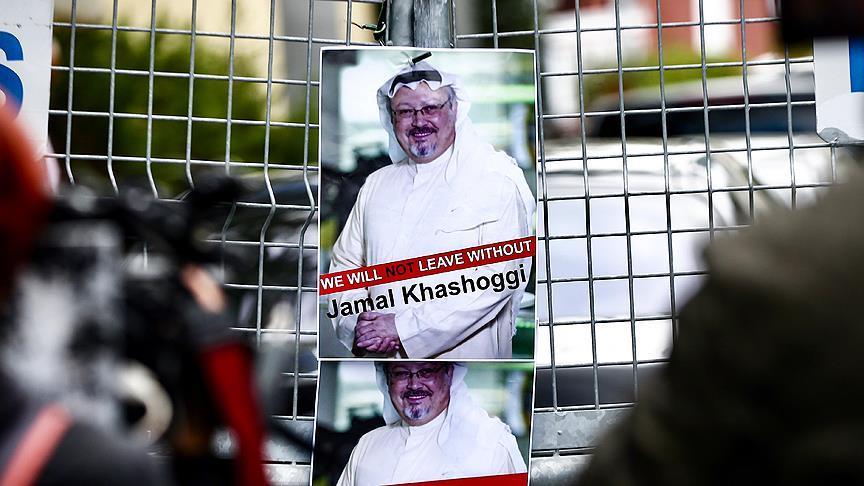
Jamal Khashoggi (
The killing of Jamal Khashoggi has entered international contemporary legal literature as an event intersecting the violation of the right to life and the prohibition of extrajudicial execution under human rights law, the principle of consular inviolability under diplomatic law, and the concept of transnational judicial cooperation under criminal justice.
Jamal Khashoggi was a journalist who had spent many years working in the media and press sectors in Saudi Arabia and was known for his analyses of his country’s domestic and foreign policies. In 2017, following political developments in his country, he relocated to the United States and began writing a column for the Washington Post. During this period, he authored critical articles on Middle Eastern politics, freedom of expression, and governance reforms.
In September 2018, Khashoggi traveled to Türkiye to complete marriage procedures. He went to the Consulate General of Saudi Arabia in Istanbul with his fiancée, Turkish citizen Hatice Cengiz, to finalize the necessary documents. His first visit occurred on 28 September 2018. During this visit, he was informed that his documents required further preparation and that he should return in a few days. Official documents confirmed that consulate officials had scheduled his return for 2 October 2018.

The Consulate General of Saudi Arabia in Istanbul Where the Incident Occurred (AA)
In the weeks preceding the incident, judicial investigations later determined that there had been various diplomatic movements from Saudi Arabia to Türkiye, temporary personnel changes within the consulate, and certain technical preparations carried out. These preparations provided the basis for assessments that the assassination was planned.
On the morning of 2 October, two teams arrived in Istanbul via special flights from Saudi Arabia. Their passport records were identified at Istanbul’s airport entry points. The team members checked into two different hotels. On the same morning, Turkish judicial authorities later determined that some of the consulate building’s security cameras had been disabled.
Khashoggi arrived in the Levent district near the consulate building at approximately 13:00 with his fiancée. At 13:14, he entered the consulate building alone while his fiancée waited outside. No video footage recorded his exit from the consulate building.
It was determined that members of the Saudi team that had arrived in Türkiye that morning were present inside the consulate at the same time. Witness statements from the surrounding area, recorded in the investigation file, reported hearing loud noises coming from rooms on the lower floors of the building.
During the time of the incident, personnel movement within the consulate was restricted. According to Turkish authorities’ investigations, cleaning activities inside the consulate intensified unusually after the incident. No signal was detected from Khashoggi’s mobile phone during these hours.
In the later part of the day, after Khashoggi failed to emerge from the consulate, his fiancée Hatice Cengiz approached security forces. Consulate officials claimed that Khashoggi had left the building; however, no camera footage corroborated this claim.
In the evening, two vehicles belonging to the Saudi team departed the consulate building and proceeded to the Consul General’s residence. Turkish security units later traced this route. That same night, these vehicles headed toward Istanbul Airport and the Saudi team departed from Türkiye.
By the end of the day, no contact had been made with Jamal Khashoggi. This situation prompted Turkish authorities to launch an official investigation the following morning.
News of Khashoggi’s disappearance reached the global press. The Ministry of Interior of the Republic of Türkiye and the Istanbul Chief Public Prosecutor’s Office launched an investigation into the incident. Entry and exit records of the consulate, security camera footage, and passport data were reviewed.
On 4 October, the Saudi Arabian government initially claimed that Khashoggi had left the building. However, Turkish security authorities reported they had found no camera footage confirming his exit. Istanbul Police Department teams conducted detailed searches around the consulate.
Thermal camera images were taken from rooms under suspicion that Khashoggi had been killed, and chemical tests and DNA analyses were conducted.
On 7 October, Turkish judicial authorities announced the establishment of a joint working group with Saudi Arabia to clarify the incident. During the same days, international media published reports suggesting the incident could have been a “planned killing.”
On 8 October, Khashoggi’s fiancée gave testimony to the Chief Public Prosecutor’s Office. Her statement provided critical information regarding the time he was last seen and his interactions inside the consulate.
On 9 October, the area surrounding the consulate was cordoned off for security. On 10 October, it was determined that most of the local employees working at the consulate had not reported for duty on the day of the incident, a detail noted by Turkish authorities as highly significant.
On 11 October, it was announced that Turkish and Saudi teams would conduct a joint investigation. On 15 October, Turkish authorities inspected the consulate building and the Consul General’s residence. During this inspection, chemical traces, cleaning materials, and material samples were collected.
Forensic teams identified DNA traces belonging to Khashoggi from samples collected at the scene. However, his body was not recovered. Turkish authorities stated that the evidence gathered indicated Khashoggi had been killed inside the consulate.
Daily Timeline of the Jamal Khashoggi Incident (AA)
On 16 October, the Istanbul Chief Public Prosecutor’s Office announced that the investigation into Khashoggi’s killing had been expanded to include aspects of planning, command structure, and diplomatic responsibility.
On 19 October 2018, Saudi Arabia officially acknowledged that Khashoggi had been killed “as a result of a fight inside the consulate.” However, this explanation was deemed insufficient in terms of the scope of the incident and the nature of the evidence.
On 22 October, Saudi authorities announced that the murder had been “premeditated.” On the same day, the Istanbul Chief Public Prosecutor’s Office stated that Khashoggi had been killed in a “planned murder” and that his body had been removed.
International reaction to the incident reached its peak during this period. Global media opened debates on diplomatic immunity, international criminal law, and state responsibility.
In the final quarter of 2018, the Saudi Arabian government initiated judicial proceedings against 21 individuals linked to Khashoggi’s killing. Formal charges were brought against 11 of them, while others were subjected to separate investigations. The Saudi Public Prosecution described the incident as “premeditated” and having “turned into a fatal mistake.”
The trials were conducted in closed sessions in Riyadh. In 2019, the court sentenced five defendants to death and three to prison terms; however, on appeal, the death sentences were commuted to imprisonment. Details of the trials and the scope of evidence were not disclosed to the public. This lack of transparency triggered international debate regarding the fairness of the proceedings.
During the same period, official correspondence sent by Saudi officials to Türkiye regarding the incident emphasized that cooperation must be conducted “within the limits of sovereignty.” However, Turkish authorities stressed that the investigation had been carried out in accordance with principles of international law and criminal justice.
In 2019, a report prepared by the Special Rapporteur of the United Nations Human Rights Council provided a detailed analysis of the incident’s international law dimensions. The report stated that Khashoggi’s killing was a “premeditated act” carried out “with the knowledge of state officials.”
The report classified the incident as an “extrajudicial execution” and emphasized that it violated international human rights law. It also found that Saudi Arabia had failed to fulfill its international obligations to fully clarify the incident and conduct an effective domestic investigation.
The document stated that the fact the crime occurred within a diplomatic mission did not absolve the state of criminal responsibility; rather, it reinforced state accountability. The report called on state parties to cooperate in an international investigation of the incident.
In Türkiye, the judicial process regarding Khashoggi’s killing began in 2019 at the 11th Heavy Criminal Court in Istanbul. As all defendants were Saudi citizens and were not present in Türkiye, the trial proceeded in absentia. An indictment was filed against 20 defendants, with charges including “intentional and premeditated murder” and “destruction of evidence.” Witness testimonies, security camera footage, passport records, and diplomatic correspondence were included in the case file throughout the hearings.
In 2021, witness testimonies were collected, and some of these statements indicated that certain defendants had played a direct role in Khashoggi’s killing. However, direct access to the defendants’ statements was not possible.
In April 2022, the court decided to transfer the case to Saudi Arabia. This decision was made in accordance with the view of the Ministry of Justice of Türkiye, which stated that the “transfer of judicial jurisdiction” was conducted within the framework of mutual judicial cooperation.
After the transfer, the judicial process in Türkiye was concluded, and the case file was sent to Saudi judicial authorities.
The killing of Jamal Khashoggi triggered a serious diplomatic tension between Türkiye and Saudi Arabia. Statements by the Presidency of the Republic of Türkiye emphasized the need for “full clarification of all aspects of the murder” and “bringing those responsible to justice.”
The incident affected regional balances in the Middle East and brought international issues of press freedom, human rights, and diplomatic immunity back to the global agenda.
The United States, the European Union, and many countries called on Saudi Arabia to identify those responsible for the incident. Numerous countries protested the incident through diplomatic channels, and several international organizations reiterated calls for an independent investigation.
Although relations between Türkiye and Saudi Arabia entered a normalization process during the 2020s, the diplomatic impact of the incident has not been fully resolved.
The inability to locate Jamal Khashoggi’s body has remained one of the most significant unresolved aspects of the incident. The Turkish prosecution concluded that his body was dismembered and removed from the consulate building immediately after his killing. However, no definitive evidence regarding the body’s location or remains has been found.
In 2019, the question “Where is Khashoggi’s body?” became one of the most debated topics in both Türkiye and the international public. Despite the passage of years, no answer has been found. Turkish authorities emphasized that locating Khashoggi’s remains is as essential to establishing justice as prosecuting those responsible.
Forensic evidence gathered during the investigation indicates that the body was systematically removed. Investigations at the consulate revealed that intensive chemical cleaning operations were carried out shortly after the incident and that residues exposed to high temperatures were found in certain rooms.
Technical analyses assessed data suggesting that chemicals were used and that the body may have been dissolved through this method. Additionally, investigations into the consulate’s garden and drainage systems explored the possibility that burial or incineration methods were employed. Some forensic reports indicated that biological traces and phosphate residues strengthened the likelihood of chemical dissolution.
These findings led to a forensic conclusion that the body had been completely removed and destroyed irreversibly. The United Nations rapporteur’s report also emphasized that the uncertainty surrounding the method of disposal increased the likelihood of concealment and expanded the state’s responsibility.
In 2022, Khashoggi’s fiancée Hatice Cengiz filed an individual application with the Constitutional Court of the Republic of Türkiye. In her application, she asserted that her “right to life” and “right to an effective remedy” had been violated. The application initiated a domestic legal review of Türkiye’s human rights protection mechanisms in relation to the incident. This application demonstrated that the assassination had acquired judicial and constitutional dimensions not only under international law but also under domestic law.
Jamal Khashoggi’s Fiancée Hatice Cengiz (AA)
The Jamal Khashoggi assassination has been examined as an example that challenges the scope of state responsibility for extraterritorial actions. The incident brought to the forefront the principle that states cannot be exempt from international obligations even when their actions extend beyond national borders. Under international law, the protection of the right to life requires states to be directly responsible for the actions of both their own officials and their representatives abroad. In this context, the incident serves as an example of how a planned killing committed within a state’s diplomatic mission falls under the prohibition of extrajudicial execution.
Legal analyses have focused on the relationship between the universal nature of human rights and the principle of diplomatic immunity. It has been stated that the immunity status of consular buildings cannot be used as justification for serious crimes against human life. Diplomatic immunity does not eliminate state criminal responsibility; diplomatic premises are recognized under international law as bearing special accountability.
A state’s responsibility for acts committed by its agents or officials on the territory of another country is addressed under international law through the concept of “attribution.” According to this principle, intentional and planned acts by a state’s official representatives are considered direct acts of the state. In this context, Khashoggi’s killing falls under the category of an “attributable act” in terms of the state’s international obligations.
The incident has also been examined in relation to the obligation of “effective investigation.” States bear the responsibility not only to punish perpetrators of violations of the right to life but also to fully clarify all aspects of the incident. Failure to fulfill this obligation is defined under international law as “impunity.” In this regard, the Khashoggi assassination has become a subject of debate regarding the scope of a state’s obligation to conduct effective investigations into human rights violations.
The incident has been analyzed in light of the principle of “human dignity,” one of the foundational principles of international law. The fact that the crime occurred within a diplomatic mission did not negate the applicability of human rights law; rather, it underscored the importance of states’ understanding of their international obligations.
The Jamal Khashoggi assassination is one of the comprehensive cases in international legal literature addressing state responsibility, diplomatic immunity, human rights obligations, and the prohibition of extrajudicial execution.
Individuals convicted in Saudi Arabia’s trials received prison sentences following the appeal process. However, questions regarding who ordered Khashoggi’s killing, the location of his body, and whether all aspects of the incident have been fully clarified remain relevant. The United Nations rapporteur’s office has classified the case as one of the key reference files concerning state extraterritorial responsibility.
The Question of Where Is Khashoggi’s Body Remains Unanswered (AA)
The Jamal Khashoggi assassination is not merely the killing of a journalist; it is a multidimensional case intersecting international law, diplomacy, human rights, and judicial processes. The incident has sparked debates in international law regarding the prohibition of extrajudicial execution, state responsibility, and consular inviolability.
The investigation conducted in Türkiye concluded that the killing was a planned murder; however, the body was never found, and the judicial process ended in Türkiye with the transfer of the case to Saudi Arabia. The United Nations report affirmed that the assassination constituted an international law violation and strengthened global calls for accountability.
Anadolu Ajansı. "Cemal Kaşıkçı'nın nişanlısı Hatice Cengiz AA'ya konuştu." Anadolu Ajansı Youtube Kanalı. Accessed October 20, 2025. https://www.youtube.com/watch?v=cOZ23ed5U0U
Anadolu Ajansı. "Cesedi nerede sorusu cevap bulamadı." Anadolu Ajansı Youtube Kanalı. Accessed October 20, 2025. https://www.youtube.com/watch?v=Vpfu6h8BOhM
Anadolu Ajansı. "Gün gün Cemal Kaşıkçı olayı." Anadolu Ajansı Youtube Kanalı. Accessed October 20, 2025. https://www.youtube.com/watch?v=bTVPWavCPDs
Anadolu Ajansı. “3 Yıl Geçti: ‘Ceset Nerede?’ Sorusu Hâlâ Cevapsız.” Accessed October 20, 2025. https://www.aa.com.tr/tr/cemal-kasikci/3-yil-gecti-ceset-nerede-sorusu-hala-cevapsiz/2380941
Anadolu Ajansı. “Bütün Dünya Soruyor: Kaşıkçı’nın Cenazesi Nerede?” Accessed October 20, 2025. https://www.aa.com.tr/tr/cemal-kasikci/butun-dunya-soruyor-kasikcinin-cenazesi-nerede/1599595
Anadolu Ajansı. “Cemal Kaşıkçı’nın Nişanlısı Hatice Cengiz Anayasa Mahkemesi’ne Başvurdu.” Accessed October 20, 2025. https://www.aa.com.tr/tr/cemal-kasikci/cemal-kasikcinin-nisanlisi-hatice-cengiz-anayasa-mahkemesine-basvurdu/2596588
Anadolu Ajansı. “Cemal Kaşıkçı’nın Öldürülmesine İlişkin Davada Tanık İfadeleri Alındı.” Accessed October 20, 2025. https://www.aa.com.tr/tr/gundem/cemal-kasikcinin-oldurulmesine-iliskin-davada-tanik-ifadeleri-alindi/2297908
Anadolu Ajansı. “Kaşıkçı Cinayeti 5 Haftasını Geride Bıraktı.” Accessed October 20, 2025. https://www.aa.com.tr/tr/cemal-kasikci/kasikci-cinayeti-5-haftasini-geride-birakti/1303841
Anadolu Ajansı. “The New York Times: Kaşıkçı’yı Öldüren Ekipten 4 Kişinin ABD’de Eğitim Aldığı Öne Sürüldü.” Accessed October 20, 2025. https://www.aa.com.tr/tr/cemal-kasikci/the-new-york-times-kasikciyi-olduren-ekipten-4-kisinin-abdde-egitim-aldigini-one-surdu/2282681
Anadolu Ajansı. “İstanbul Başsavcılığı’nın Kaşıkçı Açıklamasının Ortadoğu’daki Yankıları.” Accessed October 20, 2025. https://www.aa.com.tr/tr/cemal-kasikci/istanbul-bassavciliginin-kasikci-aciklamasinin-ortadogudaki-yankilari/1300374
T.C. Presidency of Communication. "There Are Still Many Questions Saudi Arabia Must Answer Regarding the Murder of Jamal Khashoggi." T.C. Presidency of Communication. Accessed October 20, 2025. https://www.iletisim.gov.tr/turkce/cumhurbaskanimizin_kaleminden/detay/suudi-arabistanin-cemal-kasikcinin-oldurulmesi-hakkinda-cevaplamasi-gereken-hala-bircok-soru-var
Tatar, Berk Cem. "Yaşam Hakkı ve Diplomatik Dokunulmazlık Bağlamında Cemal Kaşıkçı’nın Öldürülmesi." *Diplomasi Araştırmaları Dergisi* 3, no. 1 (2021): 23-36. Accessed October 20, 2025. https://dergipark.org.tr/tr/pub/jdr/issue/64201/926804
United Nations. "Report of the Special Rapporteur on Extrajudicial, Summary or Arbitrary Executions on Her Mission to Turkey (Visit to Examine the Killing of Jamal Khashoggi)." United Nations. Accessed October 20, 2025. https://documents.un.org/doc/undoc/gen/g19/296/91/pdf/g1929691.pdf
Özel, Sadullah. “Uluslararası Hukuk Açısından Cemal Kaşıkçı Olayı.” Dicle Üniversitesi Hukuk Fakültesi Dergisi 27, no. 46 (2022): 169–99. https://dergipark.org.tr/tr/pub/duhfd/issue/72217/1163699


History | 2 October 2018 | ||||||||
|---|---|---|---|---|---|---|---|---|---|
Place(s) | Consulate General of Saudi Arabia in Istanbul Istanbul Levent | ||||||||
Prominent Elements | Allegation of a planned assassination, killing at the consulate building, disposal and failure to locate the body, debates on state responsibility, example of extrajudicial execution under international law | ||||||||
Legal Dimensions | State's extraterritorial responsibility, limits of diplomatic immunity, violation of the right to life and obligation of an effective investigation | ||||||||
No Discussion Added Yet
Start discussion for "Cemal Kaşıkçı Assassination" article
Background of the Incident
Chronology of 2 October 2018
Morning Hours (07:00–10:00)
Midday Hours (12:00–13:00)
Afternoon Hours (14:00–17:00)
Evening Hours (18:00–23:00)
Immediate Aftermath and Initiation of Judicial Process (3–15 October 2018)
3–6 October 2018
7–10 October 2018
11–15 October 2018
Deepening of the Investigation
Saudi Arabia’s Statements and Judicial Proceedings
United Nations Report
Judicial Process in Türkiye and Transfer of the Case
Diplomatic and Political Repercussions
Fate of the Body
Legal Applications
Evaluations in International Law
States’ Extraterritorial Responsibility
Conflict Between Diplomatic Immunity and Human Rights Law
Principle of Attribution
Effective Investigation and Impunity
Human Dignity and Universal Obligations
Current Status