


This article was automatically translated from the original Turkish version.
+1 More
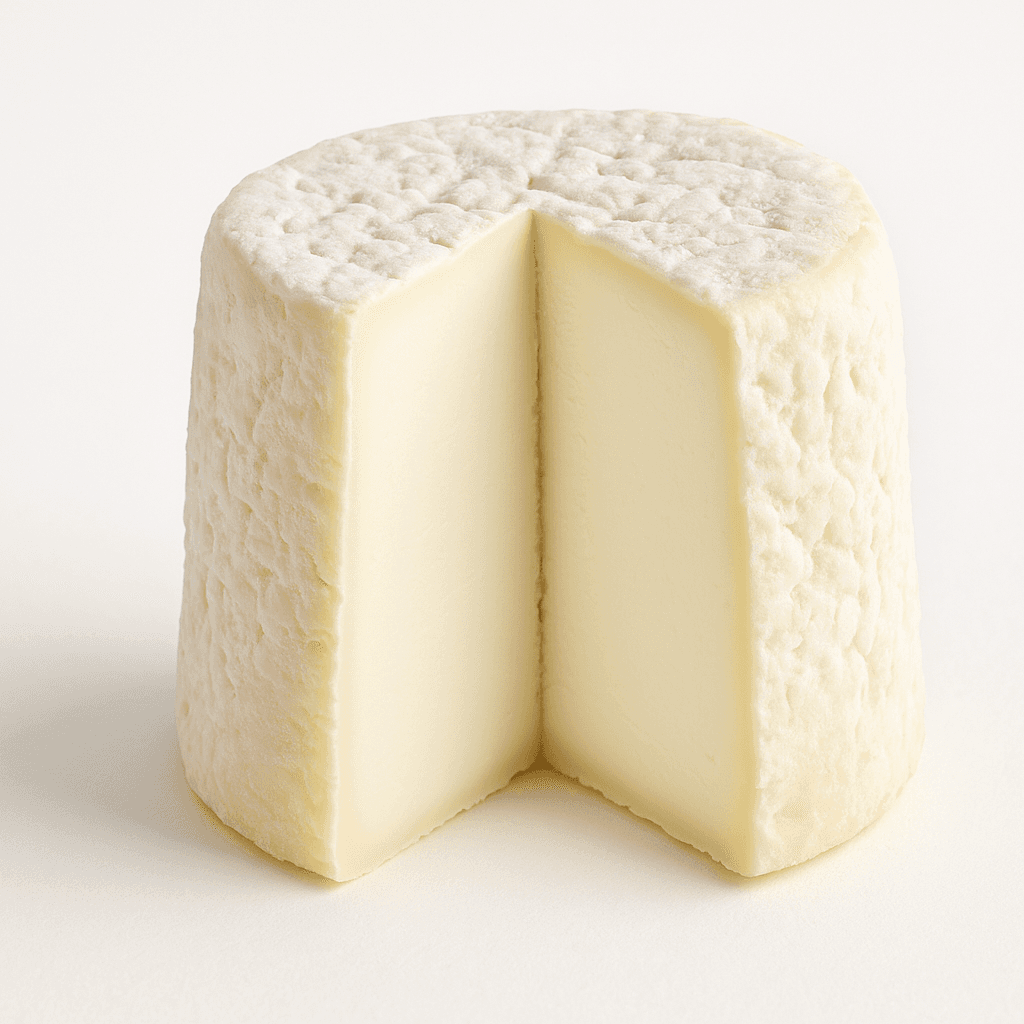
Chabichou du Poitou (generated with YZ)
Country | France | ||||||||
|---|---|---|---|---|---|---|---|---|---|
Type of Geographical Indication | Origin Name (PDO) | ||||||||
File Number | PDO-FR-0115 | ||||||||
Product Type | Food | ||||||||
Date(s) | 21.06.1996 | ||||||||
Product Category | Cheeses | ||||||||
Status | Registered | ||||||||
Protector | EU | ||||||||
Chabichou du Poitou AOP is a goat cheese specific to the Poitou region of France. Chabichou du Poitou AOP is a soft, white and unpressed goat cheese made from raw and pure goat milk. Its characteristic shape is a small truncated cone, known in French as a “bonde” (plug or stopper), approximately 6 cm in height, with an average weight of 120 grams and a milk fat content of 45%. The rind is thin and ivory-colored, with small wrinkles on its surface.
Chabichou du Poitou (Météo à la carte - France Télévisions)
Chabichou du Poitou is a pure product of Poitou (un pur produit du Poitou). Milk production, cheese manufacturing and ripening must all take place within a strictly defined geographical area, primarily in the departments of Vienne and Deux-Sèvres (Nouvelle-Aquitaine). This area corresponds to the limestone region of Haut-Poitou (Upper Poitou) and also includes the department of Charente. Cheese production is linked to the region known as Le Seuil du Poitou (The Poitou Threshold). This cheese received the Appellation d’origine contrôlée (AOC) designation in 1990 and the Appellation d’origine protégée (AOP) designation in 1996. The official application for registration was submitted in 1989 and geographical indication status was recognized in 1990.
The production of Chabichou du Poitou is based on an ancient manufacturing tradition. Approximately 1.3 liters of raw milk are required to produce one cheese. The goat breeds used are Alpine, Saanen and Poitevine. These goats are recognized by their brown or black coats. Thanks to the producers’ self-sufficiency policy, the goats’ feed is sourced entirely from within the region.
The goat milk is slightly fermented through lactic acid coagulation. It is coagulated for 24 hours using natural rennet (présure naturelle). The fresh curd is carefully molded without breaking and placed into perforated molds shaped as truncated cones. The cheese is left to drain for 18 to 24 hours. Within 48 hours it is turned three times, removed from the mold and salted on its surface. After salting, it is left to dry for an additional 24 to 48 hours. The ripening period varies depending on the desired outcome. Ripening occurs at a relative humidity of 80 to 90% and a temperature of 10–12°C for at least 10 days.
According to legend, the cheese was created in the 8th century (VIIIe) from the milk of goats abandoned by the Saracens after their defeat at Poitiers by Charles Martel. The name of the cheese is believed to derive from the Arabic word “chebli,” meaning “goat.” It was made by the Saracens who remained in the region after their defeat in 732 and settled on a hill near Poitiers. Chabichou is also mentioned in the 1782 travel guide by Charles de Cherge.
Centre national interprofessionnel de l’économie laitière (CNIEL). “Chabichou du Poitou AOP.” *Produits Laitiers AOP.* Accessed October 21, 2025. https://www.produits-laitiers-aop.fr/produits/chabichou-du-poitou/
European Union Intellectual Property Office (EUIPO). "Chabichou du Poitou." Accessed October 21, 2025. https://www.tmdn.org/giview/gi/EUGI00000012898
Ministry of Agriculture and Food Sovereignty. "Le Chabichou du Poitou AOP, un pur produit du Poitou." Accessed October 21, 2025. https://agriculture.gouv.fr/le-chabichou-du-poitou-aop-un-pur-produit-du-poitou
YouTube. "Météo à la carte - France Télévisions. Chabichou du Poitou." – YouTube video. Accessed October 21, 2025. https://www.youtube.com/watch?v=ZDbP_RkoN7k

Chabichou du Poitou (generated with YZ)
Country | France | ||||||||
|---|---|---|---|---|---|---|---|---|---|
Type of Geographical Indication | Origin Name (PDO) | ||||||||
File Number | PDO-FR-0115 | ||||||||
Product Type | Food | ||||||||
Date(s) | 21.06.1996 | ||||||||
Product Category | Cheeses | ||||||||
Status | Registered | ||||||||
Protector | EU | ||||||||
No Discussion Added Yet
Start discussion for "Chabichou du Poitou" article
Geographical Origin and Legal Status
Production Method
Historical Origins and Legend