This article was automatically translated from the original Turkish version.
+2 More
Architecture(s) | Asymmetrical layout fully adapted to the topography | ||||||||
|---|---|---|---|---|---|---|---|---|---|
Status | UNESCO World Heritage Site (1997) | ||||||||
Construction Date(s) | 1405 (the most preferred palace of the dynasty) | ||||||||
Prominent Structure | Biwon (Secret Garden) | ||||||||
Technical | Nail-free wooden joinery system and 'Ondol' (underfloor heating) | ||||||||
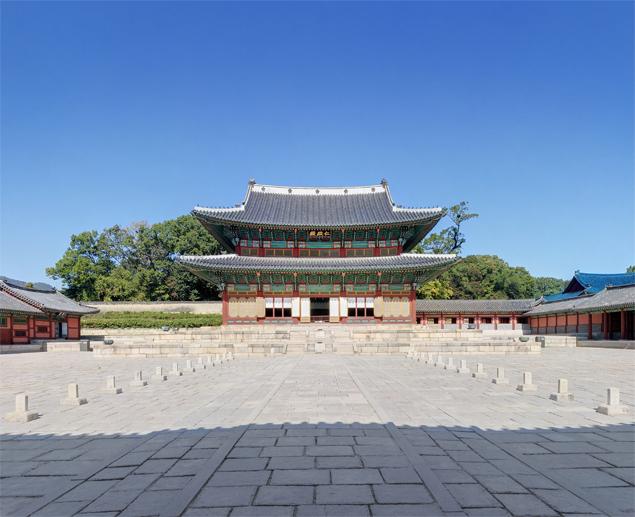
Changdeokgung Palace Complex is one of the royal palaces built during the Joseon Dynasty, located at the foot of Ungbong Hill on the slopes of Baegaksan Mountain in Seoul, the capital of South Korea. Constructed in 1405 by King Taejong as a secondary (auxiliary) palace to the main palace Gyeongbokgung, the complex covers an area of approximately 58 hectares. Recognized as an exceptional example of East Asian palace architecture and garden design, Changdeokgung distinguishes itself from other traditional palaces through the harmonious integration of its structures with the natural topography and existing tree cover. It was inscribed on the UNESCO World Heritage List in 1997.
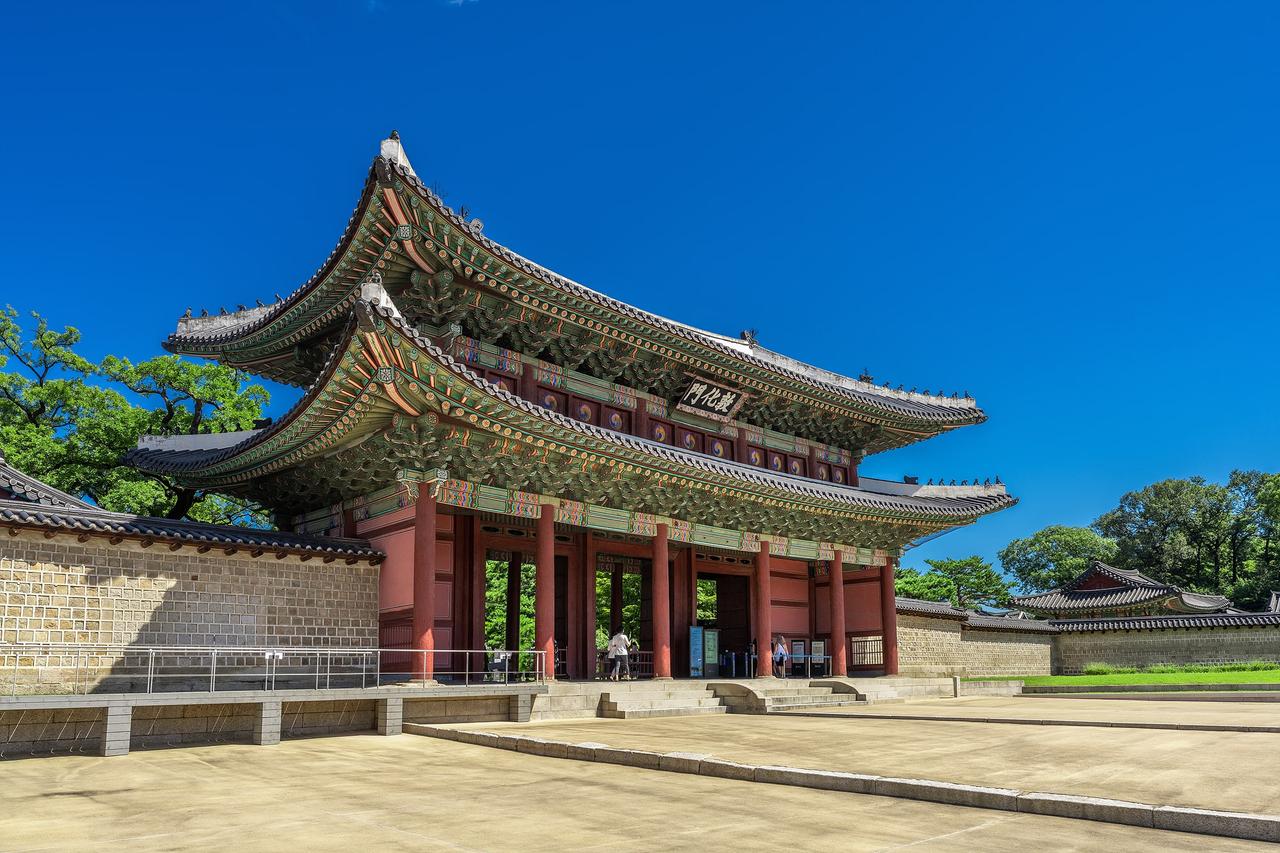
Changdeokgung Palace (Royal Palaces and Tombs Center)
Construction of Changdeokgung Palace began in 1405, with the main structures completed within seven years. The palace was entirely destroyed during the Japanese invasions of 1592 but was restored in 1610 by the Joseon kings Seonjo and Gwanghaegun to its original form, prior to the reconstruction of other palaces. From that time until 1867, when Gyeongbokgung was rebuilt, Changdeokgung served as the primary administrative center and royal residence for approximately 250 years. As the residence of Korea’s last emperor Sunjong until his death in 1926, the palace also holds historical significance as the place where the final members of the royal family—including Empress Sunjeong, Crown Princess Yi Bangja, and Princess Deokhye—spent their final years.
The palace complex was designed according to Confucian ideology and traditional palace layout principles known as “sammun samjo” (three gates, three courtyards) and “jeonjo huchim” (front for administration, rear for residence).

Palace roof (Royal Palaces and Tombs Center)
The main entrance to the complex, Donhwamun Gate, marks the official boundary of the palace. The most prominent administrative building is the Injeongjeon Hall, where the royal throne was located. This structure is a wooden building raised on stone platforms, characterized by ornate tiled roofs and intricate bracket systems. The number of animal figurines (japsang) placed along the roof ridges symbolizes the social status of the occupants. Additionally, the “ondol” heating system, which involved laying stone beneath buildings and heating them with fire, is a key technical feature of the architecture.
The buildings at Changdeokgung were largely constructed without nails, using a technique in which wooden components were precisely carved to interlock. Within the palace, stone-paved courtyards serve to differentiate structures according to their status.

Changdeokgung Palace Biwon (AA)
Located to the north of the palace, the area known as the Secret Garden (Biwon) or Rear Garden (Huwon) constitutes a large portion of the complex’s total area. Designed as a retreat for the king’s leisure and scholarly pursuits, the garden includes lotus ponds such as Buyongji and Aeryeonji, the Juhamnu Pavilion, and various study rooms. Over 56,000 trees of numerous species—including walnut, oak, plum, and maple—grow within the garden. The landscape is designed to achieve complete harmony with the natural environment by minimizing human intervention.
Changdeokgung is designated as a “State-Designated Cultural Property” under South Korea’s Cultural Heritage Protection Act. Sections such as Injeongjeon Hall and Donhwamun Gate are also registered as National Treasures or designated cultural assets. Changes made during the Japanese colonial period in the early 20th century are being reversed through restoration projects based on historical evidence, using traditional methods and materials. Today, the palace is a major attraction for both domestic and international tourists.
Anadolu Ajansı. "Seul'deki Gyeongbokgung Sarayı Ülke Turizminin Çekim Noktası Oldu." Accessed February 20, 2026. https://www.aa.com.tr/tr/kultur/seuldeki-gyeongbokgung-sarayi-ulke-turizminin-cekim-noktasi-oldu/3178907
Korea Heritage Service. "Changdeokgung Palace." Accessed February 20, 2026. https://english.khs.go.kr/html/HtmlPage.do?pg=/royal/RoyalPalaces_2.jsp&mn=EN_02_03_02
MİMDAP. "Güney Kore, Asırlık Saraylarıyla Büyülüyor." Accessed February 20, 2026. https://mimdap.org/haberler/guney-kore-asyrlyk-saraylaryyla-buyuluyor/
Royal Palaces and Tombs Center. "Changdeokgung Palace and Its History." Accessed February 20, 2026. https://royal.cha.go.kr/ENG/contents/E102010000.do
UNESCO Dünya Heritage Sites. "Changdeokgung Saray Complex - Seoul - South Korea." Accessed February 20, 2026. https://www.unescodunyamiraslari.com/guney-kore/changdeokgung-saray-kompleksi/
UNESCO World Heritage Centre. "Changdeokgung Palace Complex." Accessed February 20, 2026. https://whc.unesco.org/en/list/816/

Architecture(s) | Asymmetrical layout fully adapted to the topography | ||||||||
|---|---|---|---|---|---|---|---|---|---|
Status | UNESCO World Heritage Site (1997) | ||||||||
Construction Date(s) | 1405 (the most preferred palace of the dynasty) | ||||||||
Prominent Structure | Biwon (Secret Garden) | ||||||||
Technical | Nail-free wooden joinery system and 'Ondol' (underfloor heating) | ||||||||
No Discussion Added Yet
Start discussion for "Changdeokgung Palace" article
Historical Development
Architectural Features and Spatial Organization
Main Structures and Functions
Construction Technique
Biwon: The Secret Garden
Conservation and Current Status