


This article was automatically translated from the original Turkish version.
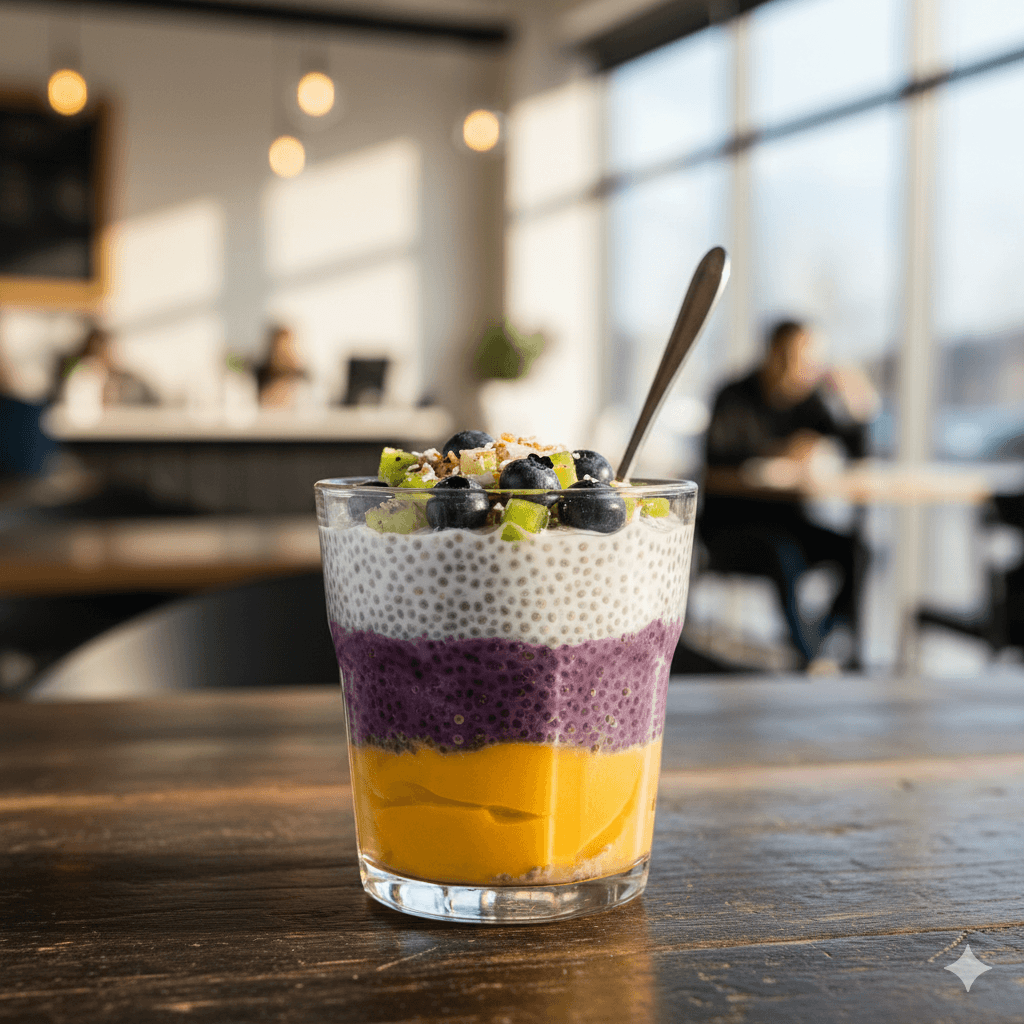
Chia seed pudding (generated by artificial intelligence)
Mechanism | absorbs liquid up to 10-12 times its weight Hydrophilic structure | ||||||||
|---|---|---|---|---|---|---|---|---|---|
Health Effect | supports glycemic control promotes satiety Slows digestion | ||||||||
Preparation Time | ideal density achieved in 8-12 hours (overnight) At least 2 hours | ||||||||
Liquid Options | etc.) soy Animal milk or plant-based alternatives (almond | ||||||||
Ideal Ratio | 1 cup liquid 1/4 cup chia seeds | ||||||||
Mineral Content | manganese phosphorus magnesium Calcium (18%) | ||||||||
Nutritional Profile | omega-3 (ALA) complete protein (4g) High fiber (11g) | ||||||||
Variation | Use a blender after hydration for a smooth texture | ||||||||
Critical Technique | Double stirring within the first 10 minutes to prevent clumping | ||||||||
Texture Characteristic | Gel-like structure formed by mucilage fibers | ||||||||
Main Component | Salvia hispanica (Chia) Seeds | ||||||||
Chia seed pudding is a gelatinous and nutritious food preparation formed by combining the seeds of Salvia hispanica, a plant belonging to the mint family (Lamiaceae), with a liquid. The foundation of this dish lies in the hydrophilic nature of chia seeds, which can absorb up to ten to twelve times their weight in liquid. When exposed to liquid, the outer fibers of the seeds dissolve to form a mucilage layer, imparting a pudding-like consistency without requiring any cooking process. In modern dietary practices, it is classified as a functional meal or snack due to its compatibility with plant-based diets and its high nutrient density.
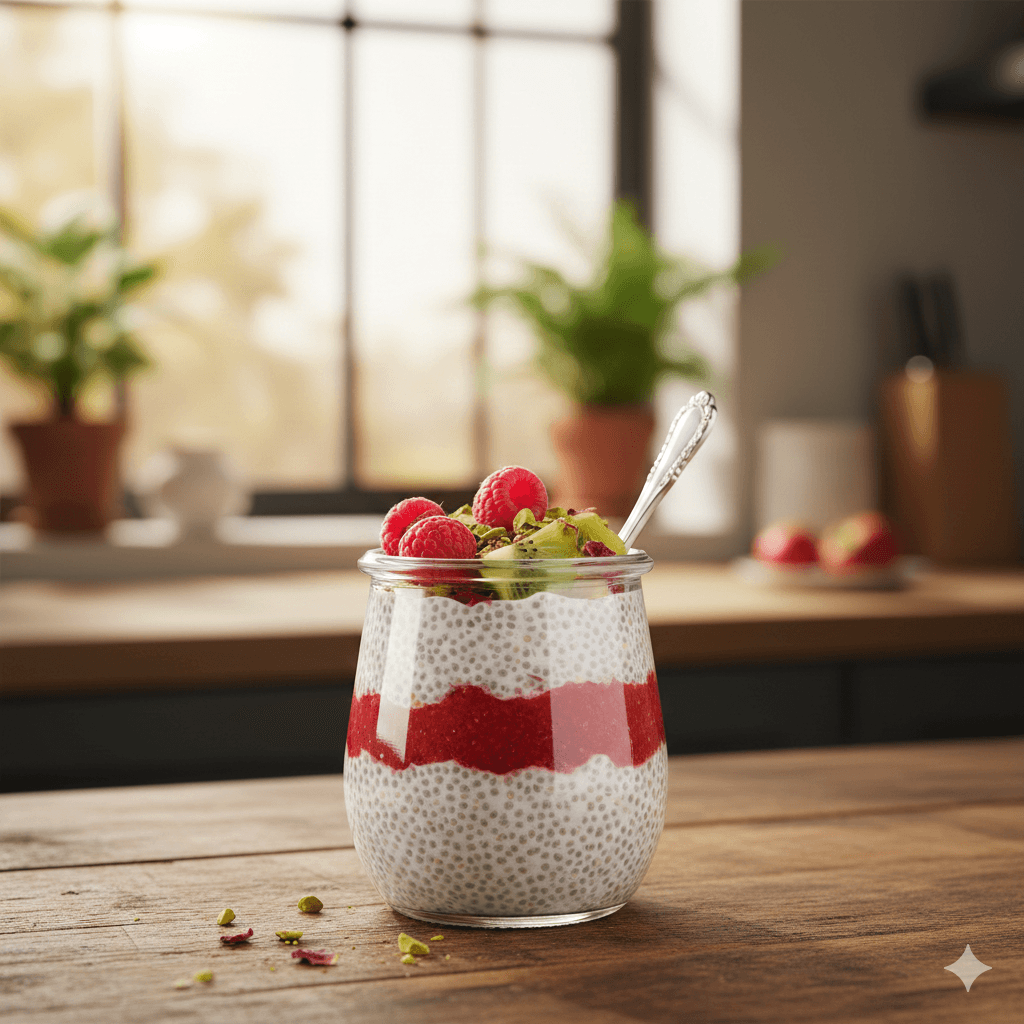
Chia seed pudding (Generated by artificial intelligence)
Historically, chia seeds were used as a staple food and energy source by Aztec and Maya societies. The complex carbohydrates and fibers within the seed structure are the primary components responsible for forming the pudding texture. During this process, the stability of omega-3 fatty acids (alpha-linolenic acid) is preserved by naturally occurring antioxidants such as quercetin, kaempferol, and chlorogenic acid in the seeds. The presence of these antioxidants helps prevent oxidation of the fatty acids in the pudding form.
Chia seed pudding delivers a high concentration of micronutrients and macronutrients in a low-volume serving. The nutritional profile of one serving prepared with approximately two tablespoons (28 grams) of chia seeds is as follows:
The gel structure formed during the pudding process slows gastric digestion, enhancing satiety and promoting gradual conversion of carbohydrates into glucose, thereby contributing to blood sugar regulation.
The texture of chia seed pudding is directly influenced by the ratio of seeds to liquid. The most commonly accepted ratio in the literature is one-quarter cup of chia seeds to one cup of liquid. The preparation follows these steps:
The physical structure of the pudding can be modified according to consumer textural preferences. Pudding made with whole seeds has a granular texture similar to tapioca pudding. For a smoother, more homogeneous “mousse-like” consistency, the fully hydrated mixture can be blended using a high-speed blender.
The neutral flavor of chia seeds allows the pudding to be enriched with a wide variety of aromas. Sweeteners such as honey, maple syrup, or stevia may be used, while flavorings such as vanilla extract, cocoa powder, or cinnamon are commonly preferred. At the serving stage, the addition of fresh fruits, nuts, walnuts, or granola enhances both visual appeal and textural depth.
Boston University. "Sargent Choice Test Kitchen: Chia Seed Pudding." Sargent Choice Nutrition Center. Accessed February 1, 2026. https://www.bu.edu/scnc/2024/11/14/sargent-choice-test-kitchen-chia-seed-pudding/ Cleveland Clinic. "How to Make Chia Pudding." Health Essentials. Accessed February 1, 2026. https://health.clevelandclinic.org/how-to-make-chia-pudding Harvard T.H. Chan School of Public Health. "Chia Seeds." The Nutrition Source. Accessed February 1, 2026. https://nutritionsource.hsph.harvard.edu/food-features/chia-seeds/ Mayo Clinic Health System. "Chia Seeds Pack Nutritional Punch." Speaking of Health. Accessed February 1, 2026. https://www.mayoclinichealthsystem.org/hometown-health/speaking-of-health/chia-seeds-pack-nutritional-punch Nottawaseppi Huron Band of the Potawatomi. "Chia Seed Pudding." NHBP Nutrition. Accessed February 1, 2026. https://nhbp-nsn.gov/nutrition/chia-seed-pudding/

Chia seed pudding (generated by artificial intelligence)
Mechanism | absorbs liquid up to 10-12 times its weight Hydrophilic structure | ||||||||
|---|---|---|---|---|---|---|---|---|---|
Health Effect | supports glycemic control promotes satiety Slows digestion | ||||||||
Preparation Time | ideal density achieved in 8-12 hours (overnight) At least 2 hours | ||||||||
Liquid Options | etc.) soy Animal milk or plant-based alternatives (almond | ||||||||
Ideal Ratio | 1 cup liquid 1/4 cup chia seeds | ||||||||
Mineral Content | manganese phosphorus magnesium Calcium (18%) | ||||||||
Nutritional Profile | omega-3 (ALA) complete protein (4g) High fiber (11g) | ||||||||
Variation | Use a blender after hydration for a smooth texture | ||||||||
Critical Technique | Double stirring within the first 10 minutes to prevent clumping | ||||||||
Texture Characteristic | Gel-like structure formed by mucilage fibers | ||||||||
Main Component | Salvia hispanica (Chia) Seeds | ||||||||
Botanical and Biochemical Background
Nutritional Composition and Physiological Effects
Preparation Techniques and Standard Ratios
Textural Variations and Modifications
Gastronomic Diversification and Aromatic Profile