


This article was automatically translated from the original Turkish version.
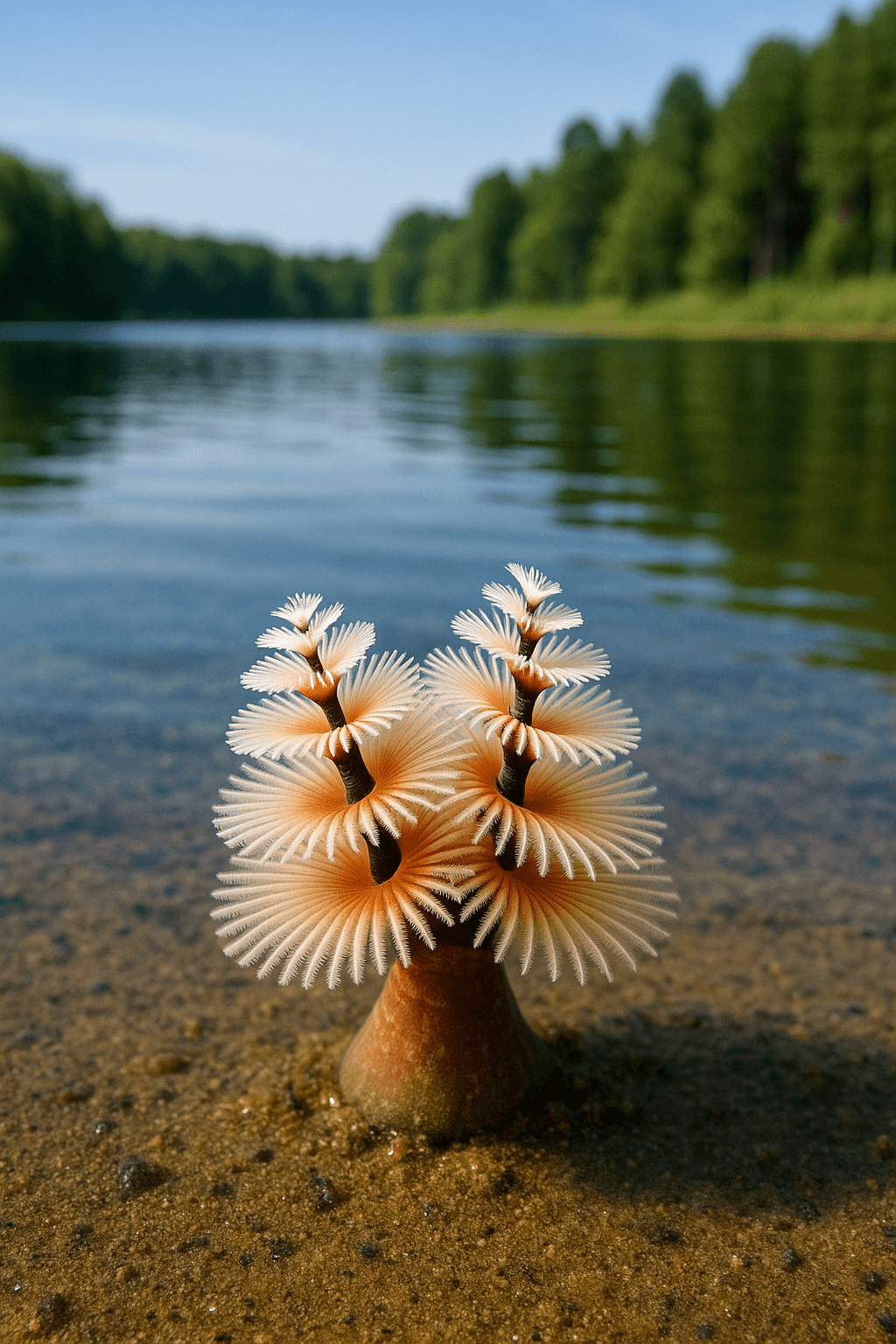
Latincesi | Spirobranchus giganteus | ||||||||
|---|---|---|---|---|---|---|---|---|---|
Familyası | Serpulidae | ||||||||
Yaşadığı Yer | Tropical coral reefs | ||||||||
Cins Özellikleri | Spiral gill | ||||||||
The Christmas tree worm gets its name from its colorful, spiral-shaped gill structures. This organism, scientifically known as *Spirobranchus giganteus*, is a tube worm that lives a sessile life in marine environments and forms strong symbiotic relationships with coral reefs. Its bright colors, spiral structure, and resemblance to a Christmas tree attract the attention of both scientists and nature photographers. This article will examine this species in detail, covering aspects from its physical structure and behavior to its habitat and relationship with humans.
The Christmas tree worm has an unusual appearance that does not immediately suggest it is a marine worm. Its most distinctive feature is a pair of spiral gill structures. These structures can be various vibrant colors—blue, yellow, red, and white—and play a role in feeding and gas exchange. These spirals are actually feathery appendages called “radioles,” which are key to identifying the species. The worm’s body is concealed within a calcareous tube it constructs on the surface of coral. This calcareous tube grows alongside the coral over time. The worm’s body is soft, segmented, and capable of being retracted inward. In moments of danger, it rapidly withdraws its spiral gills into the tube for protection.
Its body size typically ranges from 3 to 4 centimeters, but when including the tube, the total length can exceed 7 centimeters. Although the worm is easily visible on coral reefs due to its striking appearance, its protective tube makes it difficult to access. Its skin is thin and covered in mucus, which both protects the worm from pathogens and aids in capturing particles. All surfaces of its body are equipped with nerve endings capable of detecting subtle movements in the water. The calcareous tube structure outside its soft tissues indicates this species leads a permanently sessile lifestyle. This structure serves both as protection and enables the worm to withstand environmental stresses with minimal damage.
*Spirobranchus giganteus* is widely distributed throughout the tropical and subtropical seas of the world. It is most commonly found in the Caribbean, the western coasts of the Pacific Ocean, the Indian Ocean, and Australia’s Great Barrier Reef. These worms typically inhabit depths between 3 and 30 meters—zones where sunlight penetrates and coral growth is most intense.
In addition to coral reefs, rocky substrates and other fixed marine structures can also serve as habitats. However, they are especially associated with hard corals of the genus *Porites*. This symbiotic relationship allows the tube worms to live without harming the coral.
Because they are sessile organisms, Christmas tree worms spend the majority of their lives in a single location. They position their tubes on or within coral surfaces, maintaining their orientation according to the coral’s growth direction. The environmentally stable nature of coral reefs provides a significant advantage for the long-lived, sedentary lifestyle of these worms. As a result, these worms can also be considered indicators of reef health.
Global warming, ocean acidification, and coral bleaching threaten large portions of their habitat, leading to a documented decline in their distribution over time.
The Christmas tree worm is a sessile organism, spending most of its life motionless. It extends only its gills to capture plankton and food particles carried by water currents. One of its most striking behaviors is the rapid retraction of its gills into the tube upon detecting external threats.
Socially, it lives solitarily; however, large numbers of Christmas tree worms can be found on the same coral or in close proximity. These aggregations result from larvae settling on coral surfaces, a key factor in the species’ dispersal.
Another behavior involves the use of a flap-like structure called an “operculum” to seal the entrance of its tube and protect itself from the external environment. This operculum prevents potential predators from entering.
There is no direct communication between individuals; however, synchronized movements can be observed due to similar responses to environmental stimuli. This collective reaction enables them to retreat into their tubes simultaneously when a threat is detected.
Their sessile lifestyle has transformed them into organisms that cannot escape predators but are exceptionally well-camouflaged. Consequently, their behavioral repertoire is limited yet highly functional.
The Christmas tree worm is a passive suspension feeder. Using ciliated cells on its spiral gills, it captures plankton, detritus, and microscopic organisms from the surrounding water. Food particles are directed toward the mouth via channels on the gills, while non-beneficial materials are expelled. This creates an efficient filtration mechanism.
Feeding is entirely dependent on water movement. Therefore, these worms feed more efficiently in areas with waves or currents. In still waters, feeding efficiency decreases.
Energy conservation is critical during feeding. The worm does not actively hunt; instead, it relies on ambient water currents to deliver food. This strategy is perfectly suited to its sessile lifestyle.
No hibernation or similar metabolic slowdowns have been observed. In tropical regions, they remain active year-round. However, water temperature and food density can influence the intensity of their activity.
*Spirobranchus giganteus* is a dioecious species, meaning individuals are either male or female. Reproduction occurs through external fertilization, with sperm and eggs released into the water. This process is typically triggered during specific times of the year, influenced by lunar cycles and water temperature. The larvae that hatch from the eggs drift planktonically in the ocean for a period. This phase enables new individuals to colonize different coral colonies. The larval stage can last several days.
Once larvae find a suitable surface, they settle and begin constructing a tube, eventually transforming into adults. The most critical factor in this process is the chemical and physical suitability of the coral surface.
Reproductive success is highly sensitive to environmental stressors. Coral bleaching, ocean acidification, and pollution negatively affect larval attachment and development. Since adult worms cannot relocate, successful settlement during the larval stage is vital. In this way, the species exhibits high selectivity during early life stages.
The Christmas tree worm is not directly harvested by humans; however, its symbiotic relationship with coral places it at indirect risk. The loss of coral reefs equates to the loss of its habitat.
One of the greatest threats is coral bleaching. Rising sea temperatures cause corals to lose their symbiotic algae, ultimately leading to coral death. The death of the coral results in the eventual collapse of the tube in which the worm resides. Human activities such as coastal pollution, plastic waste, and fishing also pose indirect threats. Particularly, physical damage to coral reefs can lead to mass mortality of Christmas tree worms.
Conservation efforts are generally focused on protecting coral reefs. Initiatives such as marine protected areas, marine parks, and coral farms indirectly safeguard these worms. Additionally, ecotourism activities in some regions highlight visually striking species like the Christmas tree worm, helping to raise public awareness and promote conservation.
Although the Christmas tree worm has no direct economic value to humans, it attracts significant aesthetic and scientific interest. It is an ideal subject for marine photographers and nature documentary filmmakers. Divers frequently observe it within the context of reef tourism. Due to its colorful appearance, it is commonly featured in promotional brochures and educational materials.
Scientifically, it is studied in fields such as biomimicry and gill morphology. The spiral structure of its gills is considered a potential model for microfluidic systems. These organisms are regarded as indicators of ecosystem health. Thus, their presence serves as an important biological marker for assessing the vitality of coral reefs.
They pose no direct harm to humans. However, careless diving activities can damage their habitat, leading to their decline. Education and awareness campaigns are therefore essential in mitigating such threats.
Cronin, Shawn. “Spatial Distribution and Larval Biology of Spirobranchus giganteus.” CiteSeerX. Accessed May 2025. https://citeseerx.ist.psu.edu/document?doi=69352d6188f9c09b4ae67ad3a614174a7291ebbe
GBRI. “Spirobranchus giganteus.” University of Queensland. Accessed May 2025. https://www.gbri.org.au/Species/Spirobranchusgiganteus.aspx?PageContentID=637
MarineBio Conservation Society. “Christmas Tree Worms, Spirobranchus giganteus.” Accessed May 2025. https://www.marinebio.org/species/christmas-tree-worms/spirobranchus-giganteus/
Petrocelly, Gabriella. “The Christmas Tree Worm (Spirobranchus giganteus) as a Potential Bioindicator of Coral Reef Health.” Berkeley Scientific Journal 27, no. 1 (2022): 77–84. https://escholarship.org/uc/item/305555sk
Treehugger. "Welcome to the Magical World of Christmas Tree Worms."

Latincesi | Spirobranchus giganteus | ||||||||
|---|---|---|---|---|---|---|---|---|---|
Familyası | Serpulidae | ||||||||
Yaşadığı Yer | Tropical coral reefs | ||||||||
Cins Özellikleri | Spiral gill | ||||||||
No Discussion Added Yet
Start discussion for "Christmas Tree Worm (Spirobranchus giganteus)" article
Physical Characteristics
Habitat and Distribution
Behavior and Social Structure
Feeding Habits
Reproduction and Larvae
Threats and Conservation Efforts
Relationship with Humans