


This article was automatically translated from the original Turkish version.
+2 More
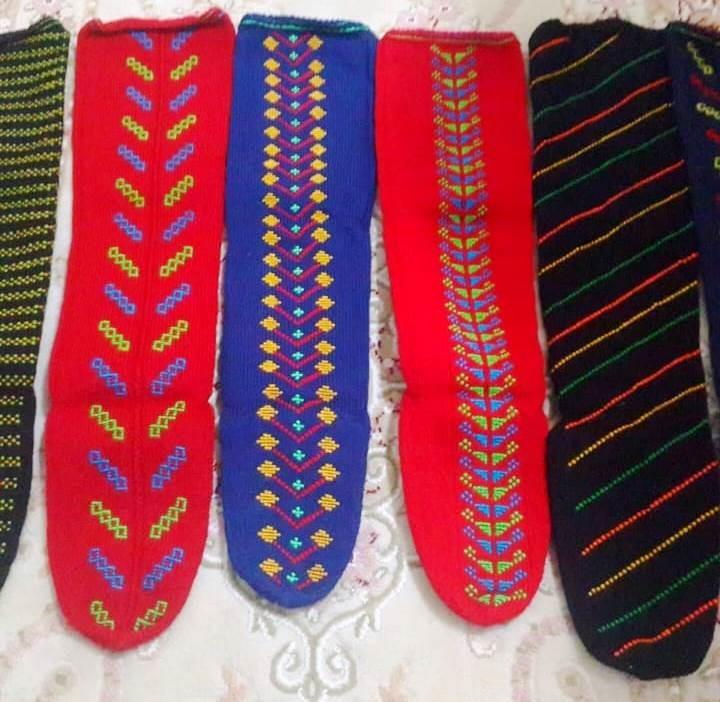
Cimil Sock
Registration Number | 1331 | ||||||||
|---|---|---|---|---|---|---|---|---|---|
Registration Date | 30.01.2023 | ||||||||
Application Number | C2022/000097 | ||||||||
Application Date | 08.03.2022 | ||||||||
Name of the Geographical Indication | Cimil Çorabı | ||||||||
Product / Product Group(s) | Handicraft Products Other Than Socks Kilims and Textiles Carpets | ||||||||
Type of Geographical Indication | Certification Mark | ||||||||
Applicant/Registrant(s) | İkizdere District Governorship | ||||||||
Address of the Registrant | Çarşı Mah. Cumhuriyet Cad. No:42 İkizdere RİZE | ||||||||
Geographical Boundary | Cimil Village Rize Province İkizdere District | ||||||||
Cimil Çorabı is a traditional handicraft produced in Cimil Village of İkizdere District, Rize Province, Türkiye, and officially registered as a geographical indication on 30 January 2023. The registration process began with an application submitted on 8 March 2022 and was completed under the category of “Handicraft products other than socks, carpets, kilims and textiles” at the Turkish Patent and Trademark Office of the Republic of Türkiye. The application was submitted by the İkizdere District Governorship. The geographical indication term “Cimil Çorabı” and its associated geographical indication emblem must be visibly displayed on the product itself, its packaging, or, if this is not possible, in a clearly visible location within the production area.

Rize Cimil Çorabı, (Generated by artificial intelligence.)
Cimil Çorabı is a traditional product knitted using five double-pointed needles and the plain knitting technique. The sock features a total of eight openwork ribbing sections: four pairs of two-stitch ribs and four pairs of four-stitch ribs. These openwork ribs provide elasticity and ensure comfortable wear despite the sock’s length. The production of Cimil Çorabı combines plain knitting, patterned knitting, colored patterned knitting and openwork knitting techniques.
The patterns are formed using the auxiliary yarn cast-on method applied during knitting. Historically, only sheep wool yarn was used in production; however, today, in addition to wool, synthetic, acrylic or blended yarns are also commonly preferred.
The patterns used in Cimil Çorabı are unique to the cultural heritage of Cimil Village. These patterns are classified into six main categories: geometric, figurative, botanical, symbolic, animalistic and object-based. Various compositional arrangements combining multiple patterns on a single sock are employed. Colors and patterns vary according to the gender and age of the wearer.
Some commonly used pattern names include:
These patterns are typically worked in colors that contrast with the base color. Traditionally, only red was used as the base color; today, other primary colors are also favored. The yarns used for pattern embroidery—known as “pulluk”—are generally finer than the sock yarn and are commonly green or blue in color.
Cimil Çorabı is knitted starting from the toe with ten stitches (five pairs). Additional stitches are gradually increased until the desired length is achieved, and knitting continues up to just below the knee. After the increase phase is completed, the knitting continues in a circular pattern to form the sole and front section, completing the sock. All stages of production are carried out entirely by hand using traditional methods.
The production of Cimil Çorabı is restricted exclusively to the geographical boundaries of Cimil Village in İkizdere District, Rize Province. The product’s history is deeply connected to the village’s historical and cultural fabric. It is a traditional practice in Cimil Village for brides’ dowry trunks to contain between ten and fifteen pairs of Cimil Çorabı.
The term “Cimil Çorabı” and its geographical indication emblem must be visibly displayed on the product or its packaging. If this is not feasible, the term and emblem must be kept in a clearly visible location within the production facility.

Rize Cimil Çorabı, (Generated by artificial intelligence.)
The production, processing and final product stages of Cimil Çorabı are regularly monitored through established control mechanisms. The monitoring process is coordinated by the İkizdere District Governorship and carried out by designated expert representatives from the İkizdere District Governorship, İkizdere Municipality and İkizdere District National Education Directorate. This team conducts at least one formal inspection per year. Additional inspections may be carried out upon complaint or when deemed necessary. The inspection covers the following elements:
In necessary cases, the monitoring authority may seek support from institutions in the public or private sector or from expert individuals.
Turk Patent and Trademark Office. "Cimil Çorabı - Coğrafi İşaret Detayı." Accessed May 20, 2025. https://ci.turkpatent.gov.tr/cografi-isaretler/detay/6225
Türk Patent ve Marka Kurumu. "Cimil Çorabı Coğrafi İşaret Tescil Belgesi." Accessed May 20, 2025. https://ci.turkpatent.gov.tr/Files/GeographicalSigns/a13747a7-48ba-459e-87f7-daa519b279de.pdf

Cimil Sock
Registration Number | 1331 | ||||||||
|---|---|---|---|---|---|---|---|---|---|
Registration Date | 30.01.2023 | ||||||||
Application Number | C2022/000097 | ||||||||
Application Date | 08.03.2022 | ||||||||
Name of the Geographical Indication | Cimil Çorabı | ||||||||
Product / Product Group(s) | Handicraft Products Other Than Socks Kilims and Textiles Carpets | ||||||||
Type of Geographical Indication | Certification Mark | ||||||||
Applicant/Registrant(s) | İkizdere District Governorship | ||||||||
Address of the Registrant | Çarşı Mah. Cumhuriyet Cad. No:42 İkizdere RİZE | ||||||||
Geographical Boundary | Cimil Village Rize Province İkizdere District | ||||||||
Technical Characteristics
Patterns and Compositions
Production Method
Cultural Connection and Geographical Boundary
Usage Requirements
Monitoring Process