

This article was automatically translated from the original Turkish version.
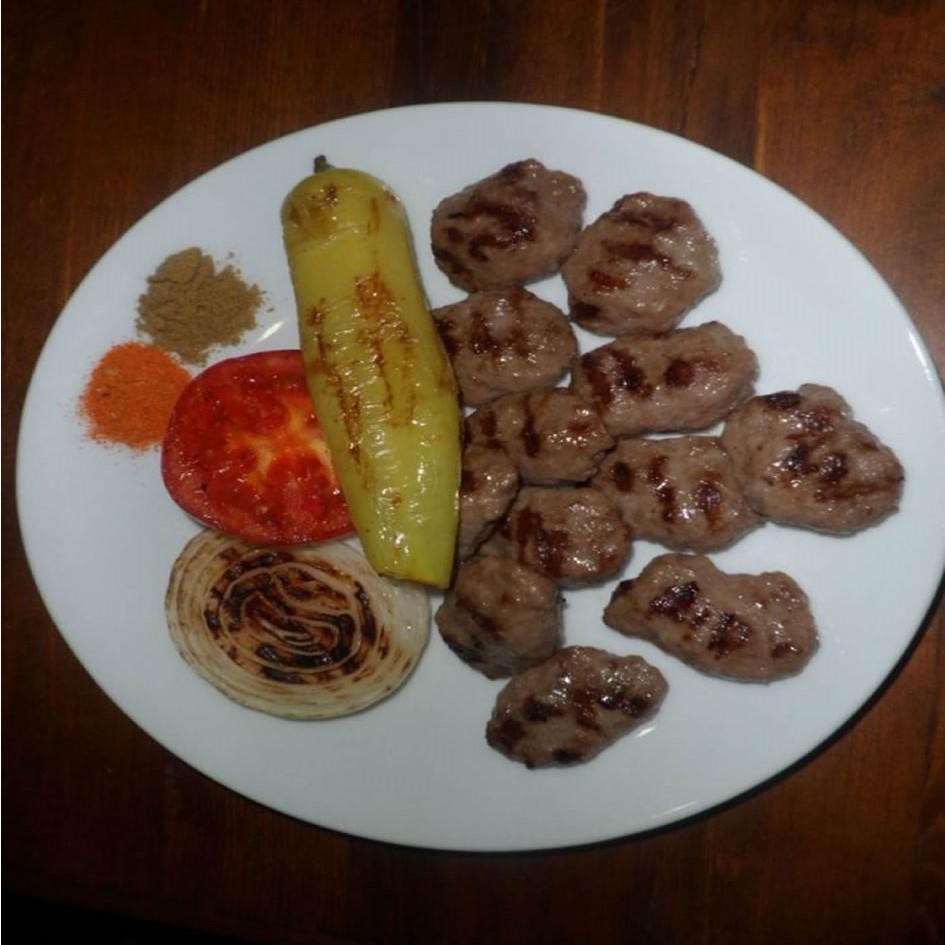
Çine köftesi is a local meatball variety produced in the Çine district of Aydın Province, Türkiye, and officially registered with a geographical indication. It was registered on 29 November 2018 by the Çine Municipality under Law No. 6769 on Industrial Property, effective from 24 June 2013. The type of geographical indication is a certification mark, and it is used through a labeling system.
The fundamental feature distinguishing Çine köftesi from similar products lies in the source and processing of the meat used in its production. For making the meatballs, only male cattle aged 1–1.5 years of the Alaca, Esmer, and Simmental breeds, raised naturally on pastures within Çine district and never fed silage or sugar beet pulp, are used. The cuts employed are rib (breast) or shoulder meat. The region where these animals are raised is characterized by arid vegetation under the influence of the Mediterranean climate.
The production of Çine köftesi follows unique rules regarding both meat preparation and the kneading and shaping process:
The meat used in Çine köftesi production must originate exclusively from male cattle aged appropriately and of the specified breeds, raised on pastures within the boundaries of Çine district. The prohibition of silage and sugar beet pulp in the animals’ diet is a fundamental requirement to preserve the product’s distinctive qualities.
Monitoring of the use of the geographical indication for Çine köftesi is coordinated by the Çine Municipality. The monitoring team includes representatives from the Çine Culture Association, Çine Chamber of Tradesmen and Artisans, Çine Chamber of Agriculture, Aydın Chamber of Commerce, and the District Directorate of Food, Agriculture and Livestock. Inspections cover aspects such as the origin of the meat, the type and age of the animals, the composition of the meatball, and the production process. The origin of the meat is verified through slaughterhouse documentation. The inspection process may be carried out by services provided by public or private institutions, and legal procedures are supervised by the monitoring authority.
Turk Patent and Trademark Office. "Çine Köftesi Mahreç İşareti Tescil Belgesi." Turk Patent and Trademark Office. Accessed October 19, 2025. https://ci.turkpatent.gov.tr/Files/GeographicalSigns/397.pdf.
Turkish Patent and Trademark Office. "Çine Köftesi." Geographical Indications Portal. Accessed October 19, 2025. https://ci.turkpatent.gov.tr/cografi-isaretler/detay/38101.

Distinctive Characteristics
Preparation Method
Ingredients (for 8 servings)
Meat Preparation
Kneading and Resting
Cooking
Geographical Boundaries and Production Conditions
Monitoring Mechanism