


This article was automatically translated from the original Turkish version.
+2 More
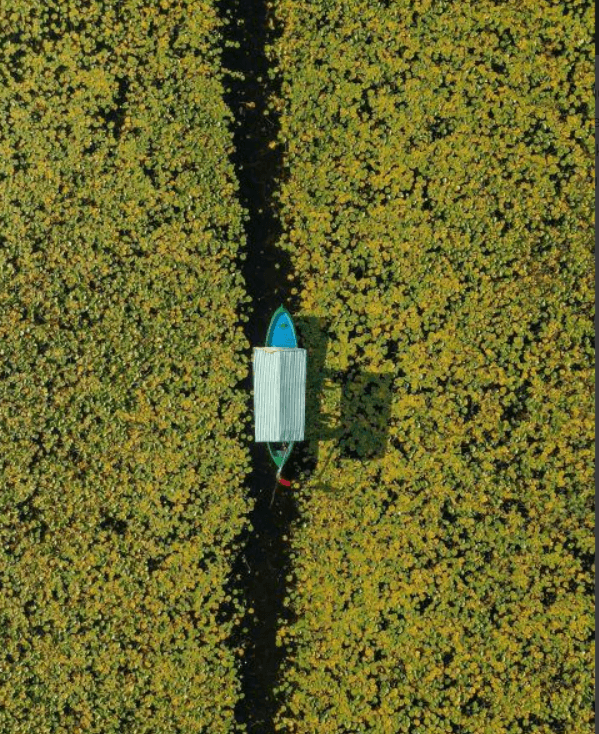
Çivril Işıklı Göl
Location | Denizli Province Türkiye Çivril District | ||||||||
|---|---|---|---|---|---|---|---|---|---|
Surface Area | Approximately 3500 hectares | ||||||||
Ecological Importance | and is home to the kadife fish has a rich crustacean fauna An important habitat for water birds | ||||||||
Economic Use | Irrigation, fishing, fish farms | ||||||||
Lake Işıklı, located within the boundaries of the Çivril district in Denizli Province, is one of Türkiye’s most important wetlands. Situated at an elevation of approximately 800 meters and covering an area of 3,500 hectares, this freshwater lake attracts attention due to its geographical structure and rich biodiversity. Its position as the source of the Büyük Menderes River grants it a hydrologically strategic role. Its designation as a Class A Wetland under the international Ramsar Convention has confirmed Lake Işıklı’s status as an ecosystem of international importance.
Lake Işıklı is primarily fed by rivers flowing from the east, including the Büyük Menderes River, Karanlık Creek, and Kuti Stream. Dams constructed along the eastern, western, and southern shores of the lake regulate its water level but simultaneously contribute to the reduction of reed beds. These artificial interventions have significantly altered the lake’s natural ecological dynamics. Research on fluctuations in the lake’s surface area and water color has provided important data regarding its long-term ecological health. Seasonal and annual analyses have revealed variations in the lake’s hydrological regime and their relationship with environmental factors. Water color analyses also offer insights into the lake’s trophic status.

Çivril Işıklı Gölü(Denizli Çivril Municipality)
Lake Işıklı stands out for its rich biodiversity. Its designation as a Proposed Important Bird Area (IBA) underscores its vital role as a habitat for bird populations. The lake and its surroundings host numerous bird species, both breeding and wintering:
Comprehensive studies on the lake’s Crustacea fauna have revealed its zoological richness. A study conducted between February 1998 and January 1999, analyzing samples from six different stations, identified a total of 34 Crustacea species, classified as follows:
The lake also supports a significant population of the tench (Tinca tinca (L.)), a commercially important fish species. Studies on the growth, structure, and mortality rates of this fish are essential for understanding the lake’s fishing potential and sustainability.

Çivril Işıklı Gölü(Denizli Çivril Municipality)
Lake Işıklı provides irrigation water for surrounding settlements and supports economic activities such as fishing and fish farming. However, these human-driven activities exert various pressures on the lake’s sensitive ecosystem.
Lake Işıklı is an integral part of the regional tourism network due to its proximity to other natural and historical attractions in Denizli, including Pamukkale, the Ancient City of Laodicea, Kırmızı Su, and Kaklık Cave. Especially during the water lily season (May–July), the lake experiences heavy visitor influxes and offers tourists productive boat excursions.
The lake’s tourist visibility continues to grow annually, welcoming visitors from across Türkiye and internationally—from regions such as Russia, Ukraine, Antalya, İzmir, and Mersin. On weekends, daily visitor numbers can reach between 5,000 and 10,000, making a significant contribution to the regional economy. Çivril Municipality and local authorities are continuing infrastructure projects to meet rising visitor demand. Lake Işıklı has become a key destination included in tour operators’ itineraries, hosting over 50,000 visitors in 2022 and setting a target of closing the season with more than 70,000 visitors. This demonstrates a successful model of converting the lake’s natural beauty into economic benefits.
Anadolu Ajansı (AA). "Denizli'deki Işıklı Gölü'nde 'nilüfer mevsimi'." Accessed July 11, 2022. https://www.aa.com.tr/tr/yasam/denizlideki-isikli-golunde-nilufer-mevsimi/2634688
Aygen, Cem, and Süleyman Balık. "Işıklı Gölü ve Kaynaklarının (Çivril-Denizli) Crustacea Faunası." E.Ü. Su Ürünleri Dergisi 22, no. 3-4 (2005): 371-375.
Balık, Süleyman, Hasan M. Sarı, Mustafa Ruşen Ustaoğlu, and Ali İlhan. "The Structure, Mortality and Growth of the Tench [Tinca tinca (L., 1758)] Population in Çivril Lake, Denizli, Turkey." Turkish Journal of Veterinary & Animal Sciences 28, no. 6 (2004): 973-979.
Culture Portal. "Çivril Işıklı Gölü Su Kuşları Koruma Alanı." Accessed https://www.kulturportali.gov.tr/turkiye/denizli/gezilecekyer/civril-isikli-golu-su-kuslari-koruma-alani.
Uzun, S. Murat. "Işıklı Gölü'nün (Denizli-Çivril) Yıllık ve Aylık Göl Yüzey Alanı ve Su Rengi Değişim Analizleri." Eastern Geographical Review 29, no. 52 (2024): 77-95.
Çelik, Mehmet Ali, and Ali Ekber Gülersoy. "Işıklı Gölü (Çivril-Denizli) Çevresindeki Arazi Kullanım Faaliyetlerinin Göl Üzerine Etkilerinin İncelenmesi." SDÜ Fen Edebiyat Fakültesi Sosyal Bilimler Dergisi 29 (August 2013): 191-200.
Çivril Belediyesi. "Işıklı Gölü Nilüferler Tekne Turu." Accessed https://www.civril.bel.tr/isikli-golu-niluferler-tekne-turu.


Çivril Işıklı Göl
Location | Denizli Province Türkiye Çivril District | ||||||||
|---|---|---|---|---|---|---|---|---|---|
Surface Area | Approximately 3500 hectares | ||||||||
Ecological Importance | and is home to the kadife fish has a rich crustacean fauna An important habitat for water birds | ||||||||
Economic Use | Irrigation, fishing, fish farms | ||||||||
Geographical and Hydrological Features
Ecological Importance and Biodiversity
Human Activities and Environmental Interactions
Tourism and Socioeconomic Contribution