


This article was automatically translated from the original Turkish version.
When we look at the sky, we often see clouds of various shapes and densities. But how much water do these clouds contain? To answer this question, we must first understand how clouds form and what they consist of.
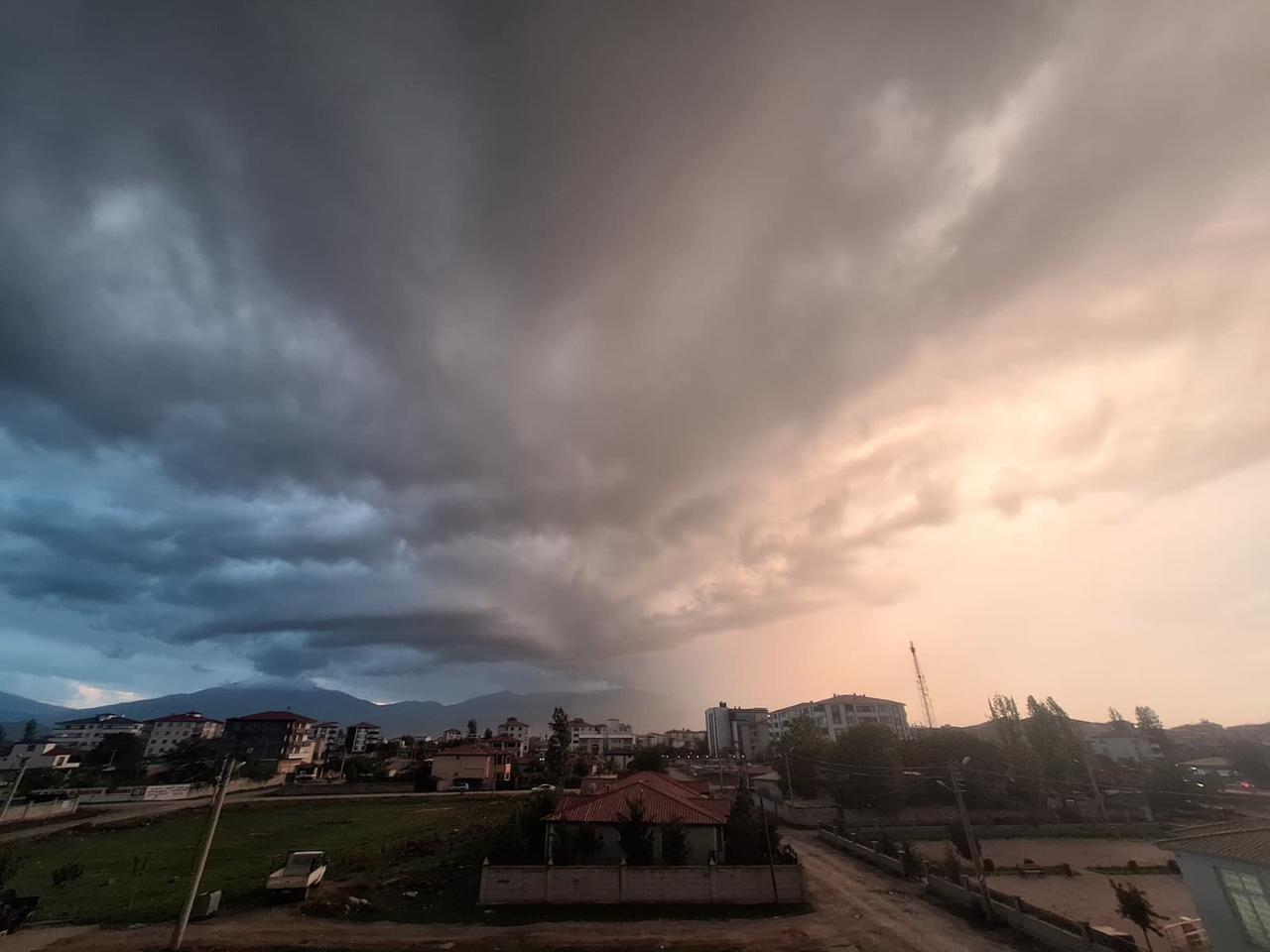
Clouds(Photo: Mehmet Bağcı)
Air contains various gas molecules, including water vapor. As air rises from the Earth’s surface and moves toward higher layers of the atmosphere, pressure decreases, causing the air to expand and consequently cool. When the cooled air can no longer hold all its water vapor, the vapor condenses into tiny water droplets.
Clouds Seen from an Airplane Window (pixabay)
However, this condensation occurs only on microscopic solid particles already present in the air, such as dust, pollen, or salt crystals—known as condensation nuclei. As a result, billions of tiny water droplets come together to form clouds. These droplets are extremely small, typically ranging from 10 to 15 micrometers in diameter. Due to their size, they do not fall rapidly to the ground under gravity; instead, they remain suspended in the air.
The density of clouds varies depending on their type. Nimbostratus clouds, commonly seen during rainy weather, have a density of approximately 0.5 grams per cubic meter. This means that, on average, each cubic meter of such a cloud contains 0.5 grams of water.
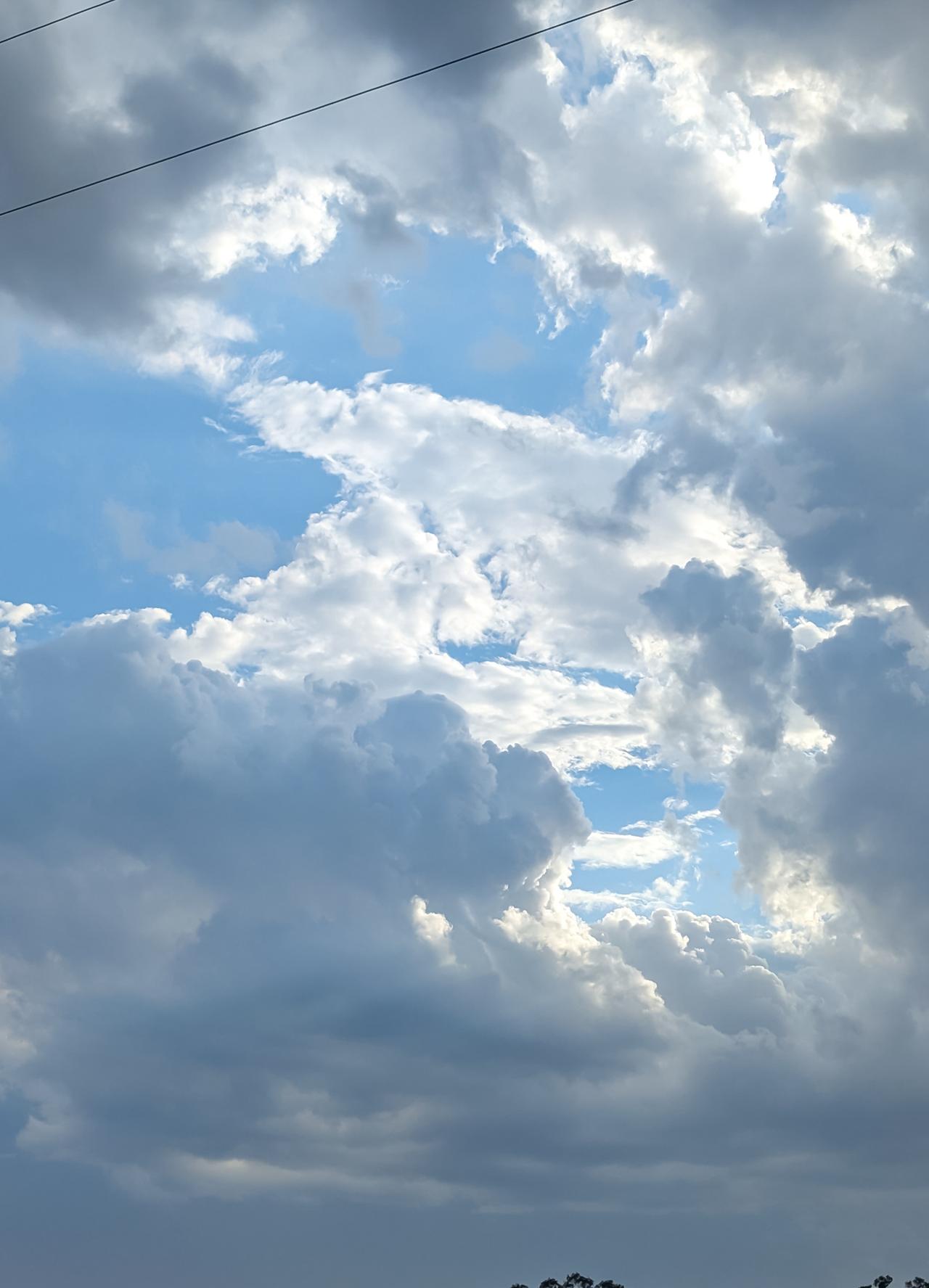
Nimbostratus Clouds (pixabay)
Using this information, consider a cube-shaped nimbostratus cloud with sides of one kilometer. The volume of such a cloud is one billion cubic meters (1 km³ = 10⁹ m³). Multiplying this volume by the density gives a total mass of approximately 500,000 kilograms, or 500 tons of water. This amount is greater than that found in cumulus clouds, as nimbostratus clouds contain denser water droplets. Nevertheless, compared to the cloud’s enormous volume, its density remains very low. Süphanallah.
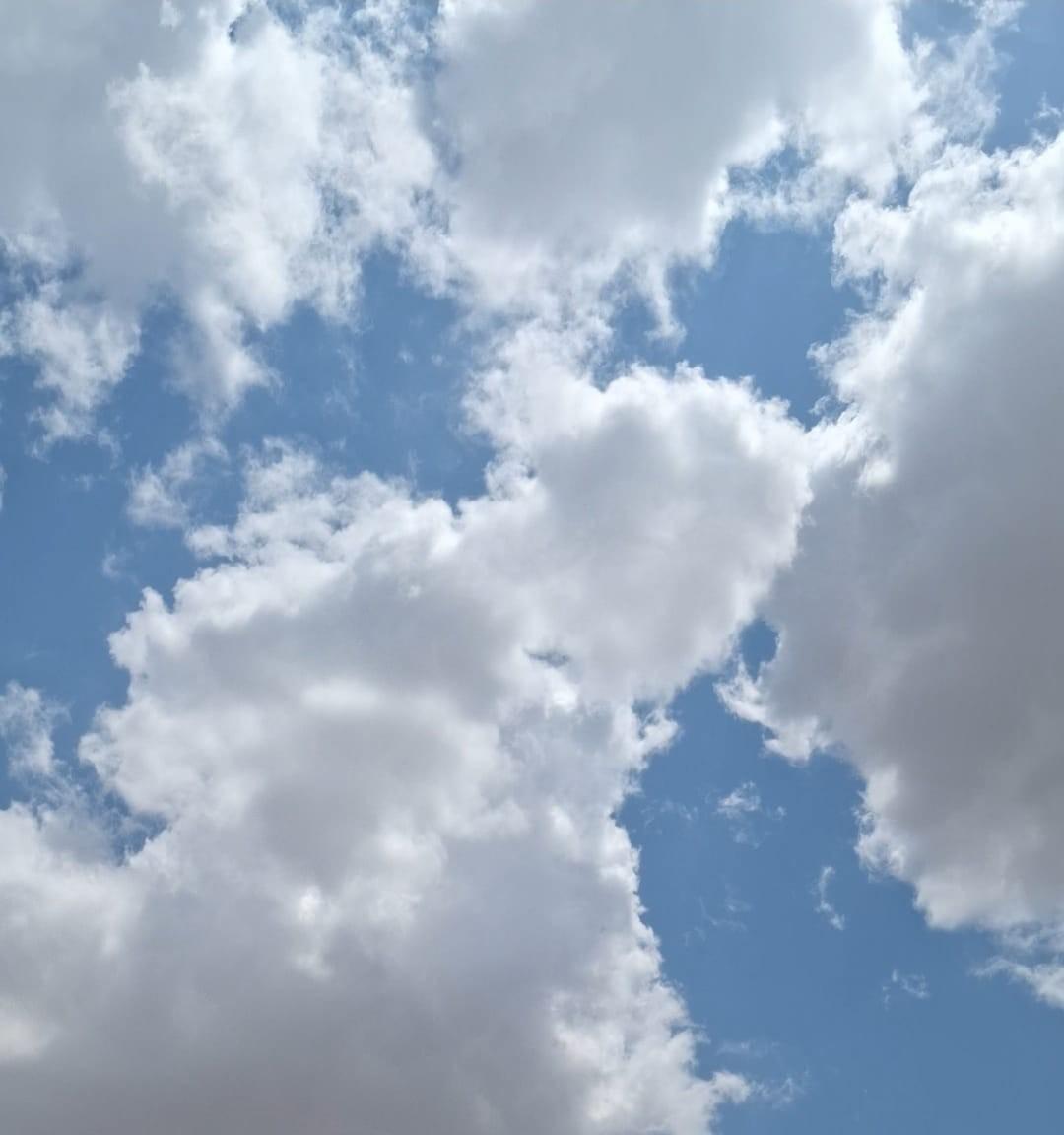
White Cumulus Clouds (Photo: Mehmet Bağcı)
An interesting fact is that the density of clouds is lower than that of the surrounding air. At sea level, the average density of dry air is approximately 1 kg/m³. In contrast, the density of clouds is only a few grams per cubic meter. Because of this difference, clouds appear to “float” in the sky despite containing water. The reason is that the water droplets forming clouds are extremely small and light, and they are spread out over a vast area.
Güven, Dilara. “Bulutlar Nasıl Oluşur?” BilimUp. Accessed August 12, 2025. https://www.bilimup.com/bulutlar-nasil-olusur.
Pixabay. “Clouds Sky Nimbostratus.” Accessed August 12, 2025. https://pixabay.com/photos/clouds-sky-nimbostratus-9578653/
Pixabay. “Gökyüzü, Bulutlar Uçuş Uçak Jet Video.” Accessed August 12, 2025. https://pixabay.com/tr/videos/g%C3%B6ky%C3%BCz%C3%BC-bulutlar-u%C3%A7u%C5%9F-u%C3%A7ak-jet-249178/.
Sarıgül, Tuba. “Bulutların İçinde Ne Kadar Su Var?” TÜBİTAK Bilim Genç. Accessed August 12, 2025. https://bilimgenc.tubitak.gov.tr/makale/bulutlarin-icinde-ne-kadar-su-var.
How Do Clouds Form?
Density and Mass of Clouds
Why Do Clouds Remain Suspended in the Air?
