


This article was automatically translated from the original Turkish version.
Dust, in general terms, is the name for microscopic, dust-like particles or accumulations of such particles composed of sand, soil, organic tissue fragments or artificial materials. These particles can be light enough to be carried by wind yet heavy enough to settle on surfaces (Source: Britannica).
Dust consists of organic or mineral-based small solid particles and can be found everywhere: in the atmosphere, on the Earth’s surface, and in space. The size of dust particles ranges from a few microns to 0.1 mm. Particles larger than 0.1 mm are classified as sand. Dust is a subject of interest in many science fields including ecology, climatology, medicine, and materials science like. Understanding the properties of dust is studied in various research contexts regarding its effects on the environment, human health, and technical systems.
Dust has various sources:
Organic origin: It includes components such as Plant residues, animal skin flakes, fabric fibers, and biological particles such as fungal spores and pollen.
Mineral origin: It results from Erosion erosion, rock weathering, sandstorms, or volcanic activity.
In House environments, dust consists of fabric fibers, animal fur, human skin and hair, as well as soot and other particles brought in from outdoors.
Dust is defined by its small particle size and large surface area relative to its mass, which contributes to its high reactivity. Dust can be easily transported by air currents and can accumulate on any type of surface.
An important property of dust is its chemical composition. Depending on its source, dust may contain various minerals, metals, carbon compounds, and organic substances. For example, street dust in large cities is often rich in heavy metals such as lead, cadmium, and zinc, resulting from vehicle and industry facility operations.
The shape and size of dust particles can be examined under microscope. For this purpose, light microscopy【1】
method is particularly useful in determining whether dust is of natural or anthropogenic origin.
In this experiment, air containing dust is passed through filters of varying densities. This allows assessment of the filters’ effectiveness in capturing particles of different sizes.
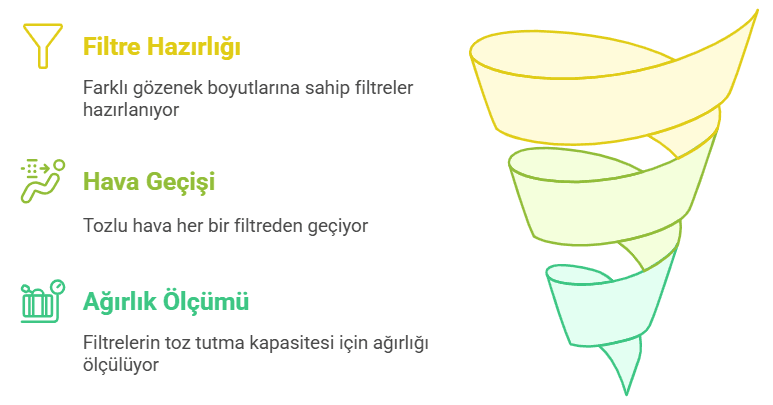
Diagram 1. Filtration and Dust Measurement Process
The experiment applied has been highlighted by researchers as useful for evaluating the efficiency of various filtration systems.
Under laboratory conditions, the effects of different types of dust on lung tissue can be studied. In this experiment, lung cell cultures are exposed to dust particles.
The experiment helps model the effects of polluted air on human lungs.
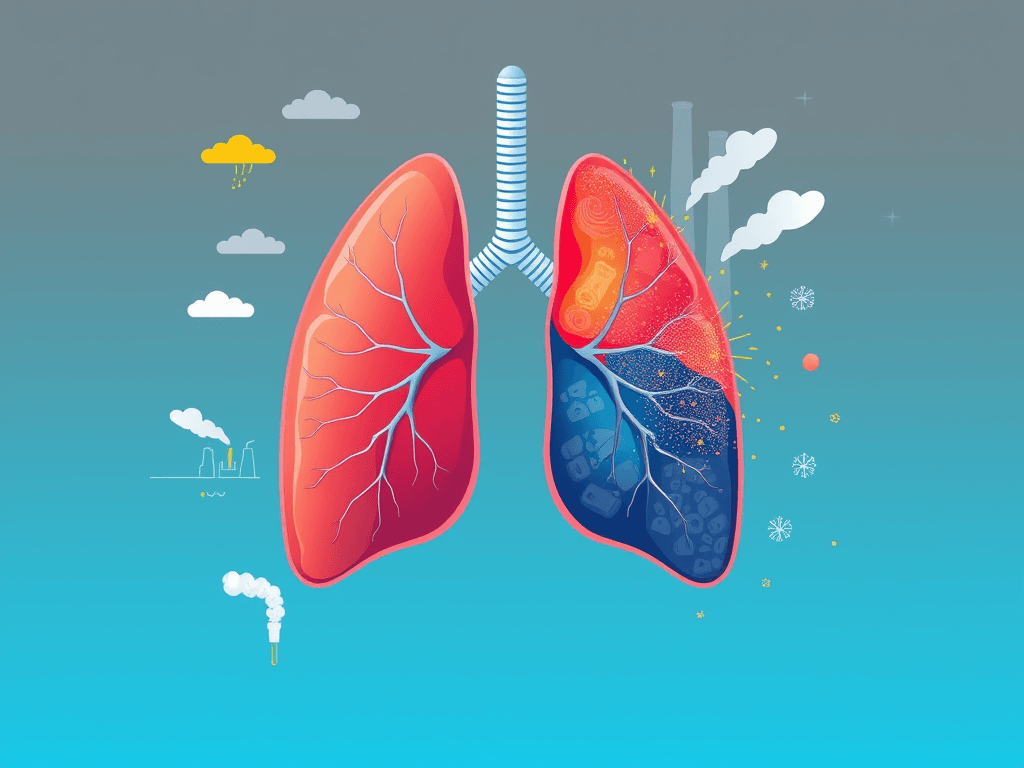
Figure 3. Effect of dust on lung tissue
Dust is a complex and multifaceted phenomenon with implications for environment, human health, and science. Modern dust research helps us better understand its impacts on the environment and human health. Studying the physical and chemical properties of dust contributes to the development of more effective filtration systems and air pollution control methods, particularly in the face of pressing contemporary challenges such as global climate change and increasing urban populations, where it holds significant importance.
Ansmann, A., Baars, H., Ohneiser, K., Foth, A., Horbanski, M., Seifert, P., and Barja, B. 2022. "Extreme Levels of Canadian Wildfire Smoke in the Stratosphere over Central Europe on 21–22 August 2017: Lidar Profiling Versus in Situ Measurements at Sonnblick Observatory." *Atmospheric Chemistry and Physics* 22 (4): 2385–2405. https://acp.copernicus.org/articles/22/2385/2022/.
Britannica. *Dust*. Accessed March 17, 2025. https://www.britannica.com/science/dust#/media/1/174452/294826.
Brunekreef, B., & Holgate, S. T. (2002). Air pollution and health. *The Lancet, 360*(9341), 1233-1242. https://doi.org/10.1016/S0140-6736(02)11274-8
Buseck, P. R., Adachi, K., Gelencsér, A., Tompa, É., & Pósfai, M. (2012). Are black carbon and soot the same? *Atmospheric Chemistry and Physics, 12*(9), 3625-3645. https://doi.org/10.5194/acp-12-3625-2012
Donaldson, K., Stone, V., Clouter, A., Renwick, L., & MacNee, W. (2001). Ultrafine particles. *Occupational and Environmental Medicine, 58*(3), 211–216. https://doi.org/10.1136/oem.58.3.211
Harrison, R. M., & Yin, J. (2000). Particulate matter in the atmosphere: Which particle properties are important for its effects on health? *Science of the Total Environment, 249*(1-3), 85–101. https://doi.org/10.1016/S0048-9697(99)00513-6
Hinds, W. C. (1999). Aerosol technology: Properties, behavior, and measurement of airborne particles. Wiley-Interscience.
Kok, J. F., Mahowald, N. M., Fratini, G., & Gill, T. E. (2012). The global role of mineral dust in the climate system: Theory and observations. *Environmental Research Letters, 7*(4), 044007. https://doi.org/10.1088/1748-9326/7/4/044007
Mahowald, N. M., Scanza, R. A., Brahney, J., Goodkin, N. F., Grassian, V. H., Hamilton, D. S., ... & Zhang, Y. (2018). Aerosol impacts on climate and biogeochemistry. *Annual Review of Environment and Resources, 43*, 1-52. https://doi.org/10.1146/annurev-environ-102017-030216
Miller, M. R., Shaw, C. A., & Langrish, J. P. (2012). From particles to patients: Oxidative stress and the cardiovascular effects of air pollution. *Future Cardiology, 8*(4), 577–602. https://doi.org/10.2217/fca.12.43
Pope, C. A., & Dockery, D. W. (2006). Health effects of fine particulate air pollution: Lines that connect. *Journal of the Air & Waste Management Association, 56*(6), 709–742. https://doi.org/10.1080/10473289.2006.10464485
Seinfeld, J. H., & Pandis, S. N. (2016). Atmospheric chemistry and physics: From air pollution to climate change (3rd ed.). John Wiley & Sons.
[1]
Light microscopy is a microscopy technique in which samples are examined using visible light and optical lenses. It is commonly used in fields such as biology, medicine, and materials science to observe cellular structures and microorganisms.【1】 or

Sources of Dust
Physical and Chemical Properties of Dust
Experiments and Research on Dust
Examination of Dust Particle Size and Structure Under Microscopy
Scientific Facts and Research
Experiments Investigating the Health Effects of Dust
Experiment 1: Examination of Air Filtration with Different Dust Contents
Experiment 2: Effect of Dust on Lung Tissue