


This article was automatically translated from the original Turkish version.
+1 More
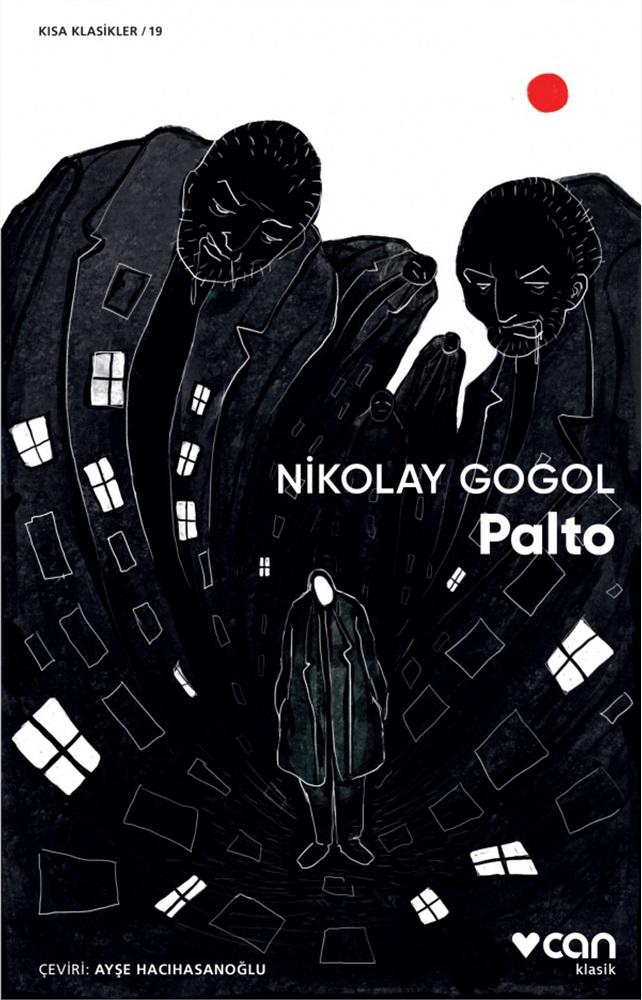
Author(s) | Nikolay Gogol | ||||||||
|---|---|---|---|---|---|---|---|---|---|
Translator(s) | Ayşe Hacıhasanoğlu | ||||||||
Publisher(s) | Can Yayınları | ||||||||
Genre | Öykü | ||||||||
Number of Pages | 56 | ||||||||
The Overcoat is a short story by Russian writer Nikolai Vasilievich Gogol, first published in 1842. This work, belonging to Gogol’s mature period, is widely regarded as having contributed significantly to the development of Russian realism. With its grotesque and satirical narrative, the story has become one of the defining texts of its era and of modern literature, due to its thematic exploration of the individual’s position within social structures. The Overcoat is interpreted not merely as a personal tale but also as an allegorical depiction of the social, bureaucratic, and moral fabric of 19th-century Tsarist Russia.
The story centers on the daily life of Akakiy Akakiyevich Bashmachkin, a low-ranking clerk working in a small government office in St. Petersburg. This extremely passive, duty-bound, and socially isolated character’s life changes when the need arises to replace his worn-out overcoat. The new overcoat provides Akakiy with both physical warmth and a fleeting sense of social visibility. However, shortly after acquiring it, the overcoat is stolen, shattering his existential balance. His inability to obtain help from authorities and the profound helplessness he experiences drive him into psychological and physiological decline. After his death, his appearance as a ghost forms the story’s fantastical elements.
Akakiy’s story represents the process of devaluation that the individual endures in modern society. Society recognizes only those who offer functional contributions, while dismissing all other forms of existence.
The government office and its officials in the story symbolize the insensitivity and mechanical operation of hierarchical systems. The indifference shown toward Akakiy’s plight clearly exposes the system’s apathy toward the individual.
The overcoat becomes a symbol of Akakiy’s social visibility. The influence of objects on individual social identity can be read particularly through the lens of consumption sociology.
Although the story begins within a realistic social context, it shifts into a fantastical dimension when Akakiy returns as a ghost after his death. This transition exemplifies Gogol’s characteristic blending of reality and imagination within his narrative world.
Gogol’s style closely resembles a grotesque aesthetic, particularly through the exaggerated depiction of characters’ physical and psychological traits. This approach generates both satirical and tragicomic effects.
The narrator in the text functions as an authority who interprets the characters’ actions while occasionally adopting an ironic and distancing tone. This technique limits the reader’s identification with the character and imparts a critical distance to the text.
The tone in the story frequently shifts, intertwining tragic elements with comic ones. These transitions reflect Gogol’s method of portraying the contradictions of human nature and the hypocrisy within society.
The overcoat in the story is not merely a garment but carries symbolic value as the concrete manifestation of abstract concepts such as social status, dignity, and belonging.
The Overcoat is recognized as one of the earliest texts in Russian literature to exhibit the signs of the realist movement. Gogol’s work represents a new narrative form in post-Pushkin Russian literature, focusing on the inner world of the individual and social contradictions. Particularly in the mid-19th century, the thematic and structural influences of The Overcoat are evident in the works of writers such as Dostoevsky, Tolstoy, and Chekhov. The story also played a decisive role in shaping the literary theme of the “little man.”
Gogol, Nikolay. Palto. Trans. Ayşe Hacıhasanoğlu. İstanbul: Can Yayınları, 2020.

Author(s) | Nikolay Gogol | ||||||||
|---|---|---|---|---|---|---|---|---|---|
Translator(s) | Ayşe Hacıhasanoğlu | ||||||||
Publisher(s) | Can Yayınları | ||||||||
Genre | Öykü | ||||||||
Number of Pages | 56 | ||||||||
Plot
Themes
1. The Individual’s Position in Society
2. Bureaucratic Corruption and Lack of Empathy
3. Identity Construction Through Objects
4. The Interpenetration of Reality and the Fantastic
Narrative Techniques and Literary Features
1. Grotesque Narrative
2. Narrator’s Position
3. Tonal Shifts
4. Symbolism
Literary and Historical Context