

This article was automatically translated from the original Turkish version.
+2 More
Coba Höyük (Sakçagözü Höyük) is a multi-layered settlement located within the boundaries of Nurdağı district, Gaziantep province, on the Sakçagözü Plain. The mound is approximately three kilometers from Sakçagözü Village and measures 10–12 meters in height and about 140 by 90 meters in width. To its west lie the Amanos (Nur) Mountains and to its east the Kartal (Sof) Mountains, while the surrounding area is bordered by fertile agricultural land and wetlands. Today the mound is largely destroyed and is under agricultural use.
Coba Höyük was first identified in 1883 by Karl Humann and Felix von Luschan. In 1907 John Garstang of the University of Liverpool noticed reliefs during a surface survey and began excavations in 1908 continuing his work in the 1911–1912 season. In the 1930s Hans Henning von der Osten conducted a small sounding and in 1949 a team from the British Institute of Archaeology under the leadership of John d’Arcy Waechter carried out a second excavation campaign. In 1986–1987 David French and Geoffrey Summers re-evaluated the finds from the 1908 and 1949 excavations.
Excavations have revealed that Coba Höyük was continuously inhabited from the Neolithic period through to the Roman era. The cultural layers identified at the site were initially classified into five phases during early excavations and later reclassified into twelve phases. Particularly layers IX and X represent the period of a Late Hittite (Late Iron Age) palace complex. These layers revealed a walled palace structure with a bit hilani architectural plan.
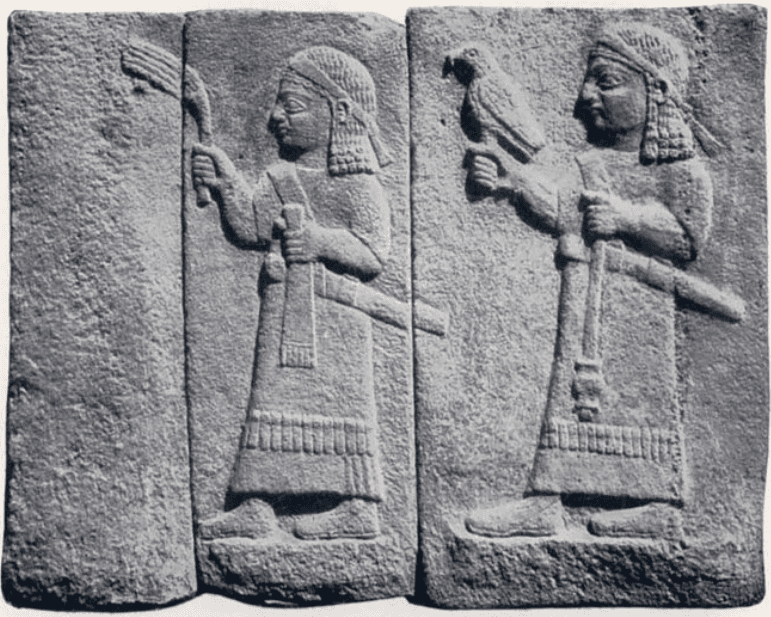
The most striking architectural find at the mound is the palace complex enclosed by defensive walls and featuring a single entrance gate. The gate is supported by two small towers and adorned with basalt orthostats on both its interior and exterior facades. In the northeast section of the palace a columned portico of the bit hilani type is located. This structure holds an important place within the Late Hittite architecture of Anatolia and northern Syria due to its three-dimensionally carved orthostats. The portico’s floor is paved with regular stone blocks and at the entrance double sphinx-shaped column bases have been found.
The reliefs at Coba Höyük exhibit clear examples of the Aramaic style. Lion gate figures bird-headed figures the tree of life motif and sphinx compositions form the core of this repertoire. Some orthostats are three-dimensionally carved and show close typological similarities to the Zincirli Hilani III reliefs. A significant portion of these is now displayed in the museums of Ankara Istanbul and Berlin. The original name of the settlement during the Late Hittite period remains unknown due to the absence of inscriptions.
Excavations have yielded numerous pottery vessels stone containers beads weights bone tools and seals from various layers. A ceramic form originating from the Ubaid layer and known in the literature as the “Coba bowl” was first defined here. Additionally a metal casting mold believed to have been used in the production of duck-billed stone axes was also discovered.

No Discussion Added Yet
Start discussion for "Coba (Sakçagözü) Höyük" article
Discovery and Research History
Settlement Continuity and Stratification
Architectural Remains
Statues and Reliefs
Small Finds